Expert analysis made easy. Breaking down the news with data, charts, and maps.
Edited by Brady Africk and Carter Hutchinson
Happy Thursday! In today’s newsletter, we examine the happiness of married Americans, Pell Grants for short-term workforce programs, and the impact of the Bitcoin bubble’s burst.
Don’t forget—subscribe and send DataPoints to a friend!
Topline: New analysis shows a dramatic decline in the number of young women wanting to get married. In 1993, 83 percent of 12th-grade girls said they wanted to get married in the future, but this number dropped to 61 percent just 30 years later. AEI’s Daniel A. Cox analyzes the various explanations for young American women’s declining interest in marriage.
Generational and Gender Change: While young women’s interest in marriage has seen a stark decrease since 1993, young men’s interest has remained the same. Young women are also now more pessimistic that their marriages will last, while their male counterparts demonstrate no significant shift. In 1993, six in 10 young women believed that if they married, they would be “very likely” to stay married for life. Now, only about half of 12th-grade girls feel this way.
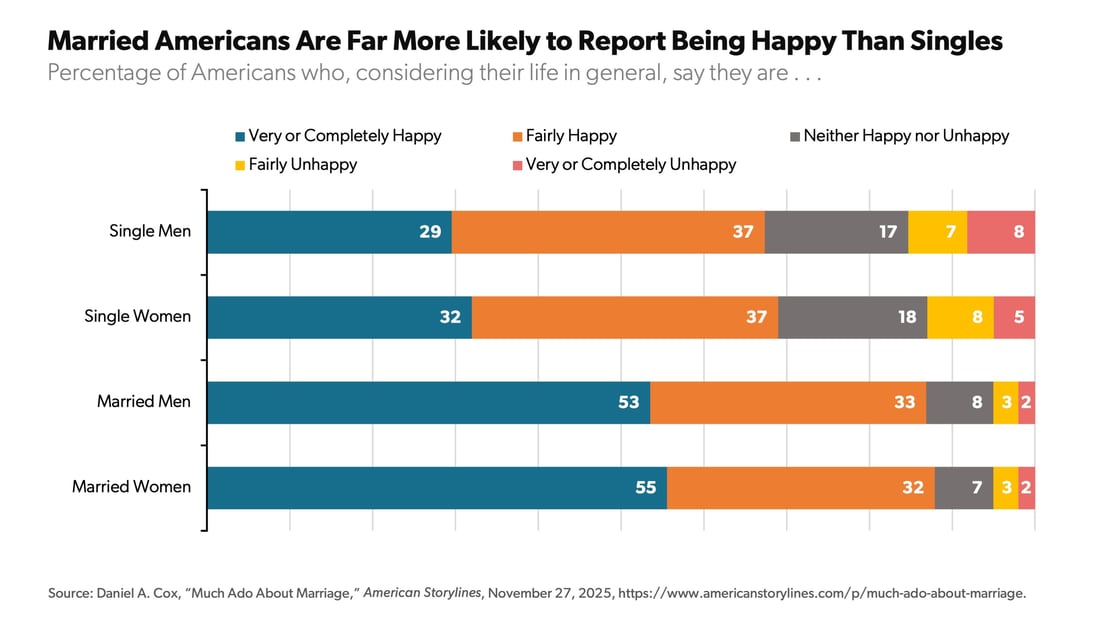
Pursuit of Personal Happiness: Cox explains that many popular social media posts suggest the happiest people are married men and single women and that married men, instead of adding to their partners’ happiness, siphon it from them. A 2025 survey found that 86 percent of married men and 87 percent of married women are happy with their lives, compared with 66 percent of single men and 69 percent of single women. The data suggest that the social, financial, and emotional benefits of marriage tend to outweigh the costs.
"The findings suggest that young adults are aware of the personal benefits of family later in life but fail to understand how this future result requires present-day investments."
Topline: The One Big Beautiful Bill Act expands Pell Grants to cover short-term workforce programs, funding those that deliver strong economic outcomes. Using analysis of Texas community colleges, AEI’s Preston Cooper writes that while enrolling in a workforce program leads to an overall salary increase, the results vary significantly depending on the type of program.
Funding Selection: To qualify for Pell Grant funding, these short-term workforce programs (as short as 150 clock hours, or eight weeks) must ensure that graduates’ earnings three years after completion exceed 150 percent of the federal poverty line combined with the price of tuition. This accountability framework guarantees that only high-quality programs with successful outcomes for students receive federal funding.
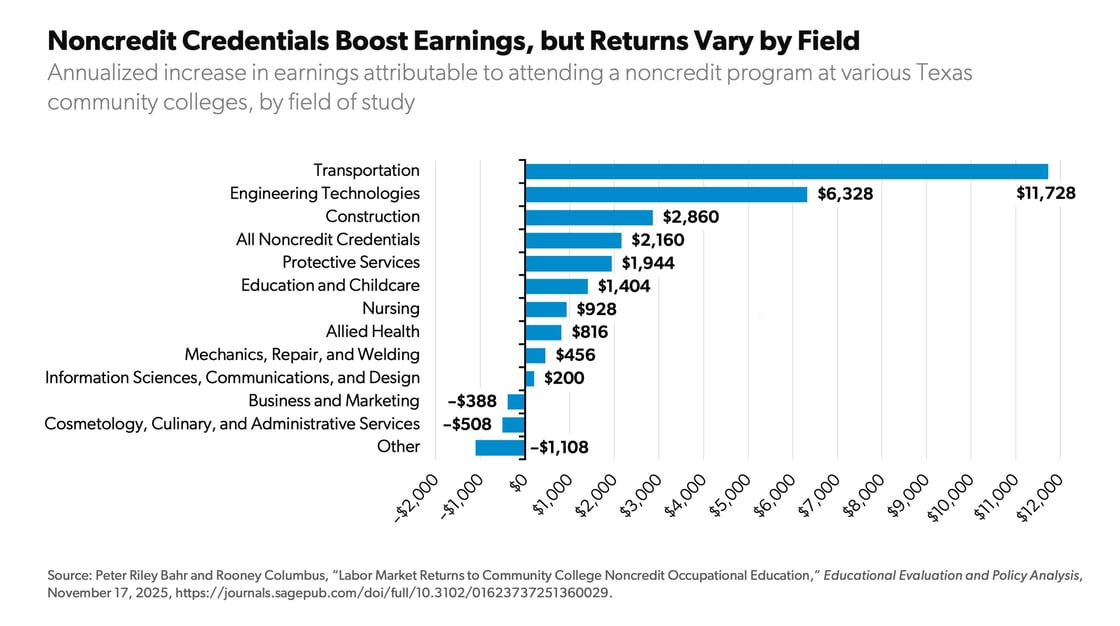
Salary Outcomes: In the Texas community college system, overall enrollment in a short-term, noncredit program led to an average $2,160 annualized increase in earnings, or about a 4 percent raise. The field of study significantly affects a salary increase, however programs in transportation led to an earnings increase of nearly $12,000, and engineering technologies programs led to a salary increase of $6,000. Meanwhile, changes in earnings for cosmetology, business, communications, and design graduates were statistically indistinguishable from zero.
"Short-term workforce education can be a pathway to higher wages, but the particular field of study matters. That’s why the accountability framework attached to Workforce Pell Grants will be so critical to the success of the program: it will ensure that federal funding only flows to courses of the highest quality.”
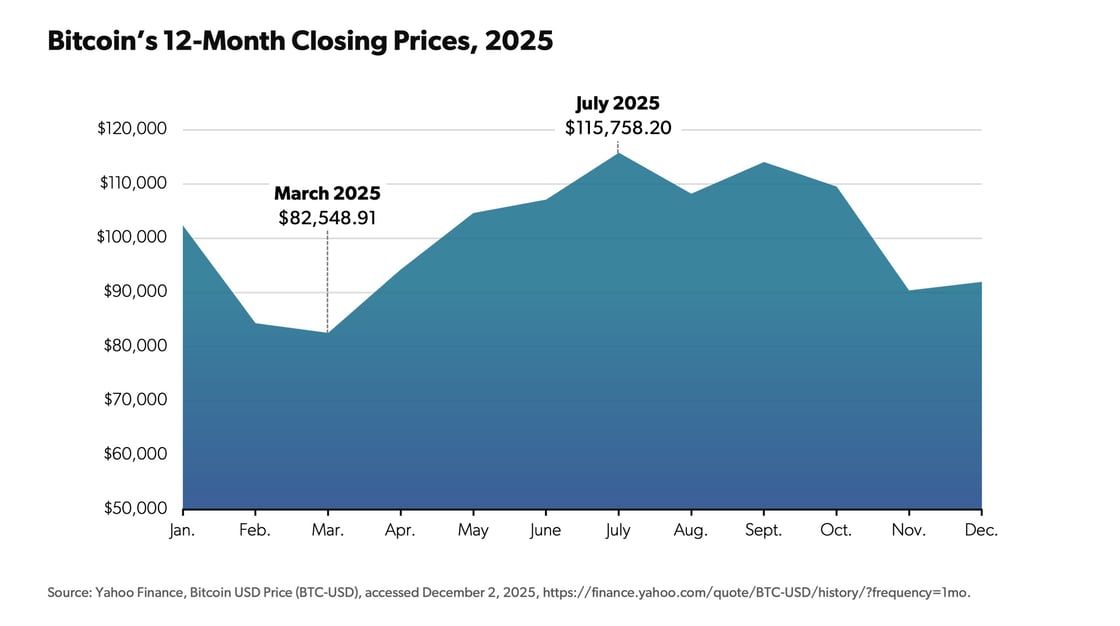
Topline: In the past two months, the cryptocurrency Bitcoin’s price dropped from $124,000 to $85,000. Bitcoin’s swift price decline of 30 percent from the beginning of October might be a forewarning about the artificial intelligence and private credit market bubbles, writes AEI’s Desmond Lachman.
Bitcoin’s Plummet: It took Bitcoin around two months to lose 30 percent of its value but around two years to double in price. Bitcoin is neither a store of value, a key property for an alternative money asset, nor a reliable safe-haven asset during financial market stress. The cryptocurrency’s swift fall has wiped out more than $1 trillion in household wealth. While that loss amounts to less than 1 percent of America’s total household wealth, it suggests that a bursting of the current artificial intelligence or private credit market bubble would be swift and brutal.
Indicator for AI: Lachman warns that both artificial intelligence and private credit have assumed important roles in the economy, which means a bubble burst in either sector would have a widespread impact. The “Magnificent Seven” companies—Alphabet, Amazon, Apple, Meta Platforms, Microsoft, Nvidia, and Tesla—make up 35 percent of the S&P 500’s total value, and AI investment accounts for around half of GDP growth in the past few quarters. The private credit market is also closely linked to the rest of the financial system.
"The least that the Fed can do is to stop inflating the bubble with an unduly easy monetary policy stance. When it meets next week, the Federal Reserve Open Market Committee might want to take the current state of the financial markets into account before unduly cutting interest rates.”