|


In today’s newsletter:
The UK-EU reset
What the GDP figures really mean
Are universities dying?
Should we be worried by declining birth rates?
and more….
Earlier this week, the United Kingdom agreed to a 'reset' in relations with the European Union. There are various aspects to the deal, including on fish, defence, and airport passport e-gates. But the primary focus here will be the decision to align on food standards and the implications for innovation (the 'Common Sanitary and Phytosanitary Area’).
The argument for regulatory alignment on food is to reduce red tape and the associated trade friction with the EU. This is a commendable goal, as it saves consumers money at the supermarket and makes it less costly for producers to sell into the European market. Even if, as trade expert Catherine McBride argues, the cost savings will be minimal, it is essential to recognise this benefit.
But any benefit must be weighed against the costs, both the loss of sovereignty and the practical implications for British farmers and consumers.
The deal means that all UK foods, whether imported, exported or produced domestically, will have to follow EU rules. The UK will also be required to dynamically align, that is, update our rules to mirror the EU's changes over time. For the pleasure of following the EU’s rules, we will have to make a financial contribution.
The UK will have a consultative say in the early stages of changes, but no ability to veto any changes. This creates a significant democratic deficit, even worse than being a member of the EU – when at least the UK had a vote in the various legislative and rule-creation processes.
Then there are the practical implications. For the most part, the UK has not taken up opportunities to diverge from the EU. But that's not entirely the case. There are now 36 pesticides allowed in the UK that are banned in the EU. It is likely that all of these will now have to be banned, including six that were approved after Brexit.
Even more significantly, the UK has already diverged on gene editing rules, but this is expected to have to be reversed before it fully comes into effect. Gene editing enables the cultivation of higher-quality produce on less land, using less water and fewer pesticides. The NFU has warned that the UK is at risk of becoming a 'rule taker without any ability to influence those rules' and losing its ability to lead the world in gene editing. The EU is pursuing similar reforms, but they are at least a few years to a decade away, holding back UK adoption.
Then there are the opportunities that have now been lost. A few years ago, I wrote a paper for the IEA on how cultivated meat is being held back by cumbersome 'novel food' regulations retained since leaving the EU. Efforts to improve this process and attract an emerging industry with significant environmental benefits will now be hindered, as the UK will be forced to continue following EU rules. It's a similar story for GMOs, where unscientific rules will continue to make it almost impossible to get approvals. It’s the same for the prospect of a comprehensive trade deal with the US, which now appears less likely if the UK cannot change domestic rules.
Brexit presented Britain with the ability to 'take back control,' nothing more or less. There were, and still are, opportunities to cut red tape in a way that encourages enterprise, innovation, and a better quality of life. At least for now, one of the most significant has been removed.
Matthew Lesh
Public Policy Fellow
P.S. The best way to never miss out on IEA work, get access to exclusive content, and support our research and educational programmes is to become a paid IEA Insider. For a limited time only, new paid subscribers will receive a copy of an IEA book of your choice for free.
Offer ends on the 31st of May!
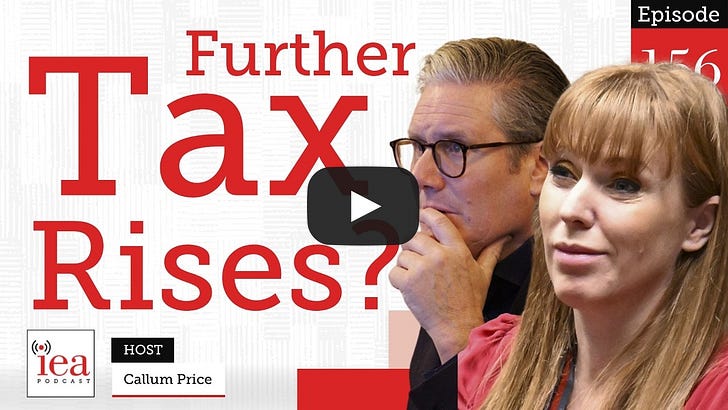
IEA Podcast: Director of Communications Callum Price, Managing Editor Daniel Freeman, and Editorial Director Kristian Niemietz discuss President Trump’s deficit-funded tax cuts bill, Angela Rayner’s call for UK tax increases, and the problems posed by universal benefits and middle-class welfare, IEA YouTube
Economy makes flying start to 2025, but more turbulence ahead
Responding to the latest GDP figures Julian Jessop, Economics Fellow at the Institute of Economic Affairs, said:
The 0.7% growth in the UK economy in the first quarter is a welcome bounce back from the weakness in the second half of 2024, but still little to cheer.
The positive headlines should at least help to lift consumer and business confidence and trigger a wave of upward revision to growth forecasts for 2025. The fading fears of a global trade war mean that the risks are now more evenly balanced too.
Nonetheless, there is no shortage of caveats.
For a start, growth of 0.7% is still slower than the 0.9% reported in the same quarter of last year, and there are doubts over the quality of the seasonal adjustments.
Moreover, Q1's 0.7% growth was flattered by a 5.9% jump in business investment, which appears to be at least partly due to spending brought forward ahead of Trump's tariffs. Consumer spending rose by just 0.2%, despite the gains in real incomes.
Most importantly, these figures cover a period before the big jumps in employment costs in April. Surveys of private businesses suggest that these cost increases hit activity hard and that many more job losses are coming.
Businesses also continue to struggle under the weight of high energy costs and more red tape.
In short, the flying start to 2025 is likely to be as good as it gets.
News and Views
Atlas Network Europe Liberty Forum 2025
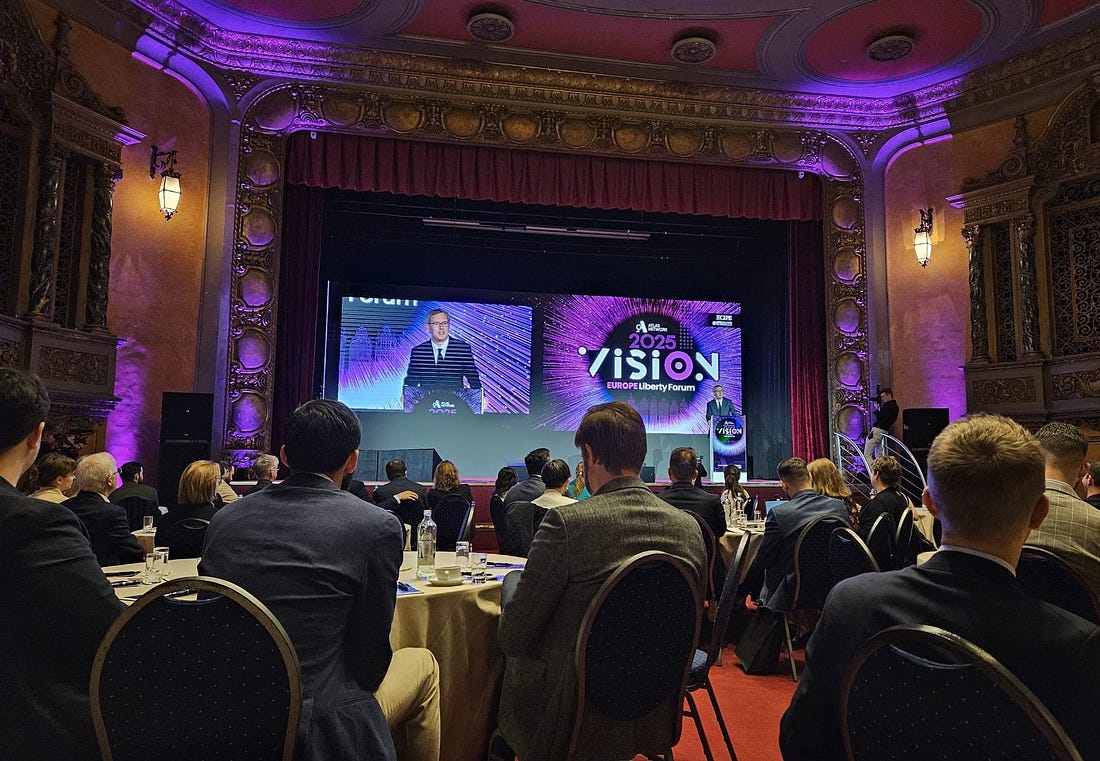 |
This week, EPICENTER co-hosted the Atlas Network Europe Liberty Forum in Brussels, bringing together freedom advocates, leaders, and innovators from across the continent. Tom Clougherty gave an opening ‘Cornerstone’ talk, outlining his view of what the liberty movement should start doing, stop doing, and continue doing in 2025. Adam Bartha represented EPICENTER as a finalist for the Europe Liberty Award; their pan-European project to improve economic competitiveness finished as a runner-up.
The death of the university may soon be upon us. Good riddance, Professor Len Shackleton, The Telegraph
Our higher education system has been in crisis for ages – excessive student debt, universities in financial Queer Street, excessive dependence on foreign students, rampant wokeism, degrees in silly subjects, trivial research projects – it’s a familiar story.
Somehow, it all trundles along, aided by vested interests and politicians who kick as many problems as possible into the long grass. But now technology is bringing a new threat to academic business-as-usual – in the form of AI.
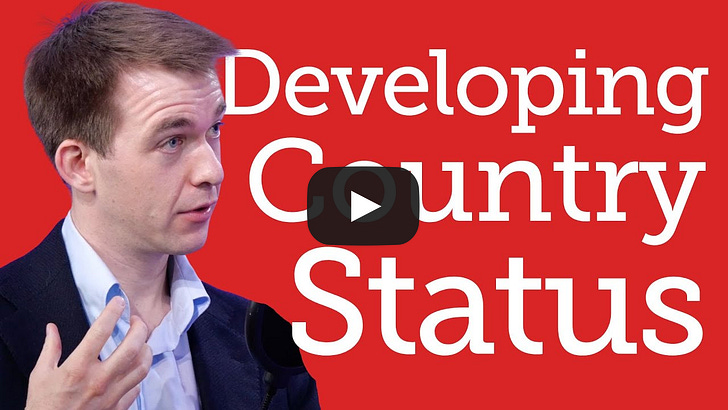
Britain's 15-Years of Stagnation & What to Do, Executive Director Tom Clougherty interviews Sam Bowman, IEA YouTube
Energy bill update as UK households could face ‘£200m hike’, Energy Analyst Andy Mayer quoted in The Express
Energy analyst Andy Mayer from the Institute of Economic Affairs thinktank said: “The smarter strategy would be to retain control of our own carbon policy and cut it drastically to compete with the EU, encouraging jobs and growth, including in low carbon technologies also impacted by high energy prices.”
The Western Population Crisis, Managing Editor Daniel Freeman interviews Lyman Stone, IEA YouTube
Is it time for a wealth tax in the UK?, Yahoo News
the Institute of Economic Affairs (IEA), have argued that this 2% tax model could even result possible exodus of wealthy individuals and capital from the UK.
Tories must ‘get moving’ on new policies or face crisis, says Robert Jenrick, The Shadow Justice Secretary’s remarks at an IEA event this week feature in The Guardian

You’re currently a free subscriber to Insider. For the full experience, upgrade your subscription.
Paid subscribers support the IEA's charitable mission and receive special invites to exclusive events, including the thought-provoking IEA Book Club.
We are offering all new subscribers a special offer. For a limited time only, you will receive 15% off and a complimentary copy of Dr Stephen Davies’ latest book, Apocalypse Next: The Economics of Global Catastrophic Risks.
| ||||||||||