Developers need more certainty if housing market to rebound for middle earners |
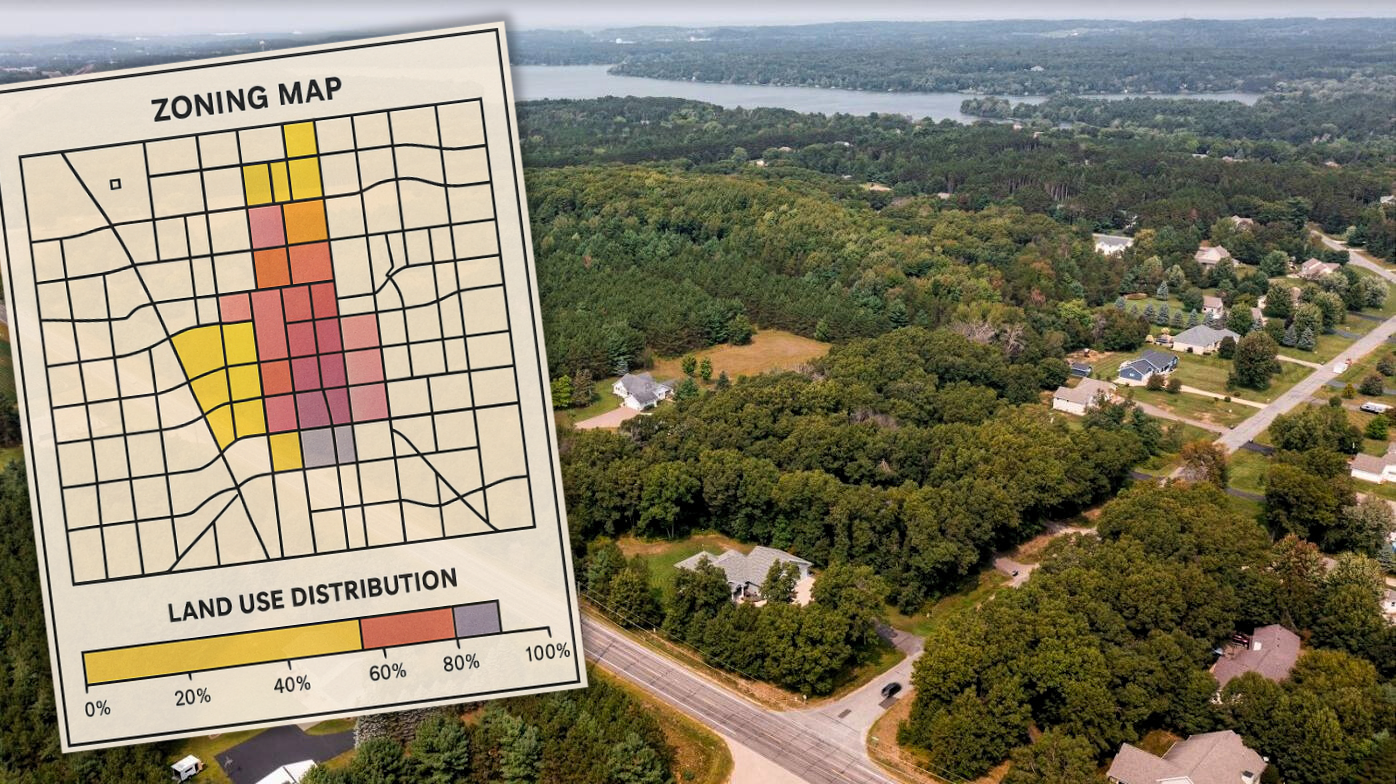
The plan for Whitetail Woods in Altoona looks like the future in fast-growing Eau Claire County.
Ground will be broken before the end of this year for a senior living center. Over the next decade, 114 duplexes, four multifamily apartment buildings and 54 single-family homes are expected to be built and occupied on 64 acres of what was farmland just a few years ago.
Whitetail Woods is a lesson in what it takes to plan for and deliver much needed housing in a part of the state that is becoming more city and less country. The story in Altoona is a familiar one in a state that needs 140,000 housing units now and 230,000 by 2030, according to a Forward Analytics study. |
In Wisconsin and neighboring states, only 16 percent of violent crimes result in arrest |
An analysis of federal data reveals that only 16 percent of violent crimes in Wisconsin’s region of the country result in an arrest of a suspect, and 4 percent of property crimes result in an arrest.
This may seem at odds with the story of crime in America: In 1991, the nation saw a peak in crime, but since then, reported violent crimes have decreased by more than a quarter and property crimes by nearly half nationwide. Wisconsin differs in seeing an increase in the number of violent crimes reported since then, but it has enjoyed a drastic decline in property crime over the period.
However, since the 1990s, the nation has seen a decline in the percentage of reported crimes that result in an arrest. This, combined with the fact that the majority of crimes go unreported to authorities, has resulted in an increasing portion of crimes that never lead to an arrest. This underappreciated fact means that justice is far from ensured and, in some place, rare in the United States. |
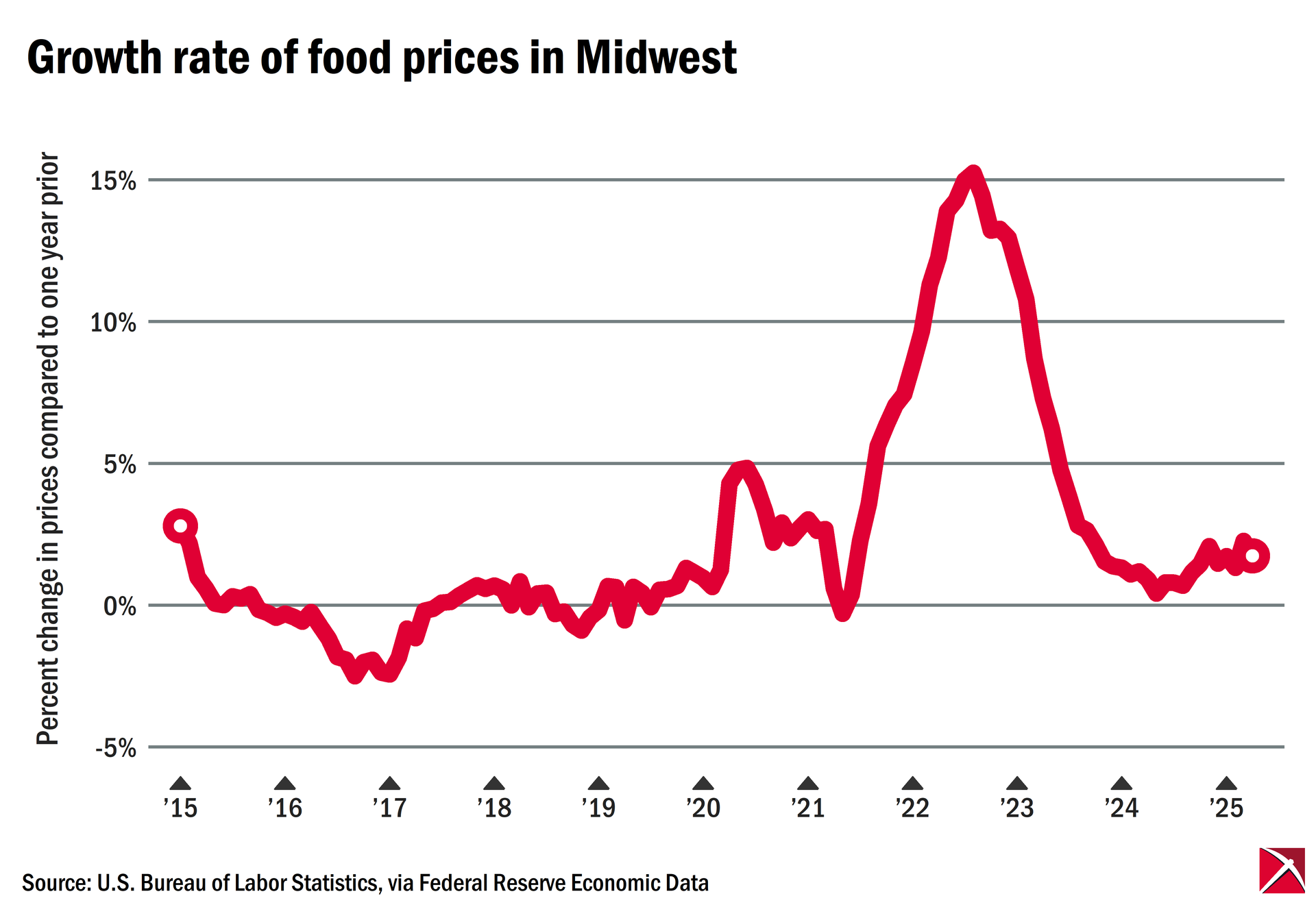
Food prices in the Midwest have grown 30 percent over the past decade, driven mostly by the explosive price inflation that occurred in 2021 and 2022, official statistics show. Food price inflation has been slower since then, and the inflation rate is below 2% in most recent months.
The graph above depicts the change in the price of groceries — “food at home,” as the Bureau of Labor Statistics terms it — for consumers in the Midwest. The graph shows for each month the year-over-year percentage change in the grocery portion of the regional Consumer Price Index — that is, the rate of inflation for food.
|
In honor of Memorial Day, we reach into the archives for a powerful story of fatherhood, family and the greatest generation. “My dad at war” was originally published in the August 2013 edition of Wisconsin Interest magazine. |
Stumbling on a long-ago photo, I saw an America that no longer exists |
This past Memorial Day, I happened upon a large batch of photographs from World War II posted on The Atlantic website. There were hundreds in various categories with titles like “Pearl Harbor,” “The Allied Invasion of Europe” and “The Fall of Imperial Japan.”
Among some of the famous images of the war were many I hadn’t seen before. These were not the iconic photographs that appeared in Life magazine or in newspapers across the country. These were pictures that an editor looked at once before moving on. They were ordinary pictures, almost snapshots of the war.
As I scrolled through the category called “The Fall of Nazi Germany,” I stopped at image number 23. The caption reads: “Men of the American 7th Army pour through a breach in the Siegfried Line defenses on their way to Karlsruhe, Germany, on March 27, 1945, which lies on the road to Stuttgart.”
What caught my eye in this particular photo wasn’t the detailed picture of the Siegfried Line or even the composition. It was much more personal. There, in a jeep, looking straight at the camera was Capt. Sidney P. Kozak, my father. |
WCLO: Your Talk Show with Tim Bremel
Segment begins at 28:45 |
|
|
President Trump’s executive order to halt federal funding for public broadcasting will save taxpayers nearly $8.5 million annually in reduced federal outlays to public television and radio networks in Wisconsin alone. In Wisconsin, in addition to federal funds, at least another $8.6 million on average in annual state appropriations flow to Wisconsin Public Media. |
|
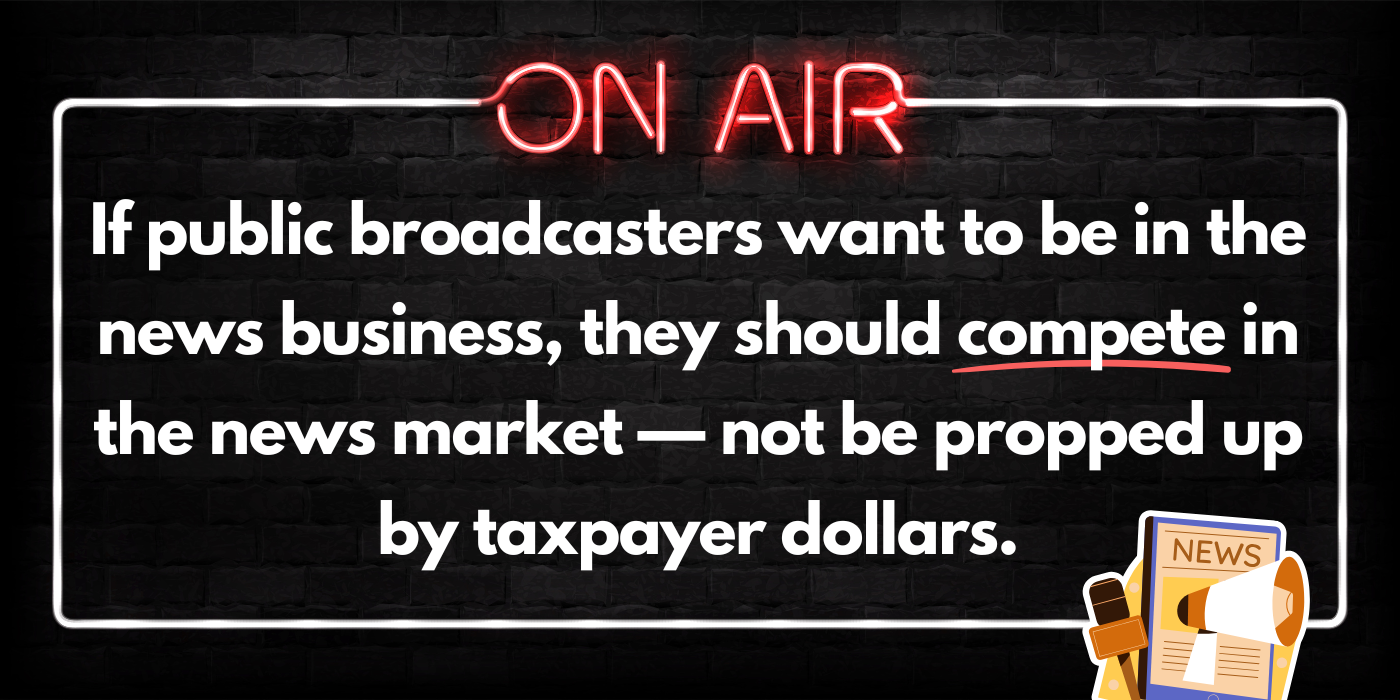
Public subsidies distort the market for news and entertainment, create unfair competition for privately funded media, and are a waste of tax dollars. Government should not be paying journalists and the people who manage and edit them, especially in a day and age when there are so many other media outlets and podcasts and social media platforms. |
|
|
Weekly survey: Which Wisconsin city boasts the largest and longest-running Memorial Day parade?
|
|
|
Previous survey question: |
Invest in the Badger Institute |
|
|
|
The Badger Institute has long been at the forefront of the fight for school choice, right to work, welfare reform, tax restructuring, limited government, civil society and so much more. If you appreciate the Institute’s legacy and want to support free markets, opportunity and prosperity, please consider donating today. Your support will help the Institute continue to advocate for conservative principles now and in generations to come.
|
|
|
The Institute never has, and never will, accept government funding. We gratefully welcome your online donation or email Mike Nichols, President. The Badger Institute is a 501(c)(3) tax-exempt nonprofit organization funded solely by the generosity of foundations, companies and individuals. |
|
|
Badger Institute
700 W. Virginia St., Suite 301
Milwaukee, WI 53204 |
|
|
|