|
Critical State: Postcolonialism on the Silver Screen
If you read just one thing … read about African postcolonial cinema!
|

| |||||||||||||||


 |
In Africa Is a Country, Fatoumata Bah writes on how African postcolonial cinema is a mirror, one that reveals “the limits of escape — whether through migration or personal defiance” and shows “the tensions between dreams and reality.”
Bah recounts cycles of migration from West Africa to Harlem, then writes, “The stories of migration in Harlem feel cyclical, and the narrative echoes through African cinema. The likes of Ousmane Sembène and Djibril Diop Mambéty immortalized these migration experiences on screen, offering audiences a glimpse into the aspirations and struggles of African migrants. … Cinema has constructed and reaffirmed the idea that migration sits at the intersection of human suffering and salvation.”
Traditionally, African cinema has looked at the migration journey and the “challenges of integrating” into a new place. But “since the early 2000s, there has been a noticeable shift in focus towards the experiences of those left behind in their home countries.”
Bah continues, “This shift brings forth a new perspective: the impact on the families and communities that remain when individuals migrate.”
Bah writes that African cinema reminds us that narratives are written and then written again, “not only on screen but in the streets of Harlem.”
If You Read One More Thing: A Nation of Migrants?
In Notes From Poland, Daniel Tiles argues that Poland is already a nation of mass migration, even if politicians are wary to acknowledge it.
“In 2023, Poland issued 642,789 first residence permits to immigrants from outside the EU. That was more than any other member state — ahead of Germany (586,144), Spain (548,697), Italy (389,542), and France (335,074),” Tiles writes, adding that this wasn’t an anomaly: “Poland has issued the bloc’s most permits for the last seven years running. For a couple of years before that, it was second only to the UK, which has since left the EU.” And this mostly took place during the reign of the rightwing Law and Justice Party (PiS), which was in power from 2015 to 2023. Tiles adds a caveat, which is that “while PiS’s rhetoric was aimed largely at the alleged threat posed by migrants from the Middle East and Africa, the vast majority of those who have arrived in Poland are white and European…However, the numbers coming from beyond Europe have also been rising rapidly.”
Tiles warns against PiS’s misleading framing, encouraging migration while in power and scaremongering now, in the opposition. And the current ruling party has, he says, also used migration as a political weapon. Tiles concludes that it would be for the best “if the country’s two leading parties stopped using the issue as a means to attack and outbid one another, and instead took the opportunity to formulate a migration policy.”
The US Elections Around the World
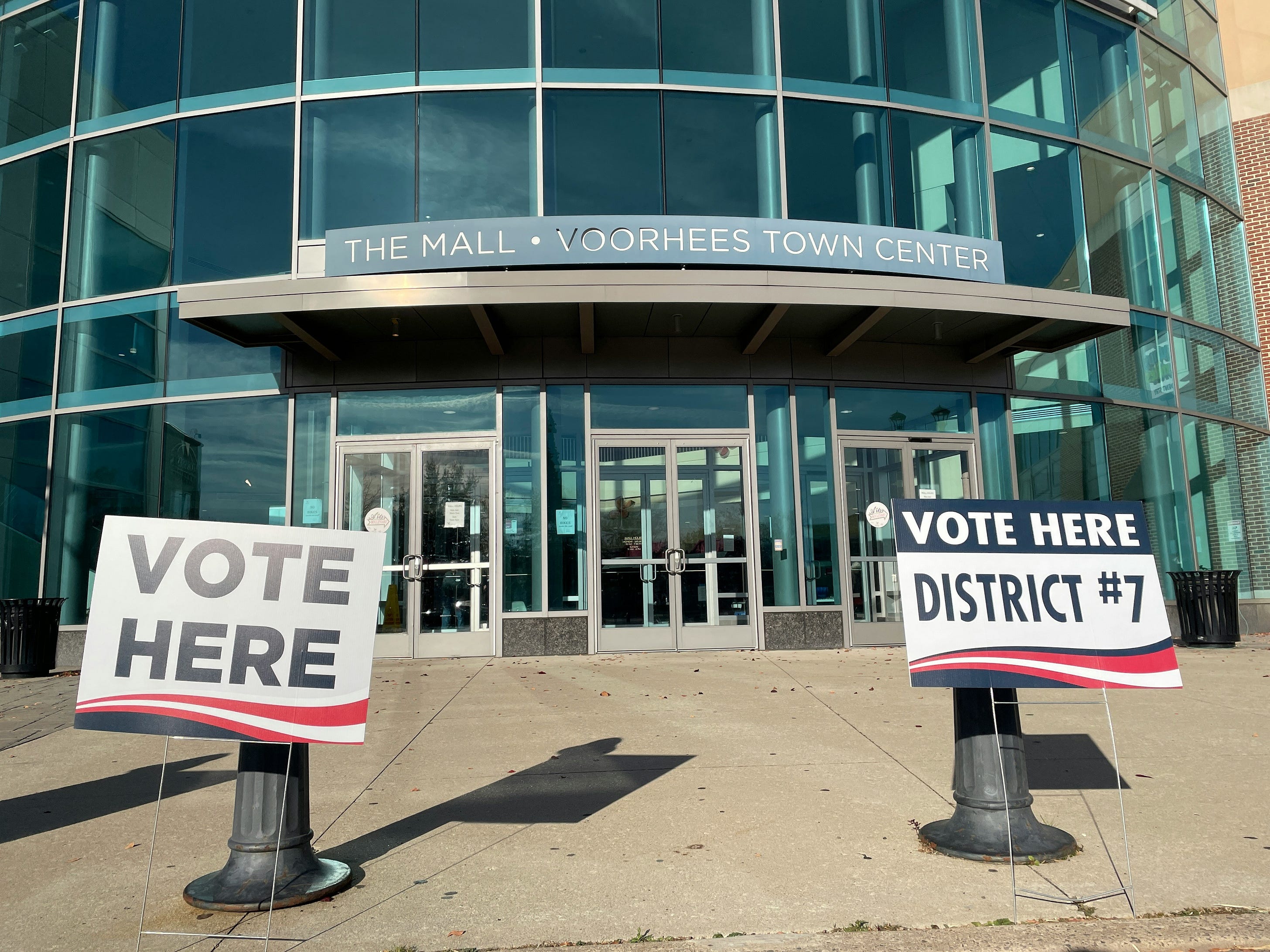 |
In the Dial, 12 writers around the world look at the stakes of the US election and offer the view from wherever they are.
As a brief introduction puts it, “The US presidential election is decided by American citizens in a handful of states, but its outcome reverberates internationally: the new president will have the power to shape trade, migration, security, and rising authoritarianism across the world, as well as the wars in Gaza and Ukraine. The race is therefore a global event, the subject of countless newspaper articles, debates, and calculations.”
Highlights include a dispatch from Hungary. “The Orbán government hopes that a Trump victory will help it break out of its current isolation in the West,” that dispatch notes. “Relations between Hungary and the US are at a historic low, and a Democrat victory would do little to fix that. But it is also unclear how much Orbán’s and Trump’s ideas of international politics actually align.” Another comes from India. “So far, Modi — who was badly bruised in his own election this year, winning by only a slim margin — has steered clear of showing support for Trump,” the piece explains. “The US presidential race is neck and neck and putting his weight behind a losing candidate could affect ties between the two largest democracies in the world.”
Deep Dive: Gender Party
In a new paper in Southern European Society and Politics, authors Ana Catalano Weeks, Paloma Caravantes, Ana Espirito-Santo, Emanuela Lombardo, Maria Stratigaki, and Sami Gul look at when political parties pay attention to gender-related political interests, and how they determine their positions. The authors argue that “progress in gender equality commitments is an essential component of democratization, and backsliding in these indicates democratic decay.”
In order to do this, they took party manifestos from Greece, Spain, and Portugal, all of which, on top of enduring economic crises, “offer similar histories of democratization, culture, and geography" over recent decades and coded data. They were looking at “the role of party ideology” and “critical junctures in the political context.”
The transition to democracy was an important turning point for gender equality in these countries. Europeanization was important, too, though in different ways: it was an important force in the direction of democratization and equality, but “also opened the way for backsliding in gender equality policies due to the severe neoliberal austerity measures that were implemented in the Eurozone in response to the 2008 economic crisis.”
They focused on party attention to and positions on “gender equality, violence against women, work-family issues, reproductive issues, and sexuality.” The paper also tracked attention to gender-related interests and positions in these countries over time and also consider how party families evolved, paying particular attention to responses to economic recession and the rise of far-right parties. They also used structural topic models in their assessment.
The authors found left-wing (social democratic, communist, and left libertarian) parties gave more attention to gender-related issues than others. They also found that “far-right parties also give significant attention to some interests and stand out for traditional positions.”
However, they noted that "far-right electoral success" did not determine “party attention and positions on gender-related issues," although an exception is Spain, where they found “democratic adversarial responses” to the far right, increasing attention to issues of reproductive rights.
This, they say, is because the Spanish left manages to present itself as the main force against the far-right. Economic recession also further decreased attention given to gender-related issues.
For future research, the authors suggest looking at whether manifestos actually translate into policy. They also write that future research could broaden the scope by looking at other countries, like by comparing democratization and backsliding and the impact of economic hardship in Southern and Eastern Europe. They also think an extension of their work could be to look at “the conditions under which gender backlash spurs parties, and women within parties especially, to engage more politically and claim back rights.”
Show Us the Receipts
Adam Ratzlaff unpacked what US elections mean for Latin America and the Caribbean, writing, “Neither the Trump nor Harris campaign have presented a clear strategy as it relates to the Western Hemisphere. Both campaign websites only mention the region in relation to immigration. Instead, analysts have had to rely on those that have worked with them in the past — as well as their past actions in office — to detail their approach to the region. While there is overlap in their approaches, how these policies are addressed and framed will have serious implications for the future of inter-American affairs.”
Rebecca Rosman reported on Nobuko Oshiro, who is 77 years old — and the lone female karate master in Okinawa, an inspiration to students worldwide. Karate was invented in Okinawa, and Oshiro began learning it when she was already 27. Oshiro, Rosman wrote, knows how to work with students of all ages, and “said that despite her achievements, the most important title she’s received in karate is that of sensei, or teacher.” She also shared that she prioritizes kindness because teachers were not always kind to her. She estimates that she’s taught 6,000 students around the world.
Lydia Tomkiw and Emily Johnson looked at Ukrainians who watched the US presidential election. “Americans aren’t the only ones obsessively watching every move that Vice President Kamala Harris and former President Donald Trump make. Ukrainians are following US news almost as closely as their own because what Americans decide could quite literally be a matter of life and death for them. … The US is the number one supplier of military aid to Ukraine. During the presidential debate in September, Harris touted her record of support for Ukraine as a member of the Biden administration, while Trump notably refused to say that he hoped Ukraine would win the war. With Russia advancing along several key frontlines and winter around the corner, Ukrainians feel a sense of urgency that more must be done to win.”
Well-Played
 |
Do you hear the people stress?
And to all a good night.
Sufjan gave up.
Staggering home from the New Deal Club.
The Pope chooses an NFL team.
Thank you, Grover.
Critical State is written by Emily Tamkin with Inkstick Media.
The World is a weekday public radio show and podcast on global issues, news, and insights from PRX and GBH.
With an online magazine and podcast featuring a diversity of expert voices, Inkstick Media is “foreign policy for the rest of us.”
Critical State is made possible in part by the Carnegie Corporation of New York.
You're currently a free subscriber to Inkstick’s Substack. For the full experience, upgrade your subscription.
| ||||||||||