|
Fisherman Spotlight
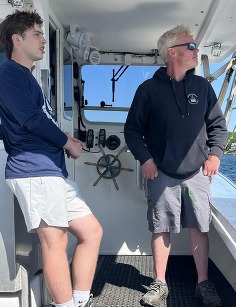
David Vintinner, a first-generation lobsterman, moved to Chebeague Island with his mother and sister when he was just 2 years old. David’s uncle was a deckhand, so David slept over at his uncle’s often hoping he’d have the chance to get up in the morning and join him. At 7 years-old, he was able to join his uncle for the first time! David filled bait bags all day long and before he knew it, he was 12 years-old and worked as a seasonal deckhand hauling 3 days a week with another island kid. David stated, “You either mowed lawns or worked on a boat. They were the only summer jobs on the island.”
Over the years, David worked for many lobstermen whom he looked up to, including Jason Hamilton and Gary Ross. When he finished high school, David started lobstering and scalloping year-round on Andy Todd’s boat. Todd gave David a bit of advice that he still holds close, “You can’t catch someone else’s lobsters, so do your own thing.”
David's brother-in-law, Dave Horner, offered David a deckhand position on his ground fishing boat, F/V Joann & Holly. Horner gave David an old Corson with a 30hp outboard so he could try his hand at lobstering. The following summer, David ended up purchasing his first lobster boat out of Stonington – a 30’ Repco. A few years later, David purchased a 37’ Repco.
|
|
Although the memories are abundant, he recalls cleaning the boat after a day of hauling in Casco Bay – David found a Native American arrowhead laying on deck; he figured it must have come up in one of the traps. About a year later, he found a shark tooth on deck. He laughs at those that think sharks just started showing up in Casco Bay, as he found that shark tooth on deck nearly 20 years ago! He still keeps the arrowhead and the shark tooth with him on his boat.
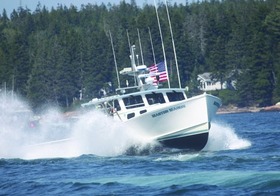
When David was just shy of his 30th birthday, he purchased his third boat – a 43’ Daniel Head Novi, which he used year-round to lobster and scallop. David recently purchased another boat from Stonington, a 42’ Southshore. When asked why he made the switch, he replied, “I thought I wanted to downsize, but soon realized that I really just wanted to go faster. I have been going 8-9 knots for 17 years, and that’s long enough!”
When asked about a favorite memory, David shared, “One of my fondest memories was just a few years ago. It was Labor Day Weekend, and I looked up and saw my teenage son in his Eastern Norton skiff hauling singles, with my wife as his deckhand, off the east end of Chebeague. I had been his deckhand one day a week all summer hauling singles. He finally was confident enough to go out with his mother. I was proud.”
Today, David’s son hauls singles by himself with his student license. When asked if his son, Mason, will be a second-generation lobsterman David replied, “I know he loves being out on the water and he is trying to figure out how that will fit into his future, especially with the changes and uncertainty in the industry.”
|
|
Lobster Sea Sampling Program Expansion
The DMR sea sampling program places trained observers onto commercial lobster boats for a day of biological data collection. Sea samplers schedule trips by contacting volunteer lobstermen that will be actively fishing the following day or week. Compiling biological data over time enables the DMR to see spatial, temporal and biological trends in the near shore lobster fishery. In order to capture inshore vs. offshore lobster population dynamics, as well as spatial and temporal trends, each month samplers specifically target trips by port, zone, and distance from shore.
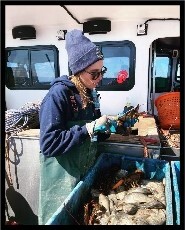
For every trap that comes aboard, the sampler measures carapace length, sex, cull status, v-notch condition (if present), egg development stage, molt status, and presence of shell disease. They also record any finfish bycatch. This is done with a voice recorder so the samplers’ hands are free to move quickly through the lobsters.
|
In response to feedback from the lobster industry regarding the population of lobsters inshore vs. offshore, the DMR is expanding the Lobster Sea Sampling Program. In order to expand the sampling program to specifically target both inshore and offshore trips, document observations of lobsters, and answer questions related to lobster population dynamics, we will need increased industry participation!
If you are interested in having a sea sampler out with you for the day, or would like more information about the Lobster Sea Sampling Program, please text, call or email:
|
General Info
Need Assistance from the Landings Program?
Landings Program staff are available by phone: (207) 633-9414, or by email: [email protected] Monday-Friday from 8:30am-4:00pm
Appointments for in-person office assistance need to be scheduled with the Landings Program in advance. Walk-ins are not accepted at this time. To schedule an in-person appointment, please contact Landings at (207) 633-9414 for a date & time. The Landings Program office is located at: 194 McKown Point Rd, West Boothbay Harbor, ME 04575.
Need Assistance from the Licensing Dept?
Licensing staff are available by phone:
(207) 624-6550 option 2, or by email: [email protected] Monday-Friday from 8:30am-4:00pm. Harvesters can visit the Licensing Dept. for
in-person help Monday, Tuesday, or Thursday. Wednesday & Fridays are closed for in-person help; however, you can call or leave license applications in the drop-box outside. The Licensing Dept. office is located in the
Marquardt Building at:
32 Blossom Ln, Augusta, ME 04330.
|
|
Landings Program Updates
License Renewal is Coming up
- With the new year just 2 months away, please be sure that you are up to date on your landings reports prior to renewing your fishing license(s) for 2025. You will not be able to renew your license(s) if you have missing landings reports.
- To see if you are compliant, log in to Maine LEEDS and select “View Reporting Compliance Status.” Instructions on how to view your reporting compliance status and report landings in LEEDS can be found here. User manuals for reporting landings in VESL can be found here.
-
VESL users – your compliance status is still located in Maine LEEDS. The “Compliance Summary” located on the “Create Did Not Fish” page in VESL does not reflect your compliance. Please log in to Maine LEEDS to view your compliance status. Please contact the Landings Program with any questions.
Do you have a new mailing address, phone number or email?
-
If your mailing address, phone number, or email address has changed, please contact Licensing (207-624-6550, option 2) to ensure that your contact information is updated.
- You can also update this information by logging into your Maine LEEDS account and clicking "Update My Contact Info".
Do you have a new vessel?
- If you have acquired a new boat or obtained a new federal permit, please call Licensing (207-624-6550, option 2) to ensure the boat/permit is associated with your licenses. If you use VESL to report your landings, please contact Landings (207-633-9414) to update your boat in the app.
Do you need to submit a request for Landings Data?
- If you need access to landings data that has been submitted to the DMR for yourself, your business, or for research purposes you will need to complete this Landings Data Request Form and follow the instructions for submitting a notarized data release form.
- If you have questions about how to complete the Landings Data Request Form, please contact the Landings Program at (207) 633-9414.
|
|
What's this critter on my lobster?!
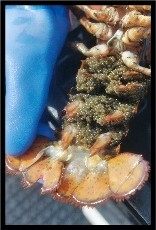
This summer, DMR staff received several questions about a strange creature attached to lobsters. This creature is none other than the goose barnacle (Poecilasma inqequilaterale, if you want to get technical) that attaches to and lives specifically on crabs and lobsters in deeper water. While it looks odd, it isn’t suspected to be unhealthy to the lobster unless there are many of them attached that interrupt the molting process.
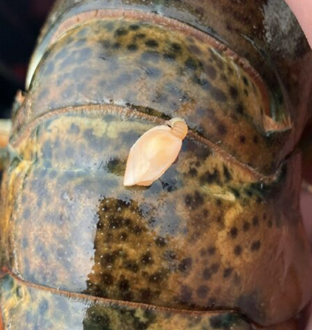
After digging into it a little bit more and discussing with the barnacle expert Dr. Jim Carlton, we noted a few interesting things: 1) in scientific papers, they’re only noted as far north as Martha’s Vineyard; 2) while others have seen them in the Gulf of Maine, they’re generally seen in deep water, not shallow (~90 ft) like they were seen this year; and 3) the people sending us these observations are well familiar with what lives on lobsters, and this was the first time they’d seen them, ever.
|
We would like to update our understanding of this barnacle by writing a new paper, but we need your help! If you have seen it while out fishing and wish to contribute, please email our Lobster Research Biologist, Dr. Heather Glon, at [email protected] with a photo, date seen, approximate location, depth, and your vessel name. If you’re taking a new photo, please put the gauge beside the lobster as a scale.
Photo credit: Elizabeth Camp
|
|
Maine Innovative Gear Library Participants Needed!
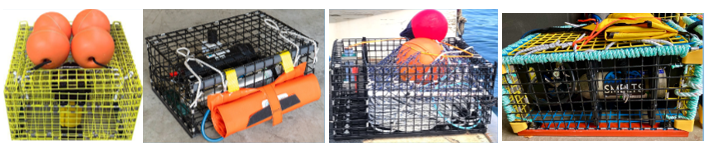
The Maine Innovative Gear Library (MIGL) is seeking fishermen interested in testing alternative gear technologies. The gear is provided at no cost, and participants are financially compensated for their time testing.
Alternative gear, also known as “on-demand” or “ropeless” gear, is a tool to provide fishermen the opportunity to fish in areas closed to traditional fishing gear with vertical lines. The MIGL supports real-world testing of alternative gear by Maine fishermen to better understand the challenges and capabilities of these new technologies.
|
|
Given that future federal regulations may include additional areas closed to fishing with vertical lines in the Gulf of Maine, Maine fishermen’s participation in this gear testing is critically important to:
- Support the development of tools that will maintain access to future areas closed to fishing gear with vertical lines
- Ensure that legally-permitted alternative gear is affordable, works consistently, and has minimal impact on fishing operations
- Inform federal rulemaking processes and prevent federal approval of technology that has not been tested by Maine fishermen
|
|
Landings Reporting Information
Sea Urchin Reporting
-
Timeline: Traditional Harvest - Trip level reports must be submitted monthly by the 10th of month. Flexible Harvest - Daily trip level reports must be submitted electronically in LEEDS or VESL. Harvesters should choose "Carred" as the Catch Source and report the intended dealer. If the dealer changes, the trip report will require an edit.
-
Negative/Did Not Fish Reports: If you did not fish for sea urchin during a month that the fishery was open, you must submit a “negative” / “did not fish” report.
- Reporting Tips: Set Time refers to the average length of a single tow or dive. Disposition should always be "Sold to Dealer"
-
FOBS: The FOB you received replaces the Swipe Card and should be KEPT for future fishing seasons. Harvesters will not be sent a new FOB each year.
- Sea Urchin regulations are described in the Maine DMR Regulations Chapter 26.
Scallop Reporting
-
Timeline: Trip level reports must be submitted electronically in LEEDS, VESL, or NOAA FishOnline (federal permit holders) by 11:59PM Sunday for any landings occurring from Monday 12:01AM – Sunday 11:59PM.
-
Negative/Did Not Fish Reports: If you did not fish for scallops during a week that the fishery was open, you must submit a “negative” / “did not fish” report. If you fished under another fishery during that week, you must still file a negative report for scallop.
-
In-season Closures: If the local area/zone that you typically fish closes, but the overall fishery is still open you must still file a report for that week.
-
VESL Reporting: Select SEA scallop not BAY scallop for all scallop reports. Set Time refers to the average length of a single tow or dive.
- Scallop regulations are described in the Maine DMR Regulations Chapter 11.
Lobster Reporting
- Winter often means changes to gear configurations for harvesters who are shifting traps offshore. When reporting, it's important that gear configuration changes are reflected on your landings reports. This often looks like a decrease in the number of sets hauled each day, as well as a decrease in total # of buoys/endlines in the water.
- To view detailed instructions on completing lobster effort fields, click the applicable link: reporting in LEEDS, state reporting in VESL, federal reporting in VESL.
|
|
Click the links below to see detailed instructions & additional reporting tips: |
|
Maine LEEDS:
*Click here to view all LEEDS how-to manuals.
|
VESL App:
*Click here to view all VESL how-to manuals.
|
|
|
|
|