|
 |
Much ado about something…but what, exactly?
By all means, vote. But don’t pretend that it will make a difference—and don’t stop there!
|

| |||||||||||||||


The 2024 election culminates tomorrow—yet even though armies of writers have spilled no end of ink observing every step the corporate candidates have taken, some of the most important (and disturbing) elements of the process remain widely unobserved. Meanwhile, the most influential actions that voters can take involve grassroots actions well beyond the ballot box or polling station.
 |
Elections only matter if their results are respected
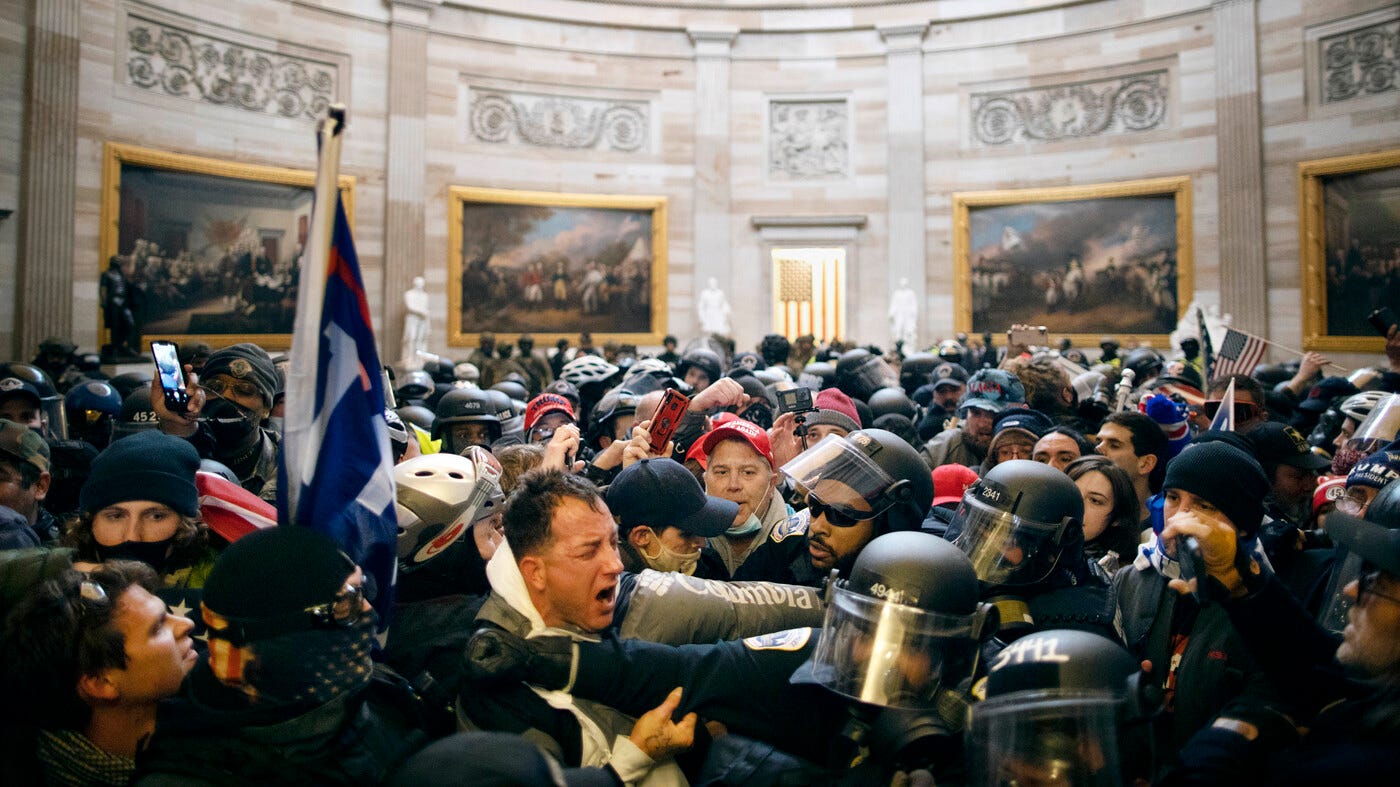
Despite the public discussion surrounding it, the election culminating tomorrow might not actually matter at all. Trump—who would be both the oldest person ever elected President if he wins, as well as the first convicted criminal to occupy the White House—has already begun calling the legitimacy of the process into question, which suggests that the results will be determined not on election day, nor even as the ballots are counted, but rather in courtrooms over the weeks following the election.
Nor is that anything new in this country. The pivotal election of 2000 was decided by the Supreme Court, which unconstitutionally abandoned settled law and the separation of powers to determine its own composition. That was the critical step that enabled the conservative cabal that now dominates jurisprudence in the United States. In the years since then, more observers have finally recognized the need for alarm in the wake of decisions undermining reproductive liberty and the independence of administrative agencies. But their alarm may have come too late.
Since at least 2010 (when the Supreme Court decided Citizens United), elections in the U.S. have been little more than contests to see which party could do more to raise money from corporate capital. The role of money in politics is entirely de-legitimating, even if we’re just looking at the electoral phase, and ignoring everything that happens afterward from corporate lobbying to poaching retired members of Congress and industrial capture of regulatory agencies.
Disinformation renders elections incoherent
Even if the election results are respected, and do not become the basis for another armed insurrection, the events preceding the election render it impossible to discern a coherent mandate from whatever the result may be.
The role of disinformation in this election cycle unhinges the election and its results from any modicum of principle, or a potential political mandate. With figures repeating lies about everything from the results of the 2020 election to the integrity of the 2024 process, the roles of immigrants and their communities, and the results of policy positions embraced by corporate candidates in the past, voters are being called on to discern not their preferences among articulated political visions, but rather flavors of culture, with little policy substance to back them. Each has been fueled by visions of reality distorted by professionals who bend it to serve them selves.
The voting process formally discriminates among voters
In addition, the electoral college is an anachronism that unapologetically disregards any pretense of democratic legitimacy. An election for the chief executive of a nation of 400 million people across 50 states can not justifiably be determined by the choices of perhaps a few hundred thousand voters in seven particular states, who have been made pivotal not only because of a quirk privileging their geographic jurisdiction, but also their preceding relative lack of interest in the process.
In an even more direct way than the machinations of billionaires, the electoral college represents a formal violation of the “one person, one vote” principle on which democracy is predicated. Put another way, the electoral college—even setting aside the disinformation and threats of violence surrounding the election—is enough to distinguish our political process from any modicum of democracy.
The axis of lawlessness
Finally, political theorists have long imagined that democracies favor peace and human rights, rather than imperialism and international belligerence. This view positions democracy as not only a set of procedural commitments, but also a substantive framework informed by the legacy of the Second World War.
Despite playing a crucial role in the Allied victory 75 years ago, the United States today actively undermines the principles it established. To international observers, this may be the most obvious reason to critique the self-congratulatory pretense among Americans that our country “leads the free world.” In fact, the U.S. in fact stands well outside the “free” world, having led an international assault on democracy and human rights around the planet for over 75 years.
In addition to weapons contracts handed out to every two-bit despot around the planet, accountability for torture offers an especially glaring and disturbing example. No one has ever been held accountable for an official policy under the Bush administration used by the CIA to justify crimes including torture, murder, and rape. At least hundreds (if not thousands, or more) detainees were tortured. When he was president, Obama chose to support secrecy by suppressing a report compiled by the Senate Judiciary Committee rather than hold CIA officials accountable for international human rights violations.
The United States has for decades openly flaunted international human rights. To the extent any rationale could justify our refusal to apply the law to our own corrupt leaders, it would be the lame and discredited principle that “might makes right.”
The same pattern of belligerence with impunity is apparent in the ongoing Israeli genocide in Gaza, which is enabled by not just Washington, but particularly a Democratic president who claims not to be a fascist, even while arming a military power shamelessly slaughtering civilians.
Democracy? Yeah, sure
People who pretend that elections in the U.S. have any legitimacy have probably not ever discovered what happens when a grassroots voice actually confronts power. Having dedicated six years of my life to liberating a congressional seat still held by an unapologetically corrupt oligarch with a leadership role in the Democratic Party, I’m quite grateful for the chance to observe Washington’s corruption from the sidelines.
The relationship between what passes for democracy in America and actual democracy is kind of like the relationship between the World Wrestling Federation and competitive wrestling. In both contexts, entertainment eclipses meaningful competition. Tragically, more Americans are able to see through the theater of wrestling than to recognize that the political process in the world’s richest and most powerful country is no less theatrical.
Paid subscribers can access an additional section exploring opportunities for grassroots activism, and 10 steps anyone can take to help hold Washington accountable...

Continue reading this post for free in the Substack app

| ||||||||||