|
 |
Budget Breakdown
With £40bn worth of new tax hikes, what does Wednesday's budget mean for the British economy?
|

| |||||||||||||||


The way I see it, the IEA has two important roles in public debate. The first is to apply sound economic thinking to current events, as a way to advance public understanding and influence future policymaking. This week’s Budget provided ample opportunities for that approach.
Take the £25bn increase in employer National Insurance contributions. This highlights two important principles of taxation. Firstly, the incidence of a tax does not necessarily fall on the person who pays it. Often, the real burden is shifted elsewhere. In this case, you may be taxing businesses, but what you are really doing is making employees more expensive. And since what matters to employers is not just wage costs but total employment costs (including taxes, pension contributions, and other benefits), the effect of higher payroll taxes is likely to be lower-than-otherwise wages – or fewer job opportunities – in the medium term. You can say you’re not taxing workers until you’re blue in the face; the economics of taxation tell a different story.
A second, related point is that taxes affect behaviour – which distorts the economy and often limits the amount of revenue that is raised. In this case, the Office for Budget Responsibility predicts the employer National Insurance hike will be passed through into lower wages, lower profits, and higher prices – which cancel out £9bn or so of the revenue increase. Add in higher costs in the public sector (tellingly, the government is increasing spending to offset higher payroll taxes) and about 60 percent of the ‘scorecard’ tax increase is gone before you even start.
It is not just employer National Insurance either. More than doubling the Stamp Duty Land Tax surcharge on second properties may seem like an easy fiscal win, but in reality it is bound to reduce transactions (impacting revenue) and suppress the supply of rental properties (driving up rents). On the other hand, allowing the (temporarily doubled) £250,000 stamp duty threshold to expire next year will likely lead to a mad dash to get purchases over the line.
Pre-Budget speculation about Capital Gains Tax seems to have led to an uptick in asset disposals, and in entrepreneurs fast-tracking their exit plans. Now that CGT rates have risen, you may see greater ‘lock-in’ effects with people holding on to assets they would otherwise sell, hoping that a future government will cut tax rates again. Then again, forewarning that the rate on assets eligible for Business Asset Disposal relief (essentially, the first £1m of lifetime entrepreneurial gains) will rise from 10 to 14 percent next year, and then to 18 percent the year after, will likely encourage more business owners to cash in early.
Time and again, we see economic decision-making being driven by tax policy. This is a very bad thing for our overall economic performance. (In fairness to the government, the changes announced on Inheritance Tax reliefs will reduce very significant distortions there – even as they have some other unfortunate side-effects.)
And that brings me to the IEA’s second – and perhaps even more important – role in public debate. Our ambition is always to go beyond the day-to-day; to look through the latest Westminster controversies and focus instead on the big ideas that matter in the long term. In this case, it is how you design a tax system that is as ‘neutral’ – and therefore as pro-growth – as possible. But of course the Budget also highlights other major issues of lasting importance: how do we eliminate barriers to economic growth, so that we are not condemned to another decade of stagnation? How do we reform public services, so that they don’t continue to consume more and produce less? How do we deal with the fact that the state is set to grow by five percentage points of GDP over the 2020s – even before the tidal wave of age-related spending liabilities hits us?
Expect to hear more from us on all these challenges in the months and years ahead.
Tom Clougherty
IEA Executive Director
P.S. The best way to support our vital research and educational programmes is to become a paid IEA Insider. For a limited time, new paid subscribers will receive a copy of Steve Davies’ new book Apocalypse Next: The Economics of Global Catastrophic Risks and a 15% discount.
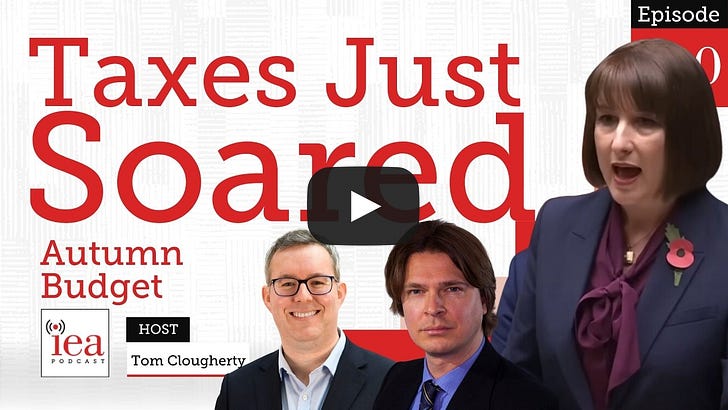
“This isn’t going to lead to growth”, Executive Director Tom Clougherty, Editorial Director Kristian Niemietz, and Managing Editor Daniel Freeman discuss the budget, IEA YouTube
Budget likely to hurt working people and do little for economic growth, IEA researchers suggest
 |
Commenting on the budget, Tom Clougherty, Executive Director at the IEA, said:
“The Government came into office promising to prioritise growth. But the reality of their first Budget – heavier burdens on business and more borrowing for public sector capital spending – does not inspire much confidence in their approach.
“Coming alongside an inflation-busting increase in the minimum wage and heavy-handed changes to employment law, higher employer National Insurance Contributions will be a bitter pill for firms to swallow. Businesses will see their costs rise and it will be workers who pay the price – in the form of lower wages, reduced benefits, and fewer job opportunities. The idea that this Budget does not increase taxes on workers is an economic fantasy.
“While rejecting an extension to the freeze on income tax and national insurance thresholds is welcome, it does not undo the damage elsewhere. They will still remain frozen for now, meaning the effects of fiscal drag will continue to eat into our pay cheques for the next 4 years.
“Meanwhile, the government is putting an awful lot of faith in its ability to choose and deliver public sector capital projects that deliver meaningful economic benefits. Few outside Whitehall will share their optimism. Greater emphasis on assessing the costs and benefits of capital spending is welcome, but a better approach altogether would have been to focus on eliminating barriers to investment by the private sector.
“Elsewhere, the worry is that Britain’s international competitiveness and economic dynamism are facing death by a thousand cuts. Individually, the measures taken on Capital Gains Tax, non-doms, and stamp duty might not make headlines. But taken together, they paint a sorry picture of the way things are going.
“Without a radical, reformist agenda – a focus on the fundamental causes of our economic malaise – this government faces the same fate as its immediate predecessors: getting stuck managing Britain’s relative decline, with no clear plan to break free of it.”
Commenting on the announcement that the minimum wage will rise by 6.7% in April, Professor Len Shackleton, Editorial and Research Fellow at the IEA, said:
“Labour has, as expected, substantially upped the minimum wage rates. This will affect the pay, directly or indirectly, of well over three million workers. This will add to the other costs imposed on employers either explicitly in the budget or implicitly as a result of new work rights. While it may not lead immediately to job losses, the extra pressure on smaller employers in particular is likely to send some to the wall in the medium term.
“The quite extraordinary increase in pay – 16% – for 18-20 year olds is part of the transition towards paying all adult workers the same minimum wage. It will make younger workers less attractive to employers and may well spark a rise in the youth unemployment rate as employers prefer older and more experienced recruits. It will certainly make considerably more difficult the task of bringing the large number of inactive young people into employment.
“In the longer term, basing pay not on the productivity which workers bring to the employer but on what bureaucrats consider to be their needs will lead employers to automate many jobs, to contract work out to the self-employed, or to switch production to other countries.”
Commenting on the tax changes to e-cigarettes, tobacco and beer, Dr Christopher Snowdon, Head of Lifestyle Economics at the IEA, said:
“A wealth of economic evidence shows that taxing e-cigarettes leads to more people smoking. Taxing vape juice shows that the government is not serious about its ‘smoke-free’ ambitions.
“Reeves says that yet another ‘one-off’ tax hike on tobacco will dissuade vapers from switching back to smoking, but with 26% of the cigarette market already in the hands of organised crime, the legal price of cigarettes is irrelevant to a growing number of smokers. Tobacco duty revenue has fallen by £1.5 billion in the last two years and it will go on falling, despite the tax rate rising, because smokers feel no moral duty to buy legal cigarettes and give money to politicians who so obviously hold them in contempt.
“Cutting draft beer relief so that a pint in a pub is 1p cheaper doesn’t come close to compensating from this tax raid. Drink 600 pints and get one pint free? It is a cheap gimmick.”
More budget analysis…
Some thoughts on the budget | ||||||
| ||||||
 | ||||||
by Dr Kristian Niemietz | ||||||
|
Tax Expert WARNS: The Budget's Hidden Attack on Your Wages, Tax Expert and IEA Executive Director Tom Clougherty answers the key questions for classical liberals about the budget, IEA YouTube
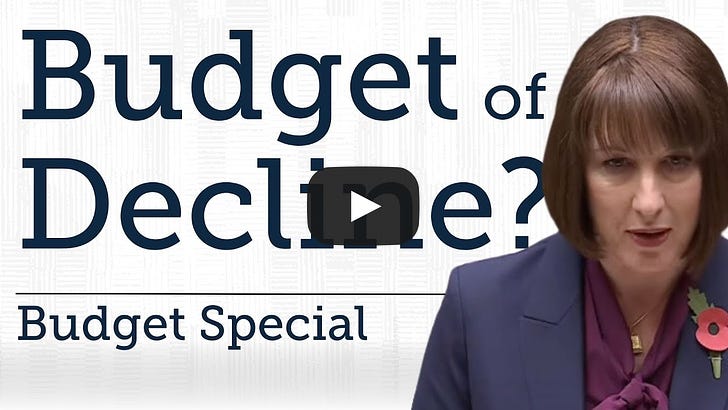
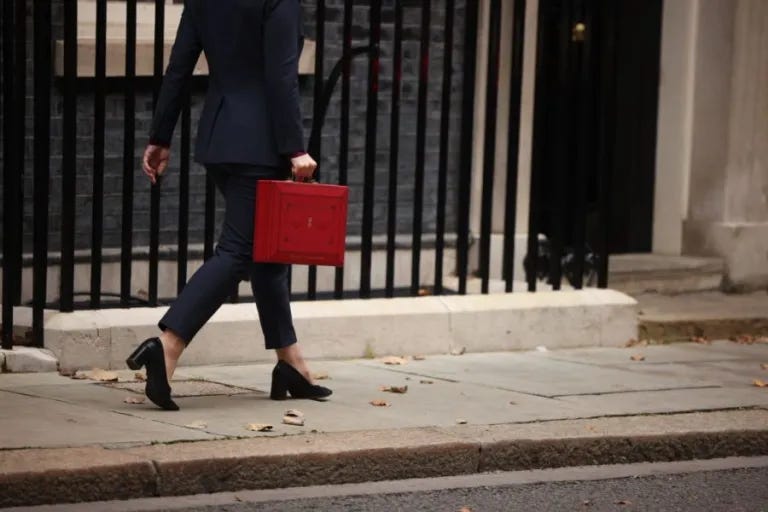
Labour has no idea how to break Britain’s spiral of decline, IEA Executive Director Tom Clougherty’s budget analysis in The Spectator
 |
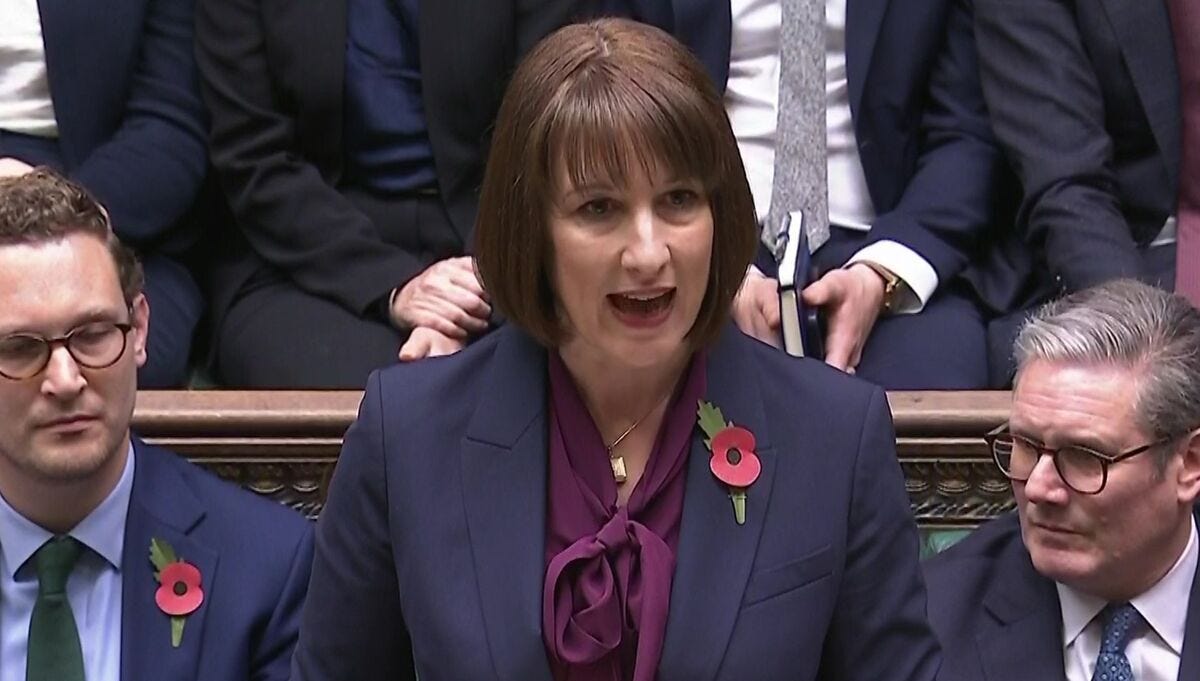
Why Rachel Reeves' Budget will fail to deliver on Labour Party's central promise, Director of Communications Callum Price’s verdict in the Daily Express
 |
Let’s be honest… this Budget is austerity for the private sector, IEA Public Policy Fellow Matthew Lesh’s take in City AM
 |
"When you increase these kind of taxes, it is always going to be working people that bear the brunt of them”, IEA Communications Manager Reem Ibrahim appeared on BBC Politics Live following the budget.
 |
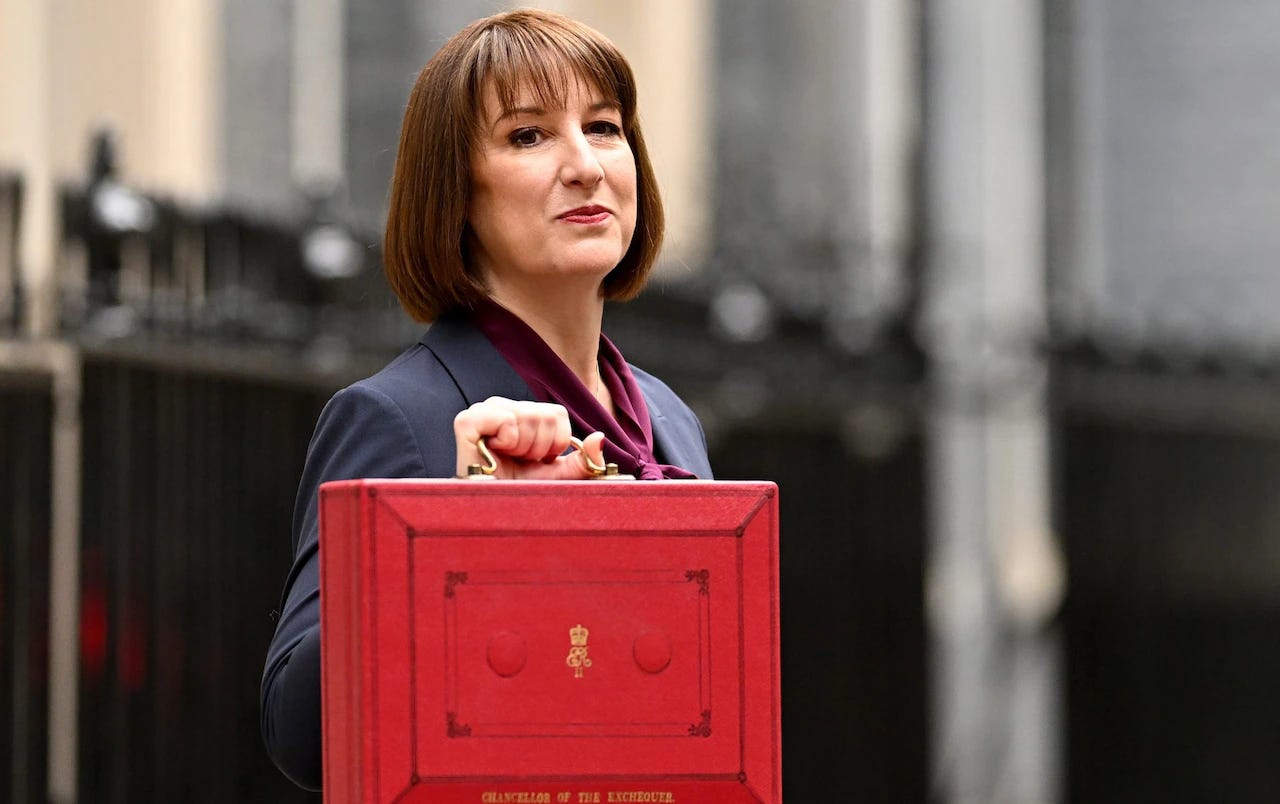
National Insurance raid will hit women hardest, economists warn, IEA Editorial and Research Fellow Professor Len Shackleton quoted in the Telegraph.
 |
Beyond the Budget: News, Views & Upcoming Events
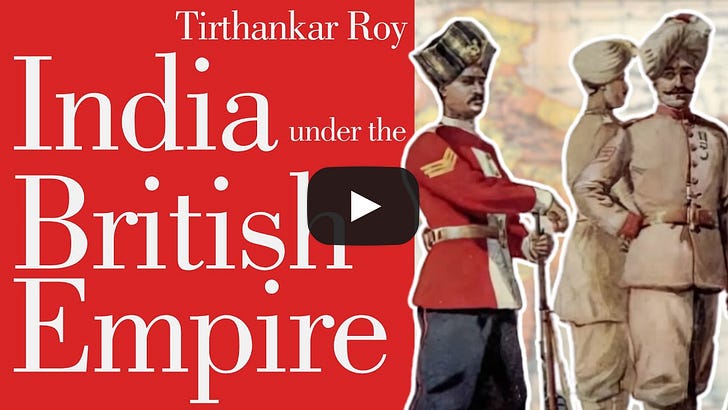
The Hidden Truth: How the British Empire Shaped India's Economy, Tirthankar Roy, Professor of Economic History at the London School of Economics explores the economic history of India with Daniel Freeman, IEA Managing Editor, IEA YouTube
The Employment Rights Bill | ||||||
| ||||||
 | ||||||
By Matthew Lesh and Len Shackleton | ||||||
|
Economic Freedom of the World: 2024 Annual Report, the annual index published in Economic Freedom of the World measures the degree to which people in 165 jurisdictions around the globe are allowed to make their own economic choices – The Fraser Institute.

Last weekend, Communications Manager Reem Ibrahim spoke at Students for Liberty’s Free Market Environmentalism conference in Lisbon.
 |

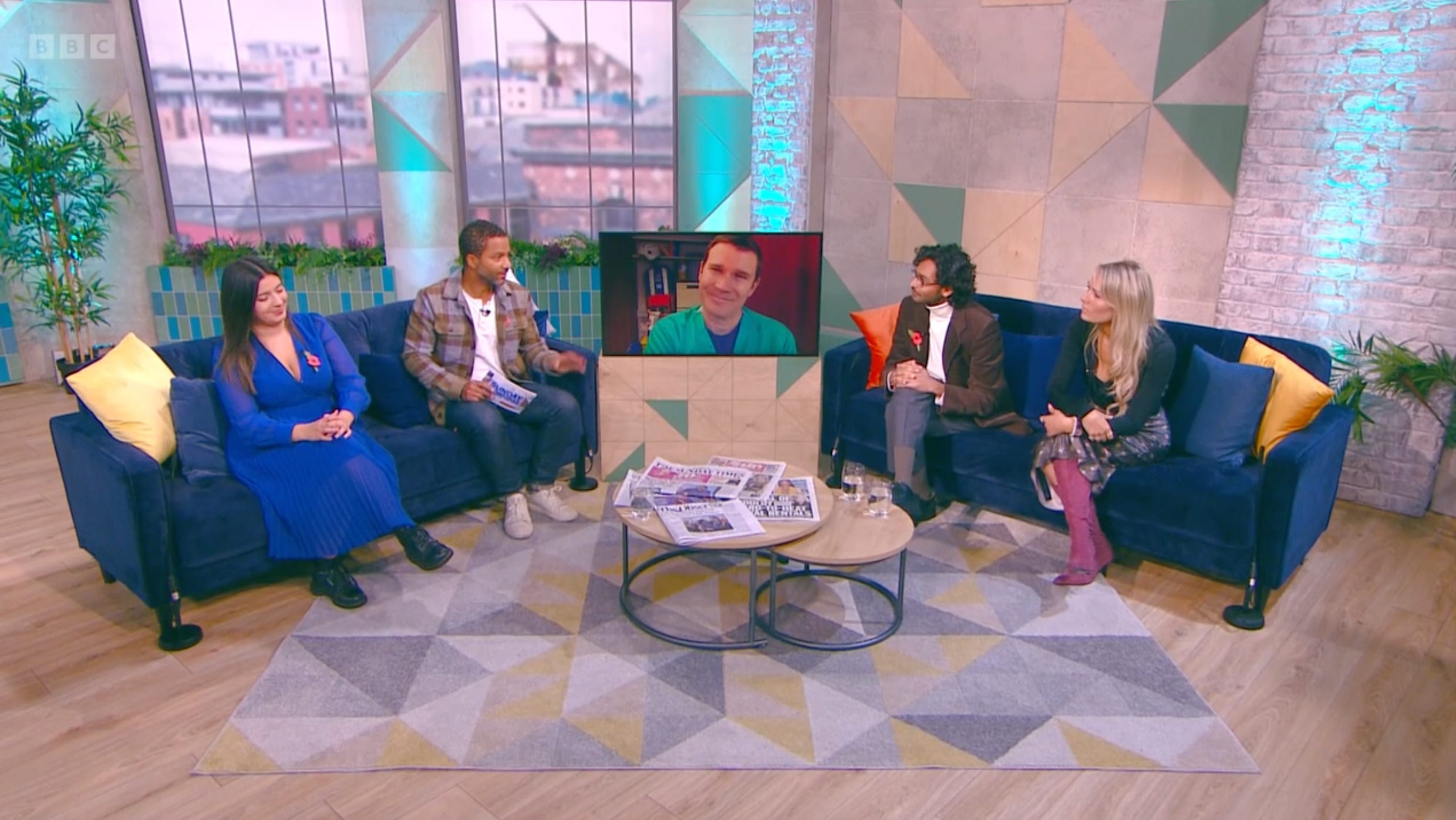
“We need competition and choice”, IEA Communications Manager Reem Ibrahim appeared on BBC Sunday Morning Live to discuss whether the NHS is worth saving.
 |
Hong Kong's financial Berlin Wall | ||||||
| ||||||
 | ||||||
By Chloe Lo | ||||||
|
You’re currently a free subscriber to Insider. For the full experience, upgrade your subscription.
Paid subscribers support the IEA's charitable mission and receive special invites to exclusive events, including the thought-provoking IEA Book Club.
We are offering all new subscribers a special offer. For a limited time only, you will receive 15% off and a complimentary copy of Dr Stephen Davies’ latest book, Apocalypse Next: The Economics of Global Catastrophic Risks.
| ||||||||||