|



 |
In The Dial, Clarissa Wei writes about how fast food took over the world.
McDonalds “opens an average of 20 new stores every month, and about 60% of its locations are international. The Economist still uses its Big Mac Index, launched the same year McDonald’s opened in Rome, to measure if currencies are under or overvalued. … There are 40,000 McDonald’s spread across 100 countries, servicing nearly 69 million customers daily — a figure surpassing the population of France or the United Kingdom. Subway and Starbucks have almost as many branches — with 37,000 and 35,000 locations, respectively. The ubiquity of these brands is a testament to America’s cultural hegemony.”
America is no longer the world’s only superpower. But America’s fast food power is still unmatched and growing. However, as Wei points out, if “America” is the hook, what people come back for is the food — which, around the world, now takes on a local flavor, like the Ramadan special in Saudi Arabia and the McBaguette in France. These, Wei argues, aren’t gimmicks, but “strategy choices,” and the strategy is so effective that other major American fast food corporations, like Starbucks and Pizza Hut, now follow the model.
If You Read One More Thing: Political Promises
In The Nation, Fahad Shah looks at the party that promised Kashmiri statehood — and won an election.
The National Conference, or NC, won 42 of 90 seats in the region’s legislative elections. What does the NC stand for? “In its manifesto, the NC promises to release political prisoners, repeal a “public safety” detention law, return the region of Jammu and Kashmir to statehood status, supply 12 free cooking-gas cylinders to each household, and provide pensions to senior citizens.”
However, Shah reminds us that the revocation of the region’s special status means that what the legislature can change is also limited: “Since becoming a federal territory, Jammu and Kashmir has been largely ruled by Manoj Sinha, the Modi-appointed lieutenant governor. Unlike past assemblies, the new one will not, for instance, have the power to pass financial bills or control law-enforcement agencies.” Shah also writes of how separatism as a movement has been quashed in public spaces. Still, “for a long-term embrace of the voting booth, elected officials will have to be able to do something.”
World Wide Women
 |
Khanya Mtshali introduces readers to Siphesihle Nxokwana, the “Candace Owens of South Africa.”
The anti-feminist influencer, Mtshali writes, “makes money from slandering the movement that won her civil and political rights. With the freedom to chart her destiny, she laments the struggle for liberties that she’s never had to second-guess, denigrating generations of women who fought for these privileges.”
Nxokwana, in particular, is “a 28-year-old content creator who has garnered attention for demanding that ‘women embrace their womanhood and not to be like men’ … Nxokwana often portrays herself as an unflinching truth-teller, who wants to set women on the straight and narrow.” However, Mtshali argues that “for all her attempts to become social media’s latest novelty, Nxokwana registers as a mere footnote in a country with a unique history of anti-feminism.” Mtshali walks the reader through a history of gender essentialism in South Africa (“an ideology that applies outside of the evangelical right, cutting across the social, cultural, and political landscape of South Africa”), of which Nxokwana is but the latest saleswoman.
Deep Dive: Awards and Attitudes
In Politics and Gender, Philipp Köker, Nele Weiher, and Anja Schollmeyer ask what the bestowal of awards can tell us about socio-political phenomenon. Their answer in a recent paper? Quite a bit, in fact.
They looked at data on the 11,559 recipients of civil awards from all three Baltic states — Estonia, Latvia, and Lithuania — from 1994 to 2020. Women received fewer awards than men, the authors found, and progress toward a smaller gender disparity over time was moderate.
Even when awards went to women at equal rates, the "higher classes" of awards still included fewer women. In Estonia, for instance, 27 men won "the highest classes of all orders," while only eight women received the same distinctions. "Furthermore," they write, "no woman ever received the highest class of the Order of the National Coat of Arms."
As far as recognition goes, women largely remain in traditionally feminine-coded spheres, such as education, social services, and health. And even in these fields, women tended to receive lower classes of awards than men. The authors do point out that “even though women present a large proportion of those engaged in this type of work, men tend to achieve and hold leadership positions and receive more prestigious awards.”
Further, almost half of the awards in Lithuania that went to women were for the category of “motherhood.”
The authors argue that the gender gap in state recognition is problematic for a few reasons, including that the government passes on status and symbolic capital when giving a person an award. The discrepancy in state awards, they argue, shows the way society "systematically" undervalues the contributions of women.
The authors felt that the focus of previous research on this subject on constitutional monarchies in the British commonwealth meant that “we still know very little about whether systems of state decorations in modern republics exhibit the same disparities.”
And so their article sought to present “the most comprehensive cross-national comparative analysis of the gender gap in state decorations to date.”
The authors feel that their findings “not only corroborate the validity of state decorations as an indicator of institutionalized gender inequalities and the role of women in society,” but also add to debates about how to work toward gender parity in awards.
They also think that, since their findings corroborated earlier research on other cases, “by focusing on key elements of state decorations systems, patterns in the awarding of decorations can be used as a reasonably standardized and valid indicator of some political phenomena that are otherwise difficult to measure in cross-national comparison.”
Thus, they feel that future research should focus on areas where researchers have already engaged with the subject of state awards (as an example, they suggest “a more quantitative approach using data on the number of decorations exchanged between countries over time”).
Show Us the Receipts
Alexander Langlois wrote about how Israel’s war in Lebanon makes Syrian refugees more vulnerable. As Langlois explained, “An increasing number of countries hosting Syrian refugees displaced by the fighting in their country since 2011 view the conflict as largely resolved, opting to assess certain areas of Syria as safe. … Some states continue to take other measures, with Italy reinstating their ambassador to Syria, Lebanon forcing returns and complicating the living conditions for Syrian refugees pre-Israeli invasion, and Turkey forcing returns into newly developed communities across areas of its control in the north.”
Winthrop Rodgers explored the leadup to recent elections in Iraqi Kurdistan — and found they didn’t do much to inspire voters. “There are all the trappings of election fever,” wrote Rodgers. “The only thing missing is voter enthusiasm. In fact, the population is angry and disillusioned. They desperately want better governance, but few believe that any of the parties running in the election can provide it.” The region is more developed compared to the rest of Iraq, but that doesn’t mean it’s free of challenges, including job scarcity, corruption, and unreliable electricity and water.
Gerry Hadden reported on how Morocco is trying to stave off drought. “Morocco is betting big on seawater — by building plants that remove the salt. Just south of Casablanca, the country’s biggest desalination facility is under construction. When it’s up and running, the plant will pump out up to 1 million cubic meters of freshwater per day, enough to cover the water needs of around 90,000 homes, according to climate change scientist and consultant Mohamed Jalil,” Hadden wrote. But Jalil also said there’s no one solution, and cities are taking different approaches. Hadden reported that in Casablanca, for example, authorities “have imposed major water restrictions. It has turned off fountains, stopped watering lawns in public parks and shut down car washes.”
Well-Played
 |
All signs point to Moldova.
A relief for California noir.
As good a reason as any.
The charm of the airport.
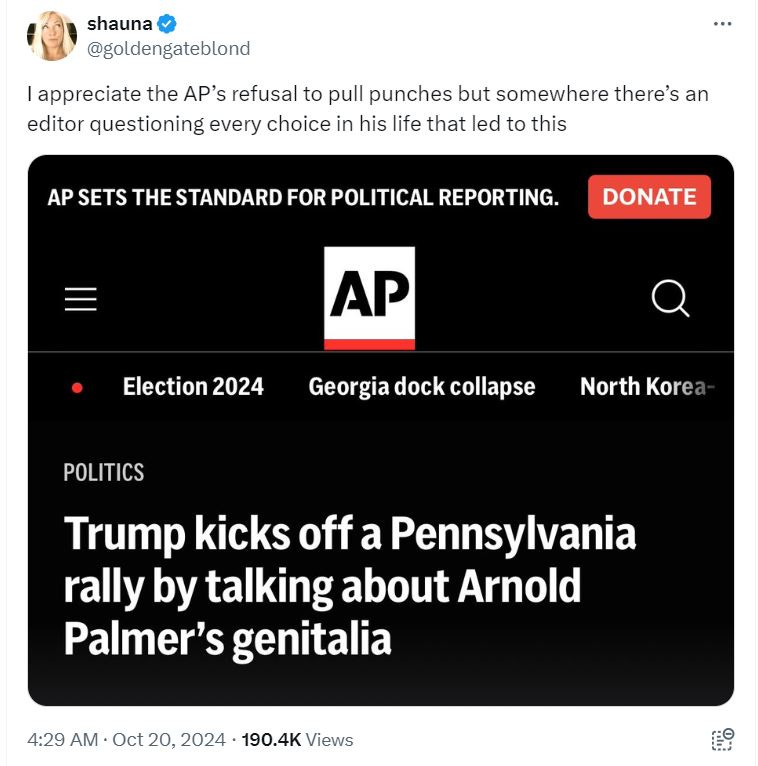
Regrets, he (probably) has a few.
Lights … camera … action!
And eventually it was published!
Critical State is written by Emily Tamkin with Inkstick Media.
The World is a weekday public radio show and podcast on global issues, news, and insights from PRX and GBH.
With an online magazine and podcast featuring a diversity of expert voices, Inkstick Media is “foreign policy for the rest of us.”
Critical State is made possible in part by the Carnegie Corporation of New York.
You're currently a free subscriber to Inkstick’s Substack. For the full experience, upgrade your subscription.
| ||||||||||