Despite decades of conservation efforts, biodiversity is still in rapid decline and habitats are vanishing.
Vertebrates such as monkeys, fish, birds and giraffes declined 73% on average between 1970 and 2020, according to global environmental charity WWF.
At COP15 in Montreal, Canada, in 2022 states committed to reversing biodiversity loss and preserving 30% of land and the ocean by 2030.
Now in Cali, nations need to review progress, see how their national commitments line up to international targets for 2030, and work out how to speed up the implementation.
One way to help make that happen could be granting more recognition to Afro-descendant nature defenders.
For a new story today, I spoke with campaigners, experts and official representatives who said COP16 could provide a breakthrough for Afro-descendants who number about 134 million people, or 21% of the total population across Latin America and the Caribbean.
"Despite the fact that people of African descent live in communities and places that are nature paradises with high levels of biodiversity, they haven't been taken into account," said Epsy Campbell, chair of the U.N. Permanent Forum on People of African Descent.
Defending nature's defenders
As hosts, Colombia is seeking to boost the participation of Indigenous and Black communities and is also pushing for human rights to be central to environmental plans.
This is a pressing issue for countries in Latin America, where environmentalists are often in the firing line.
While Colombia is one of the world's most biodiverse countries, it is also the deadliest for nature defenders with a record 79 killed last year, according to British advocacy group Global Witness.
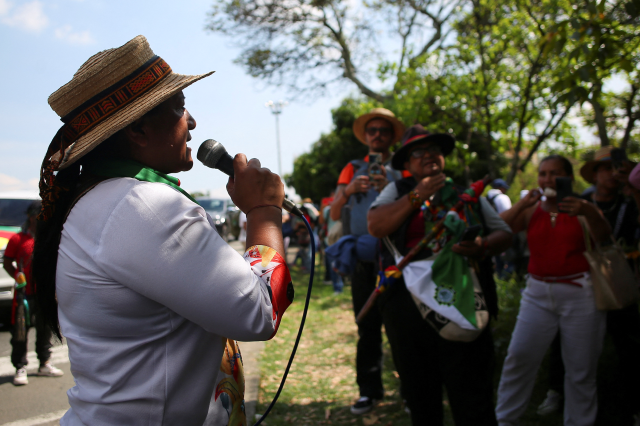
Colombian indigenous people demonstrate to demand that their rights be respected by the participating parties of the 16th United Nations Biodiversity Summit (COP16), in Cali, Colombia, October 21, 2024. REUTERS/Juan David Duque