|
Critical State: Heroism over Hope
If you read just one thing … read about the time for heroics in combating climate change!
|

| |||||||||||||||


 |
At Noema, the Vancouver-based essayist Pamela Swanigan writes that, when it comes to climate change, we need heroism, not hope. “The traditional rhetoric of hope, long used in distorted and dishonest ways within the environmental movement, is proving unfit for our current omnicrisis.”
The rhetoric of hope, Swanigan argues, lets us “soft-pedal” the climate crisis and creates an urgency chasm between what’s happening and what’s widely known. And we shouldn’t soft-pedal, and we should speak urgently. As Swanigan puts it, “Any faithful rendering of their vision for the near future must perforce be quasi-apocalyptic” (to ecological and climate crises, Swanigan adds a biodiversity crisis that Doomsday Clock keepers put as equal to not only climate change but also nuclear war in terms of threat level).
Still, Swanigan is not advocating an abandonment of investment, arguing: “Evoking heroism rather than hope, and courage rather than comfort, are central to this response. So too is involving people in a story instead of hectoring them with information. And, most importantly, we must take inspiration from a colder truth: We may not be able to prevent the end, but if we are willing to fight the long defeat, perhaps we can make a better one.”
If You Read One More Thing: Scambodia
In The Dial, Lindsey Kennedy and Nathan Paul Southern report on how thousands of people have been trafficked into, and are now stuck in, Cambodia to work on cyber scamming compounds.
The scam industry “is the result of years of investment and infrastructure development designed to accommodate the industry’s needs.”
Cambodia isn’t the first “to be plagued with high-level corruption, to see its government bow to the demands of organized crime groups or to have those in power hand lucrative public contracts to family members or sell them to the highest bidder. However, the authors write, “rarely has an entire country been redesigned — with new cities, highways, airports, seaports, business parks and in filled bays that literally change the shape of the country — to build an industry that is worth billions of dollars a year and has enslaved over 100,000 people in an astonishingly short amount of time.” They trace Cambodia’s reported descent back to 2013, when the country first joined China’s Belt and Road initiative, through to today.
After the Flood
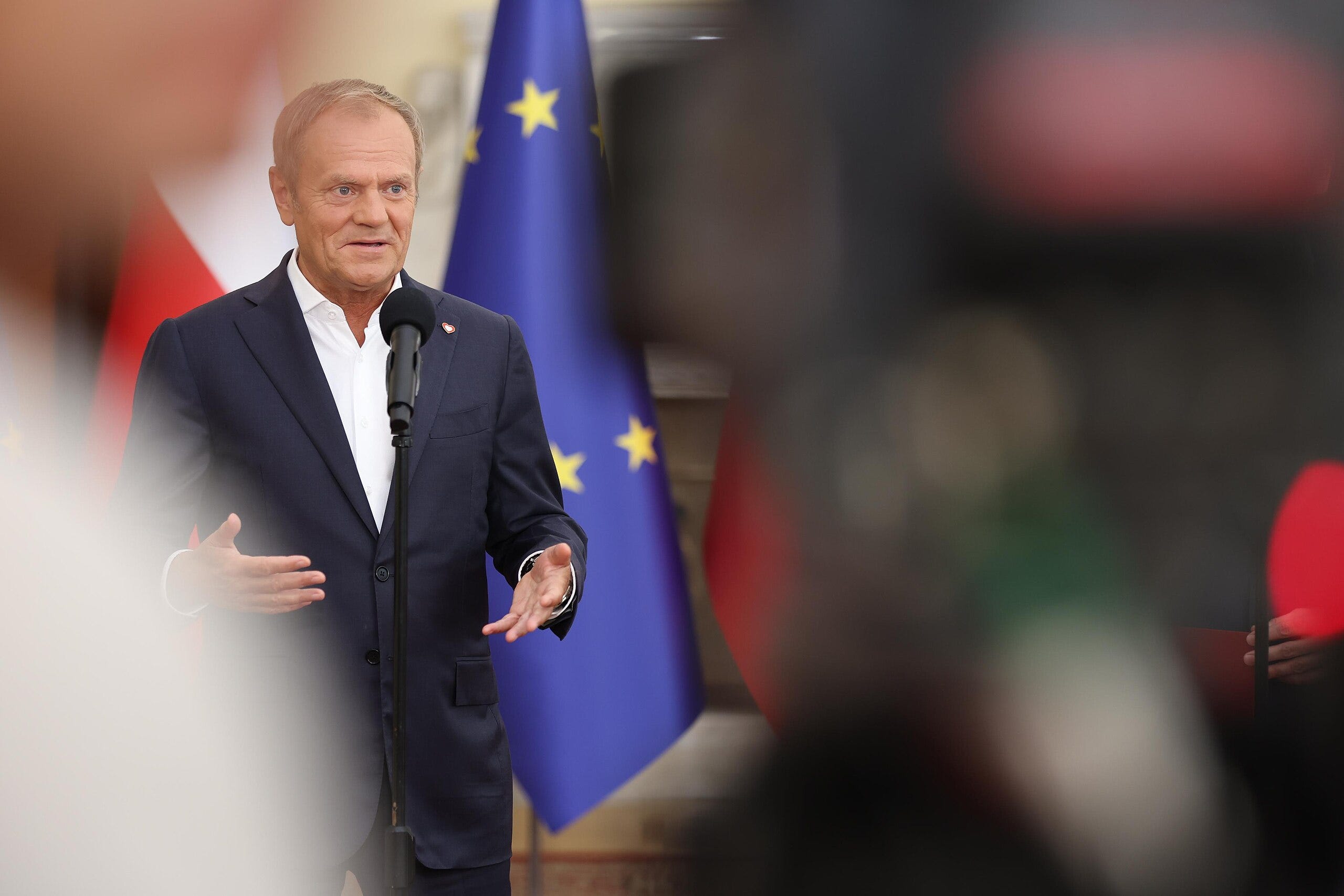 |
Aleks Szczerbiak asks what impact recent flooding will have on Polish politics.
Szczerbiak says the floods came at an “awkward moment” for Poland’s ruling coalition — but that they were helped by the opposition’s tone deaf response to the crisis: “For example, on the same day that media attention was focusing increasingly on the floods as the most important news story, the party chose to organize a protest rally outside the justice ministry where it accused the government of undermining democracy and violating the rule, and declared that it represented foreign interests, particularly Germany, that were seeking to destroy the Polish state so that the country could be brought under external control.”
Eventually, though, the opposition found its rhetorical footing and now some are accusing the prime minister, Donald Tusk, of having taken a too reassuring tone. In response, “Tusk quickly launched a public relations offensive. He took personal charge of, and did not just dominate but completely monopolized, the government’s crisis management operation, to the extent that he even intervened in Instagram posts, pushing both the opposition and other government ministers into the background.” For the moment, the government appears to have emerged “unscathed.”
Deep Dive: Czeching Populism
Do populist attitudes translate to populist support? Or are they too thin?
That’s the question Veronika Dostálová and Vlastimil Havlík pose in their new East European Politics study about the role of populist attitudes in the 2021 Czech legislative elections.
Originally, they argue that populist attitudes and subdimensions play a key role in voting propensity considering their interplay with nativist attitudes. Yet, a survey of the Czech vote found that "populist attitudes and their subdimensions are notable predictors," though "thick nativist attitudes" did not "fully" condition them.
The authors also found “the unique effects of subdimensions tend to reflect the emphasis that populist parties place on the corresponding components of populist ideology in their communication.”
They wanted to know if the 2021 legislative elections specifically explained populist support for two parties, ANO and SPD. They expected support for ANO to be “driven by populist attitudes, anti-elitism attitudes, and people-centrism, since ANO strongly emphasized anti-elitism and people-centrism in its communication.”
SPD, meanwhile, emphasized popular sovereignty, so they thought that would explain support for it.
The authors expected populist attitudes to shape support among those with strong nativist attitudes. That is, in part, because populism and nativism were “bonded” in the campaigns. “As a result of the salience of populist cleavage within the context of the 2021 election, we, nevertheless, expect populist attitudes and their subdimensions to also contribute to electoral support for each populist party among individuals with weak to moderate nativist attitudes.”
They reexamined original survey data to find answers. They found that populist attitudes (and, to an extent, their subdimensions) indeed predict propensity to vote for populist parties. Unique effects of specific subdimensions can reflect what parts of populist ideology various parties are emphasizing. And populist attitudes can be a “contingent mechanism” and “motivational substitute,” but not necessarily simultaneously.
For future research, the authors recommend exploring what factors into the effect of subdimensions on support for populists. Additionally, since their findings did not show an effect of anti-elitism attitudes on populist support, they feel researchers should “propose new ways to capture anti-elitism attitudes among voters of populist parties in government or with parliamentary representation.”
They also feel future research should explore when populist attitudes act as a motivational substitute and/or contingent mechanism, and that future research concerned with the relationship between populist attitudes and “thick ideological beliefs” should differentiate, in a nuanced way, between levels of “thick” ideological belief.
Show Us the Receipts
Hanan Zaffar and Danish Pandit looked at how Surat, India’s diamond city, is undergoing a surge of suicides — and how it’s connected to Russia’s war in Ukraine. For context, “Surat has long been the global hub for diamond polishing, employing more than 600,000 workers who cut and polish 80% of the world’s diamonds. But since the war in Ukraine began, sanctions imposed on Russia — one of the largest suppliers of rough diamonds — have caused the industry in Surat to collapse.” Sanctions have led to a collapse of wages and lost work, driving some to take their own lives.
Valerie Hamilton reported on how Dachshunds are at the center of a culture war in Germany. Proposed changes to Germany’s animal welfare laws would limit Dachshund breeding. “This animal welfare bill would ban what it calls ‘torture breeding’ — the breeding of animals with structural disabilities — not just of dachshunds with bad backs, but German shepherds with bad hips or French bulldogs with breathing problems.” Dachshund owners say the bill would hurt, not help: over 18,000 people have signed onto a petition against the bill and the national Dachshund club is putting forth a pressure campaign.
Hannah Kirshner examined a rice shortage in Japan that some have blamed on tourists and hot weather, but that farmers and analysts say could be tied to a decades-old policy that pays farmers not to plant rice, instead converting paddy fields for other purposes. “Many countries, including the US, use set-aside policies to reduce grain surpluses and stabilize prices. What’s unusual … is that Japan has kept this policy in place for more than 50 years — usually, these are short-term price control measures.” Some say the program is at odds with Japan’s goal of increasing Japanese food sufficiency.
Well-Played
 |
Only in New York, kids.
Just like the Oracle said.
Northern Lights out.
And scene.
It’s Wow Platinum.
Critical State is written by Emily Tamkin with Inkstick Media.
The World is a weekday public radio show and podcast on global issues, news, and insights from PRX and GBH.
With an online magazine and podcast featuring a diversity of expert voices, Inkstick Media is “foreign policy for the rest of us.”
Critical State is made possible in part by the Carnegie Corporation of New York.
You're currently a free subscriber to Inkstick’s Substack. For the full experience, upgrade your subscription.
| ||||||||||