| Know better. Do better. |  | Climate. Change.News from the ground, in a warming world |
|
| | Deadly flash floodsFrom Hurricane Milton devastating parts of Florida, to extreme rainfall killing some 200 people in Nepal last month, flooding has wreaked havoc on the world this year.
But floods know no borders and as extreme weather events become more frequent and severe, international cooperation could become increasingly important.
This week, Md. Tahmid Zami reports from Bangladesh on how flooding has exposed the lack of regional climate cooperation in South Asia.
The Nepal flooding followed low pressure in the Bay of Bengal and neighbouring parts of India last month. In August, a flash flood killed at least 71 near the border of India and Bangladesh.
Instead of working together to find solutions, South Asian countries have often resorted to mutual recrimination, experts said. 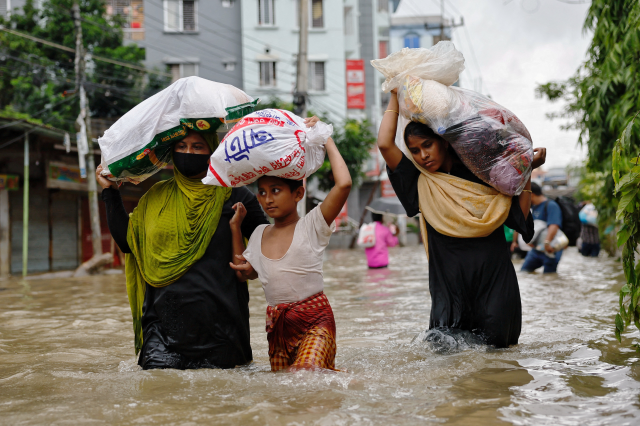 People wade through water as they carry relief supplies amid severe flooding in Feni, Bangladesh, August 25, 2024. REUTERS/Mohammad Ponir Hossain |
A Bangladesh government advisor, for example, said its flooding in August was caused by India releasing water from a dam
upstream - without warning - into a river flowing into Bangladesh.
India's Ministry of External Affairs said live data had been shared with Bangladesh about the rising waters, but had stopped due to a power cut caused by the floods. In any case, it said, most of the water came from catchments downstream from the dam.
"No country in the region trusts others when it comes to riparian management, thanks to the political differences," said Harsh Vasani, a professor of international studies at FLAME University in India.
India is Nepal's biggest trading partner, but the two also have a number of border disputes. Bangladesh and India also have strong economic ties, but are in dispute over water sharing and the alleged killing of people crossing the border illegally.
Now, climate change is likely to trigger more frequent and extreme events, said Shaikh Rokon, head of the Bangladesh non-profit Riverine People.
"But climate change should not be made into a scapegoat for explaining away preparedness gaps within and between countries," he said. |
Forecasting disastersDespite the severity of floods, the good news is that people have got better at responding to them.
Forecasts and timely messaging have brought the death toll from monsoon floods to near zero in vulnerable communities in South Asia, said Dharam Raj Uprety from the Britain-based development organisation Practical Action.
But flash floods are still a big problem as they can't be predicted 10 to 12 days ahead like monsoons, said Sardar Uday Raihan, executive engineer at the Flood Forecasting and Warning Centre in Bangladesh.  Villagers salvage goods from a collapsed house where two people died after the landslide following heavy rainfall, along the bank of Kalati River, in
Bhumidanda village of Panauti municipality, in Kavre, Nepal October 1, 2024. REUTERS/Navesh Chitrakar |
India has joint river commissions with Bangladesh and Nepal, he said, but real-time data sharing on water released from dams and upstream water levels would be helpful.
One example of a joined-up response has been over the Koshi and Karnali rivers that flow from Nepal to India, implemented by Practical Action and other organisations.
It set up mobile phone alerts of rising water from upgraded weather stations. Though mainly carried out on the Nepalese side, Indians living near the frontier also receive warnings.
To keep people safe, much more of this cooperation will be needed. Because as the climate crisis deepens, floods aren't going away, and neither are borders.
See you next week,
Jack |
|
|
|