Mink pelt output is shrinking, but new markets may be on the rise |
As the proprietor of a vintage consignment shop, I frequent estate sales. More than once – usually at a sale on a Wisconsin family farm – I’ve run across what appear to be small, wooden, legless ironing boards. The first time I encountered them, I couldn’t imagine their purpose. They looked like rustic surf boards for Barbie dolls.
It turned out they were once used for stretching and drying mink pelts — relics of an industry that, although much diminished in recent years, continues to be led by Wisconsin producers.
Wisconsin accounted for 53 percent of the nation’s total mink pelt production in 2023, but that output was down 10 percent from the previous year, according to the latest figures from the U.S. Department of Agriculture. |
Consultants’ figures prove critics right as state’s largest district continues to shrink |
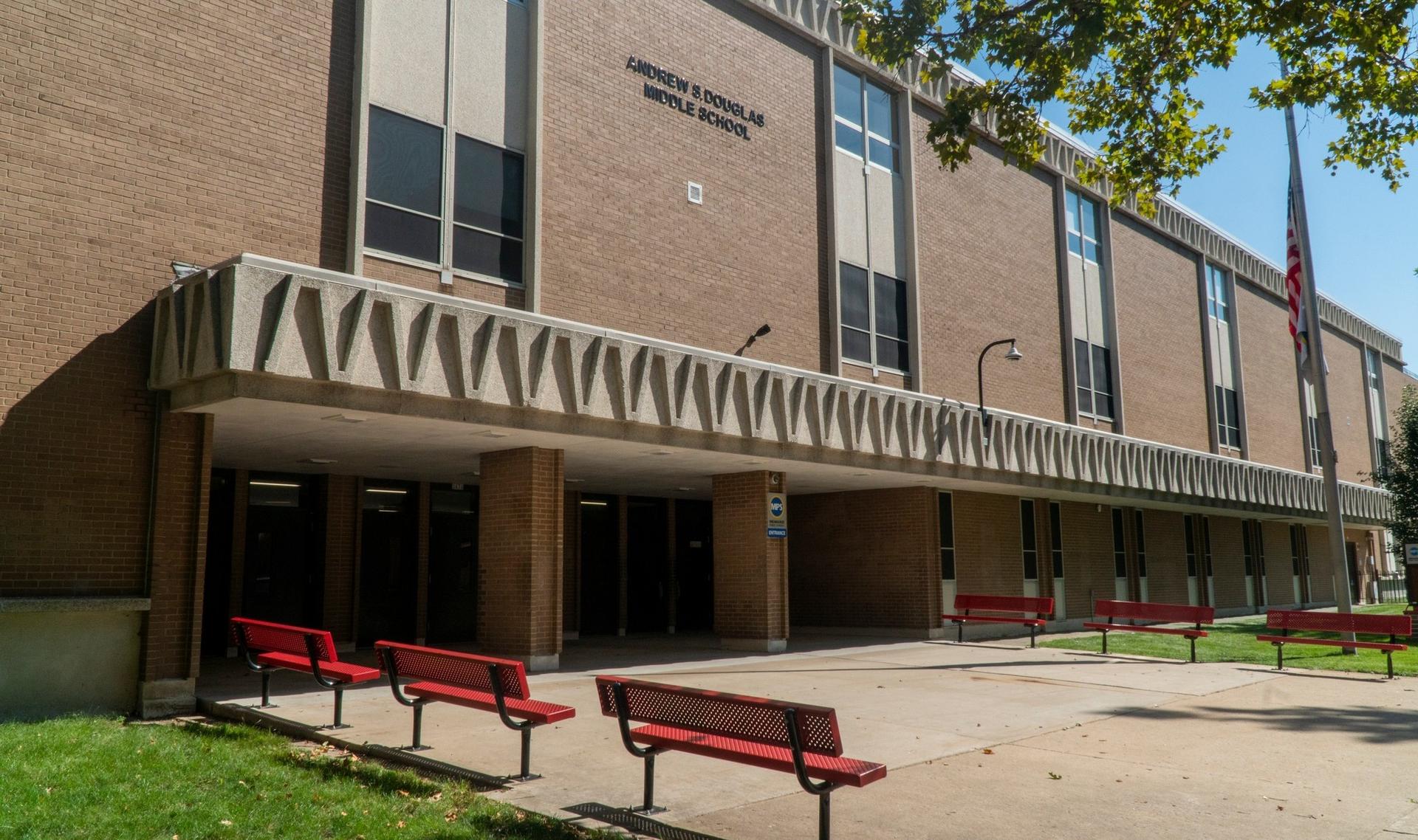
Wisconsin’s largest school district, whose voters narrowly approved a quarter-billion dollar increase in funding last spring, is breaking the news to those voters that it may have to close some schools.
The process isn’t moving quickly.
“Very little will happen even into the next school year,” a district consultant put it to Milwaukeeans at one of a series of public hearings Wednesday night at Hamilton High School.
The Milwaukee Public Schools is holding public sessions to explain its Long-Range Facilities Master Plan, an attempt to “right-size” a school district with at least a score of schools operating at less than half capacity. |
Credit card debt in Wisconsin has reached a level not seen since the 2008 financial crisis, data from the Federal Reserve Bank of New York show. Credit card debt per capita in Wisconsin — that is, the average level of credit card debt of a Wisconsin resident — climbed steadily to a peak in 2008, coinciding with the financial crisis. Per capita debt then fell sharply until 2013.
Borrowing began to modestly tick upward until the 2020 pandemic, falling during a significant decrease in consumer spending on shopping, dining out, and travel. Borrowing then began rising sharply in 2022 and 2023, a period in which prices rose faster than real wages. |
Blue state provides blueprint for purple Wisconsin |
America’s energy grids are strained as electricity demand continues to grow exponentially, and zero-emission goals are diminishing so-called “baseload” generating capacity.
The response on the other side of Lake Michigan: a remarkable atomic about-face that may hold lessons for Wisconsin. |
|
|
Weekly survey: Which country is the top destination for Wisconsin exports?
|
|
|
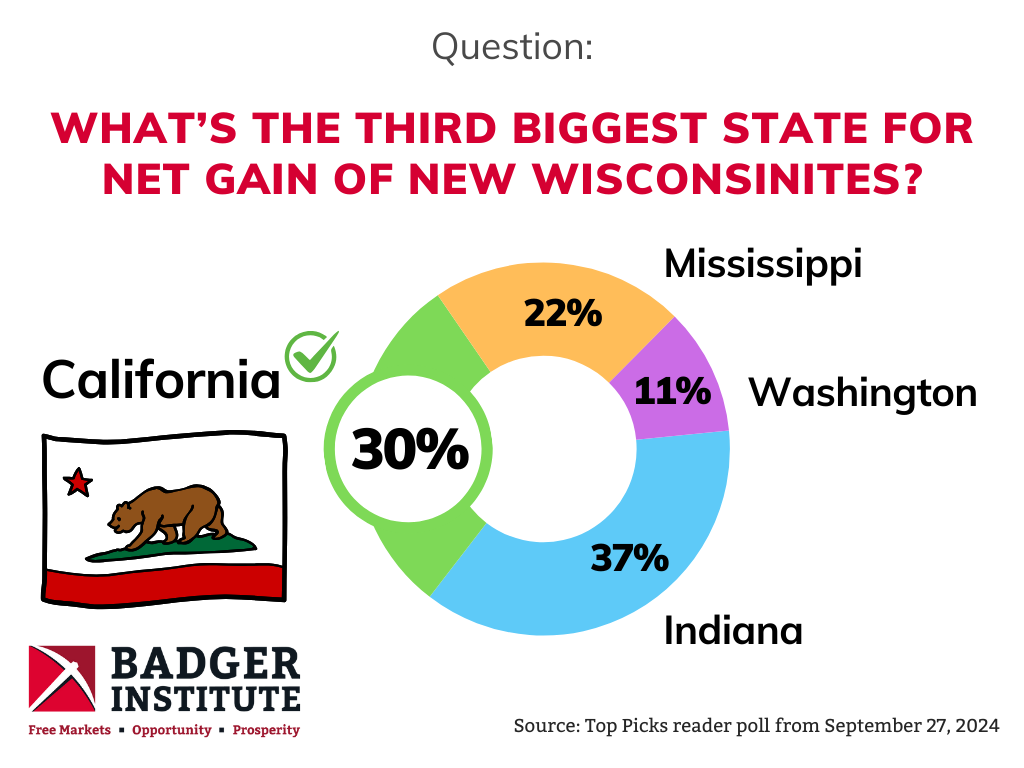
Wisconsin, on net, gains the largest number of residents from two neighboring states, Illinois and Minnesota. |
|
|
Invest in the Badger Institute |
|
|
|
The Badger Institute, formerly known as the Wisconsin Policy Research Institute (WPRI), has long been at the forefront of the fight for school choice, right to work, welfare reform, tax restructuring, limited government, civil society and so much more. If you appreciate the Institute’s legacy and want to support free markets, opportunity and prosperity, please consider donating today. Your support will help the Institute continue to advocate for conservative principles now and in generations to come.
|
|
|
The Institute never has, and never will, accept government funding. We gratefully welcome your online donation or email Angela Smith, Executive Vice President.
The Badger Institute is a 501(c)(3) tax-exempt nonprofit organization funded solely by the generosity of foundations, companies and individuals. |
|
|
Badger Institute
700 W. Virginia St., Suite 301
Milwaukee, WI 53204 |
|
|
|