Well, it's officially fall! The leaves are changing, the air is crisper, and it's back to school time. As the season begins to change, financial education is not slowing down. In this issue of the newsletter, there are updates on planning for the Next Generation Financial Leaders 2025, an update on DFI's $10 Billion Reasons campaign, webinars, and an announcement of FAFSA, ways to avoid scams, and much more!
As a reminder, please share with us any highlights, updates, or events you would like to share with the more than 23,000 people receiving the WFEN updates. When you have something you'd like to share with the network via this monthly email update - please send it to [email protected] with the subject line "Proposed WFEN content."
Additionally, if you’re not already following DFI’s social media accounts, please do! We’re working to grow our networks in addition to promoting your great work.
- X https://twitter.com/dficonsumers
- Instagram https://www.instagram.com/wastatedfi
- Facebook https://www.facebook.com/wadfi
- YouTube https://www.youtube.com/user/WADFI
- LinkedIn https://www.linkedin.com/company/state-of-washington-department-of-financial-institutions/
DFI Planning the Second Annual Next Generation Financial Leaders - Summer 2025!
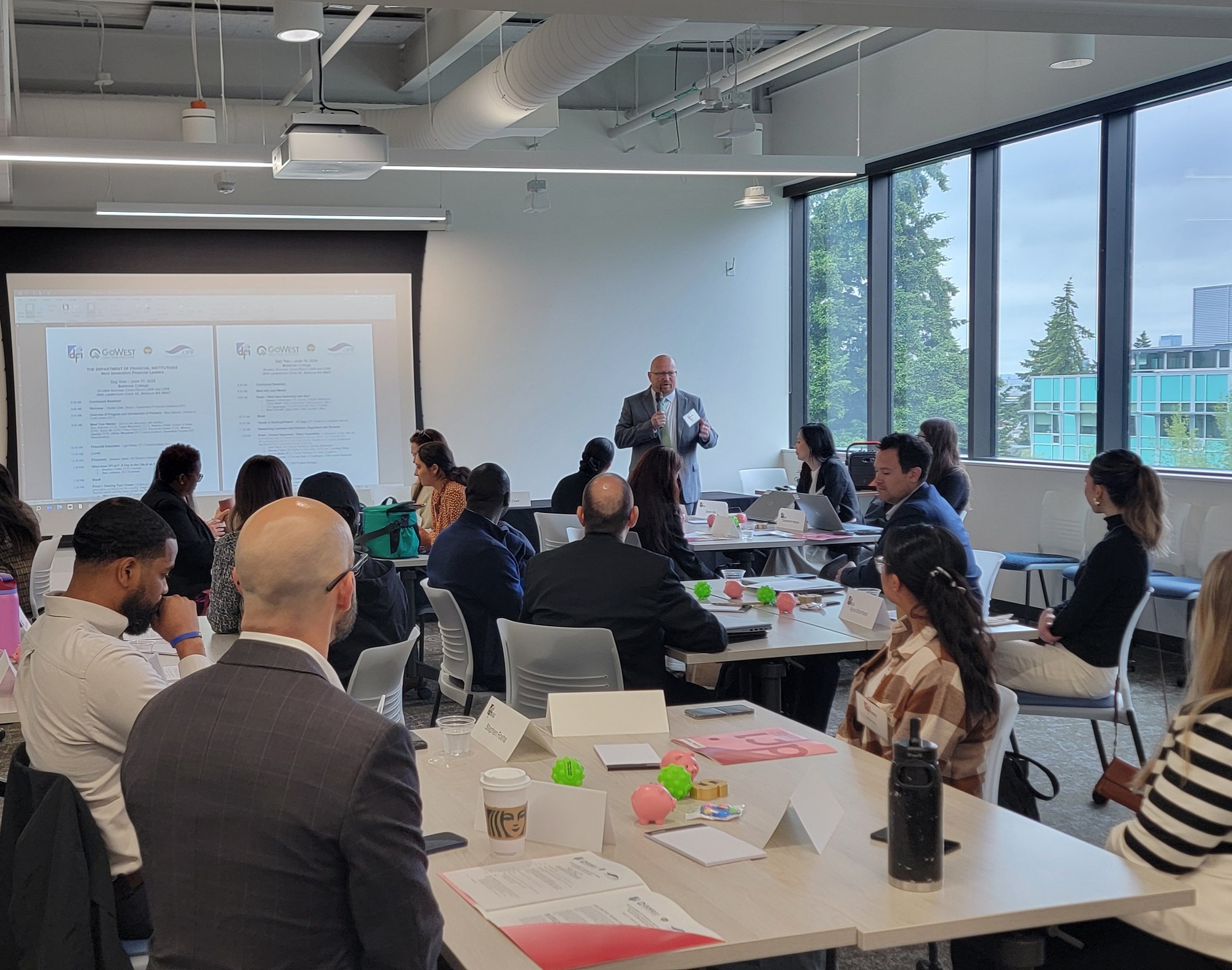
The Department of Financial Institutions (DFI) is working with bank and credit union association partners to offer our second annual mentorship program in June 2025. The event is tentatively slated to be conducted at University of Washington - Tacoma campus.
The workshop will:
- Highlight how a participant's education, interests and experience may fit into one of the many roles in a bank, credit union or at DFI as an industry regulator.
- Match up participants one-on-one with a mentor, providing a direct connection into the industry as attendees determine their future career opportunities.
- Industry leaders will share insight about:
- Their career path into banking, lending, finance, and investing.
- Career growth opportunities and how organizations seek and hire new talent.
- Upcoming trends for the industry, including fintech and cybersecurity.
- The importance of financial education and outreach in Washington State.
To learn more, visit the Next Generation Financial Leaders website - we'll update the site as more information is available.
Update on $10 Billion Reasons Media Campaign
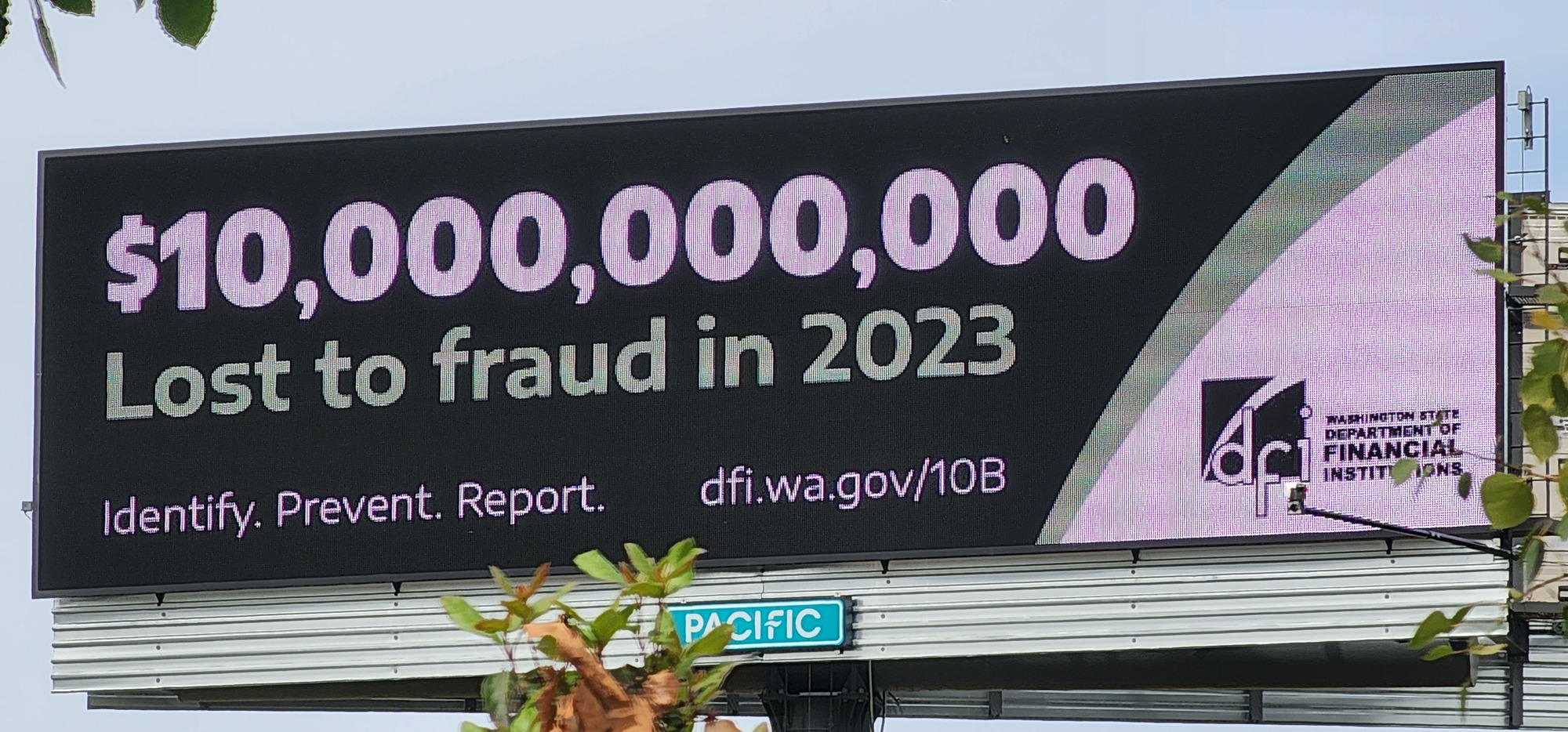
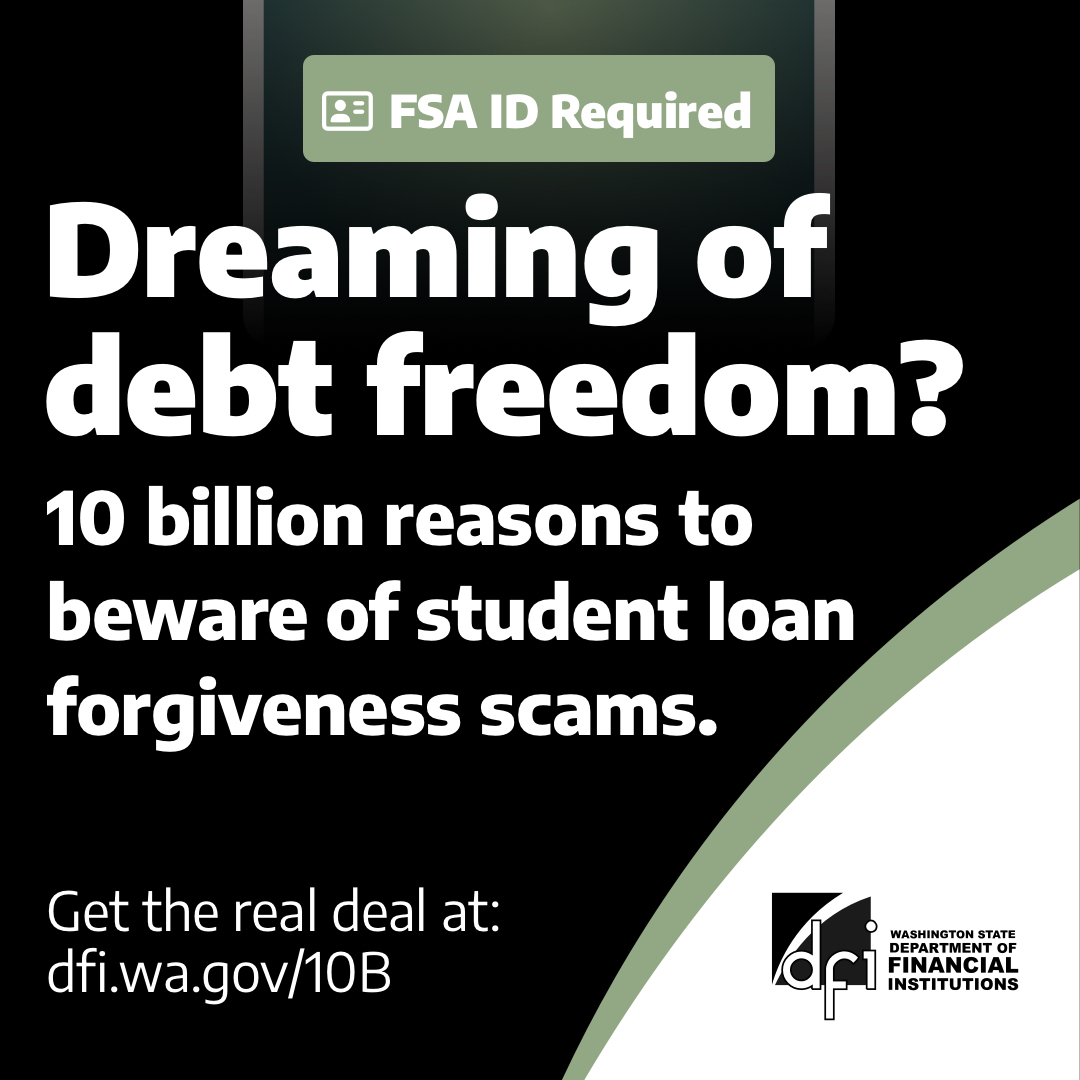
DFI launched the $10 Billion Reasons Financial Fraud Prevention media campaign June 14 to spread awareness about financial fraud. The theme of the campaign stems from the Federal Trade Commission's data indicating that Americans lost $10 Billion to financial fraud in 2023. The goal of the campaign is to help people learn how to identify, prevent and report financial fraud.
As the initial campaign winds down, we're celebrating more than 2 million views on social media, billboards on I-5 and in Spokane, radio advertisements, a podcast interview with the DFI Director Clark, news station and AARP website banner ads, movie theater advertising and ads in multiple languages.
As we move into our next phase of the campaign outreach, we are also having $10B website translated into multiple languages.
As a financial education partner - we value your opinion and welcome your input and would love to hear from you what your thoughts are about the site. Please visit and let us know at [email protected].
Spanish Financial Education Outreach At DFI
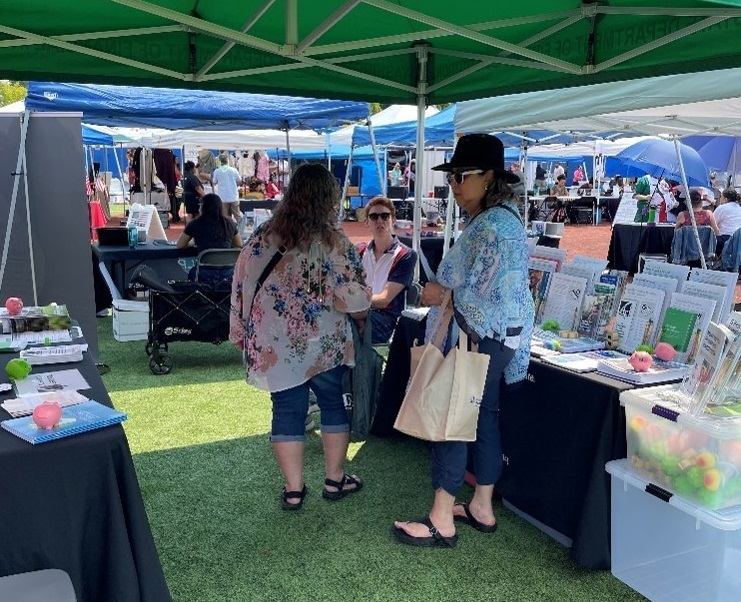
This summer, DFI’s outreach team continued to promote financial education in Spanish, working to create and strengthen partnerships with community stakeholders, including nonprofits, schools, and other organizations seeking to empower the Spanish-speaking community.
DFI was honored to staff a resource table at LETI’s Latino Expo 2024 in Edmonds, a vibrant gathering of community organizations, state agencies, and fantastic food trucks, to celebrate Latinx culture and offer resources to the Spanish-speaking community.
During March and April, Outreach Coordinator Nathan Spiecker facilitated a four-part series of financial education workshops in coordination with Centro Cultural Mexicano in Redmond. Inspired by the positive feedback they received from participants, Centro Cultural Mexicano launched a financial education series of their own, accompanied by one-on-one mentorship opportunities for participating individuals, with the goal of increasing financial wellness and literacy. Nathan was invited back to Centro Cultural Mexicano to present twice, which proved to be a truly rewarding experience with active participation and lots of good questions asked and answered. Through partnering with nonprofit organizations in efforts like these, DFI hopes to continue to build a robust network of community-based resources to promote financial education and wellbeing among the Spanish-speaking population in Washington State.
If you are interested in having DFI give a presentation at your organization, school, or group located in Washington, you can request a presentation.
Office of State Treasurer Financial Wellness 101 Workshops
In partnership with WorkSource of Thurston County, the Office of the State Treasurer provides financial Wellness one-on-one workshops in an effort to enhance financial education and empower individuals in Washington. These workshops educate participants on financial goal setting, budgeting, saving, credit management, and identity theft prevention and awareness. Attendees can participate either in person at WorkSource of Thurston County or online, making it accessible to people across the state. By equipping individuals with essential financial knowledge this partnership contributes to building a financially resilient community.
October workshops:
|
Financial Wellness 101 - Part B: Credit & Debt Tuesday, Oct. 8 @ 9 - 11 a.m. |
||
|
Financial Wellness 101 - Part C: Consumer Cautions Tuesday, Oct. 15 @ 9 - 11:00 a.m. |
WA529 Knowledge Cafe Webinars
The WA529 Knowledge Cafe is a virtual learning center, where you can attend webinars to learn about the Washington College Savings Plans (The GET Program and DreamAhead Plan), ask questions and gather resources that support educational goals. There will be questions and answers time that will be available for all sessions to ask questions.
Register for a webinar:
|
Oct. 8, 2024 @ 12 p.m. |
|
|
Oct. 22, 2024 @ 12 p.m. |
|
|
Nov. 5, 2024 @12 p.m. |
|
|
Nov. 19, 2024 @12 p.m. |
|
|
Dec. 10, 2024 @12 p.m. |
2025-26 Financial Aid Applications to Open in December 2024!
After significant delays and technical issues with the 2024-25 FAFSA, the U.S. Department of Education announced a delayed launch with additional testing for the 2025-26 application. High school seniors and others planning to attend college or career training during the 2025-26 school year can begin applying for aid in December 2024. Students and families can take steps now to plan and prepare.
Read more on the Washington Student Achievement Council website.
Financial Education Grant Opportunity!
Financial education is vital for navigating today's complex economic landscape, and FEPPP has the opportunity to empower teachers' and students' futures with an iGrant.
The goal of the grant is to support school districts increasing financial education and sustaining its impact. Grant activities may include integrating financial education into courses and classrooms, teacher professional development in financial education, and developing community engagement opportunities. Grant applications are available through EGMS.
Learn more about this opportunity on FEPPP's flyer.
2024 Bank On Annual Forum
Join the 2024 Bank On Washington Annual Forum Oct. 24 and 25 in Washougal, WA (just east of Vancouver, WA) at the beautiful Black Pearl on the Columbia! The theme this year is, "Leading the Way: Embracing Financial Belonging."
Last year, Bank On explored the concept of fostering financial belonging and discussed the barriers and challenges faced by marginalized communities that have been historically excluded from mainstream financial services. Because this concept resonated with so many, this year the goal is to take the discussion a step further and explore financial belonging in action. The conference will examine leading models in communities and discuss how to implement the financial belonging ethos. Bank On Washington is excited to offer an opportunity for learning, networking, expanding partnerships, and working toward a future where everyone can achieve financial wellbeing.
To learn more about Bank On, visit their website.
Bitcoin ATMs: A payment portal for scammers
Bitcoin ATMs (or BTMs) have been popping up at convenience stores, gas stations, and other high-traffic areas for years. For some, they’re a convenient way to buy or send crypto, but for scammers they’ve become an easy way to steal people's hard-earned cash. FTC Consumer Sentinel Network data show that fraud losses at BTMs are skyrocketing, increasing nearly 10-fold from 2020 to 2023, and topping $65 million in just the first half of 2024. Since the vast majority of frauds are not reported, this likely reflects only a fraction of the actual harm.
Learn more on the FTC website.
Avoid Disaster Relief Scams - How to Spot Charity Scams
After natural disasters like hurricanes, earthquakes, or wildfires, scammers create fake relief organizations to exploit public eagerness to help affected communities. They set up websites and social media pages and even make phone calls asking for donations, but the money never reaches those in need. Instead, it goes straight into the scammers' pockets.
To make sure your money is going to a legitimate charity, verify Washington State charities on the GiveSmart website. You can also visit Charity Ratings and Donor Resources | Charity Navigator.
Additionally, the Washington State Combined Fund Drive has a Disaster Relief Center website that lists verified nonprofits and charities that you can give to, even if you're not a state agency employee.
How to Protect your Information from a Data Breach
What can you do to make sure your information, including your Social Security Number and passwords, are safe? Cybersecurity company Pentester created an easy, legitimate search engine to indicate whether your information is included in the data breach.
If your information HAS been compromised:
- Freeze your credit files with the major credit bureaus: Experian, Equifax, and Transunion. This will prevent any bad actors from borrowing in your name. The U.S. Public Interest Research Group has a detailed step-by-step guide.
- Review your credit report to flag any suspicious activity and report it to the three major credit bureaus.
- Consider subscribing to an identity theft protection service. There is a list of some of the services on the market.
Data breaches are unfortunately becoming more and more common. Monitoring your credit report regularly (at least once a quarter), keeping track of data breaches, and using secure passwords are all great habits to keep your personal information protected.
|
| STAY CONNECTED: | ||||||
 |
 |
 |
 |
 |
||
SUBSCRIBER SERVICES:
Manage Preferences | Unsubscribe All | Subscription Help | Contact DFI
| This email was sent to [email protected] using GovDelivery Communications Cloud on behalf of: Washington State Department of Financial Institutions · 150 Israel Rd SW · Tumwater, WA 98501 |  |