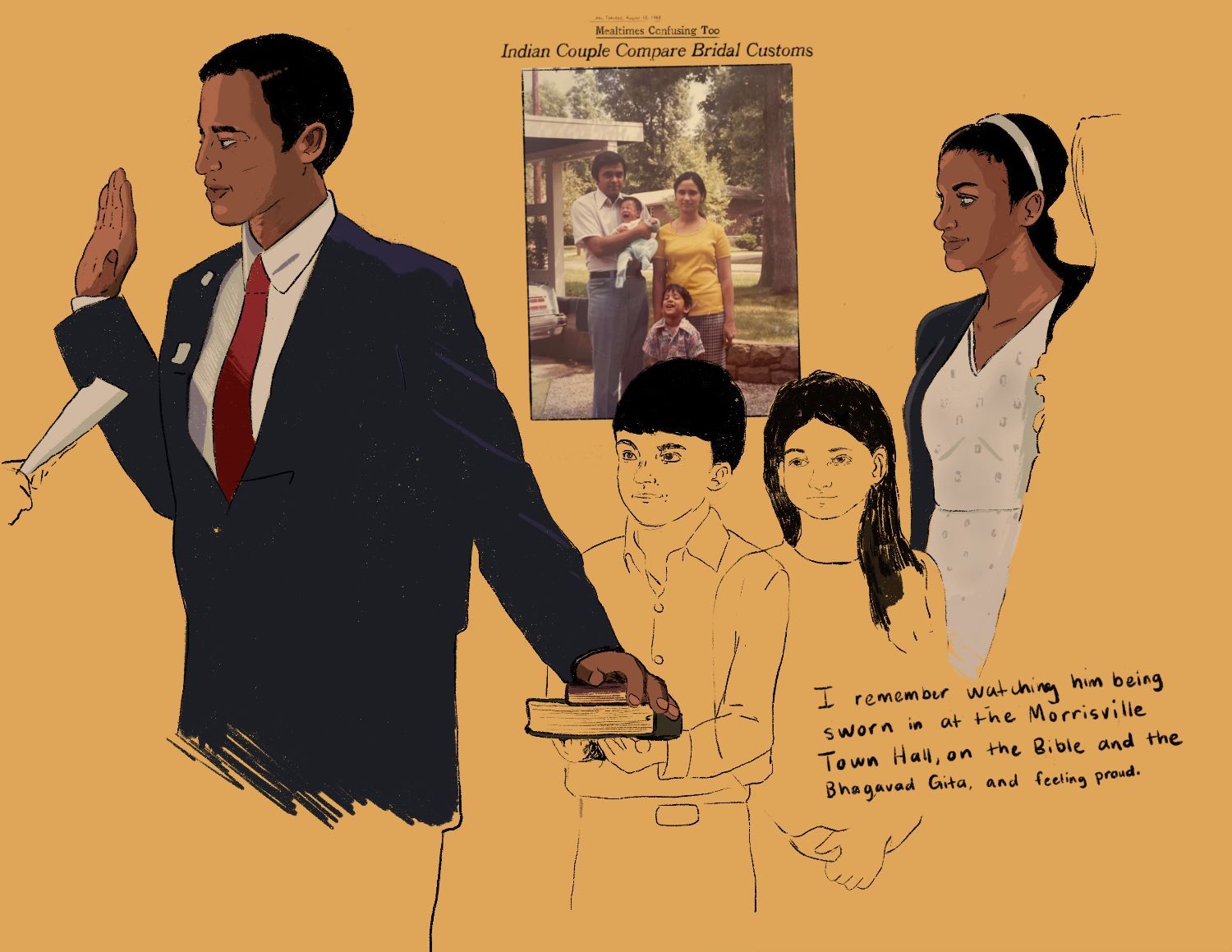
'Things fell into place'  This is the second installment in our CAROLINADAZE Essay Series, a joint project with Common Cause North Carolina featuring the voices of young North Carolinians and their visions for a better future for N.C. and the South. This is the second installment in our CAROLINADAZE Essay Series, a joint project with Common Cause North Carolina featuring the voices of young North Carolinians and their visions for a better future for N.C. and the South. When my grandparents immigrated from Madras, India to New London, Connecticut in the late 1960s, it was so “newsworthy” the local paper wrote a story about it. “Indian couple compare bridal customs – mealtimes confusing too,” read the headline in the Aug. 13, 1968 edition of The Day, accompanied by photographs of my grandmother grocery shopping in her sari and my grandfather working at the local hospital. My grandparents later settled in Charleston, West Virginia, where they were one of four Indian families at the time. My grandmother adapted her Indian cooking because she was not able to buy certain spices, as there were no Indian grocery stores or restaurants nearby. Sometimes, they traveled over three hours to visit a Hindu temple in Pittsburgh. Fast forward nearly four decades later, and I am growing up in the South with the opposite experience from my grandparents. In 2000, my family landed in Morrisville, North Carolina, a town where today, 46% of the population is Asian. Within a fifteen-minute drive, we could access three Hindu temples, and countless restaurants, grocery stores, and other institutions that kept us tied to our Indian culture. Today, the Triangle area’s boom in its Asian American population means even more families like mine are calling North Carolina home. And research shows that Asian Americans are the fastest growing group of eligible voters in the United States – and particularly in North Carolina. This election cycle, disinformation is already being used to target marginalized communities. Advocates are now confronting misleading information by directly engaging voters and providing reliable facts and resources that can help this year's election remain free, fair, and secure. Read more > |