‘It’s tough enough to run a small business in Minnesota,’ but rates and regulations grew harsher under Walz, starting with COVID |
Minnesota has been bleeding population and revenue for several years with its high tax and regulatory structure.
As of 2022 U.S. Census data, the No. 1 destination for Minnesotans was Wisconsin, with 19,307 relocating that year. In that same year, 18,702 Wisconsinites moved to Minnesota, many of them to the Twin Cities, according to the Census data.
IRS data show a similar story, with a twist. Between 2021 and 2022, the federal agency found that 8,211 households (or “tax units” in IRS parlance) moved from Minnesota to Wisconsin, while 7,559 moved from Wisconsin to Minnesota.
The full impact on the Minnesota and Wisconsin border is just beginning to be felt, perhaps because the cumulative effect of so many different Minnesota tax increases has not been fully realized. The businesspeople who have been affected say the tax increases are only the latest in a series of calculated decisions by Minnesota politicians that began with federal COVID funding disbursement and have hit the middle class and small businesses the hardest.
|
‘Freedom fighter’ took a pistol to a legislative debate |
Lest anyone doubt his intentions, the man charged as a would-be assassin of a U.S. presidential candidate left a letter, made public this week by the Department of Justice. “This was an assassination attempt,” the suspect wrote several months beforehand, “but I failed you. … It is up to you now to finish the job.”
He offered a $150,000 reward to do just that, and surely every American of goodwill hopes no one tries. We all reject politics by violence.
But if we all reject violence in politics, why does a mural on a government building on a prominent Milwaukee corner honor a woman who shot up the U.S. Capitol? |
As Tony Evers tours schools to talk of energy, here’s some background |
Wisconsin is nearing the end of what Gov. Tony Evers proclaimed “Clean Energy Week,” and the Badger Institute offers ample reading on the subject.
Wisconsin will likely need to generate more electricity, even as utilities shut down the former workhorse of their generating mix, coal-fired power plants, in response to federal regulations and Evers’ demand that Wisconsin cease emitting any carbon dioxide from power plants by 2050.
The demand for electricity will increase due to data centers, efforts to make consumers turn to electric cars, and possibly efforts to push electric home heating as a replacement for natural gas. |
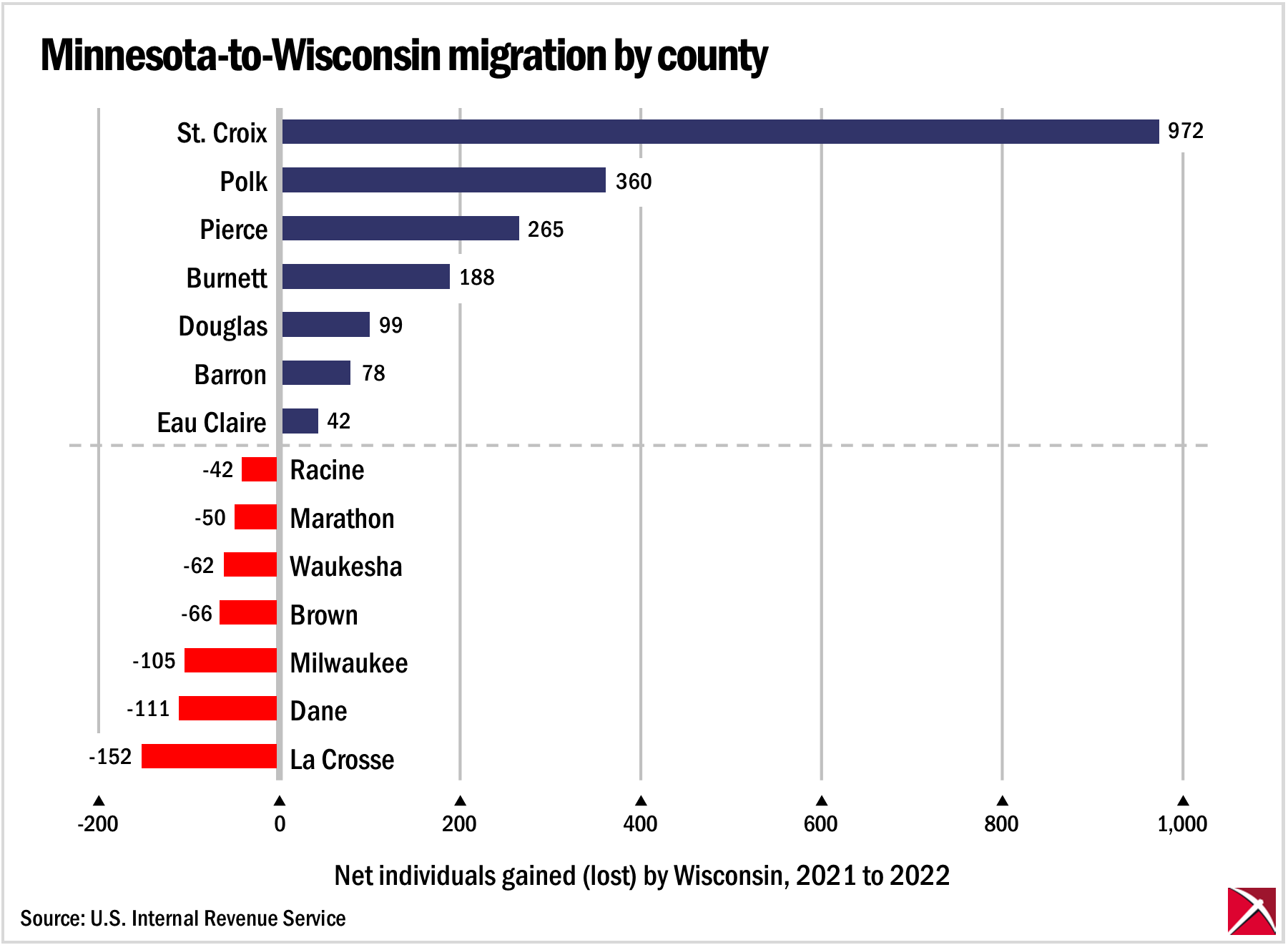
In the flow of people moving between Minnesota and Wisconsin between 2021 and 2022, Wisconsin gained a net total of 2,083 individual new residents, data from the IRS show. That resulted in a shift of adjusted gross income now earned in Wisconsin rather than Minnesota, a shift that netted $189 million in Wisconsin’s favor.
Anecdotally, the trend has continued in recent years, according to a report by the Badger Institute. Individuals say that tax rates and other harmful policies are the motivation to find a better state. |
|
|
Wisconsin, on net, gains the largest number of residents from two neighboring states, Illinois and Minnesota.
|
What’s the third biggest state for net gain of new Wisconsinites? |
|
|
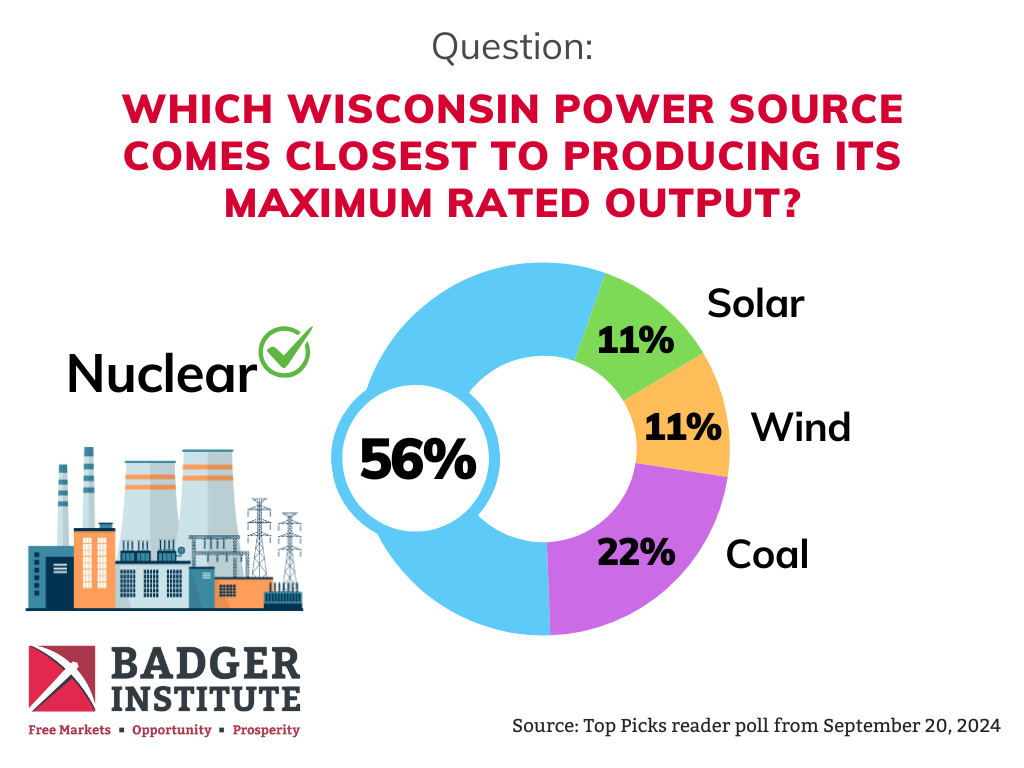
By far, the energy source with the highest capacity factor is nuclear energy. Wisconsin’s one nuclear power plant consistently puts out more than 90% of the maximum amount of power it’s rated for. In 2022, the nuclear capacity factor for Wisconsin was 96.2%. For wind turbines, the capacity factor in Wisconsin last year was 28.2%; for solar power installations, the capacity factor was only 16.9%. |
| |
|
Invest in the Badger Institute |
|
|
|
The Badger Institute, formerly known as the Wisconsin Policy Research Institute (WPRI), has long been at the forefront of the fight for school choice, right to work, welfare reform, tax restructuring, limited government, civil society and so much more. If you appreciate the Institute’s legacy and want to support free markets, opportunity and prosperity, please consider donating today. Your support will help the Institute continue to advocate for conservative principles now and in generations to come.
|
|
|
The Institute never has, and never will, accept government funding. We gratefully welcome your online donation or email Angela Smith, Executive Vice President.
The Badger Institute is a 501(c)(3) tax-exempt nonprofit organization funded solely by the generosity of foundations, companies and individuals. |
|
|
Badger Institute
700 W. Virginia St., Suite 301
Milwaukee, WI 53204 |
|
|
|