| Know better. Do better. |  | Climate. Change.News from the ground, in a warming world |
|
| | Digging deepLast August, the people of Ecuador voted in an historic referendum to ban all oil drilling in part of the Amazon rainforest.
But a year on, scant progress has been made to shut down the oil wells in the Yasuni National Park, despite the wishes of 10 million Ecuadorians and Indigenous leaders.
This week, our Latin America correspondent Anastasia Moloney reports that drilling is likely to continue for five more years.
Environmentalists around the world hailed the referendum result, celebrating the protection of a significant area of biodiversity and a rare example of a country moving beyond fossil fuels.
The state oil firm, Petroecuador, was supposed to shut operations down and restore the area, with Ecuador's constitutional court ruling it had one year to remove its infrastructure from the block.
But oil is still being pumped out. The area produces some 58,000 barrels a day. 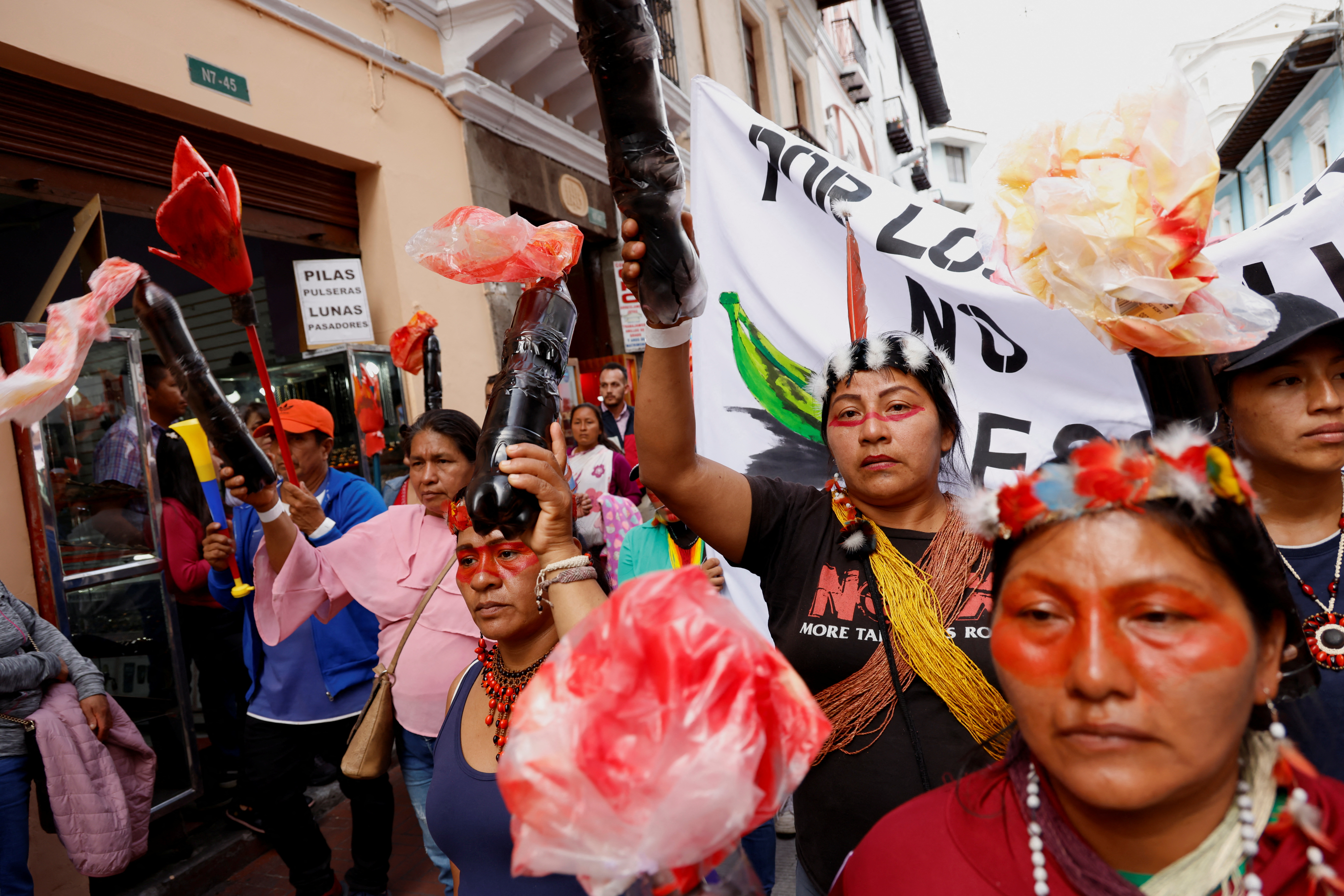.JPG/640w) Members of Ecuadorean indigenous communities march demanding that the government comply with court orders to halt the use of hundreds of gas flares by oil producers in the country's Amazon, in Quito, Ecuador March 12, 2024. REUTERS/Karen
Toro |
"It's very worrying. The machinery is still there, so where's the commitment from the government?" asked Nemonte Nenquimo, a leader of the Waorani Indigenous people, whose ancestral lands lie in the Yasuni rainforest.
"It's been a year, and the government hasn't complied," Nenquimo told Context.
The government said it remained committed to honour the referendum result, but has closed only one of the 247 wells, with the phase-out plan expected to take five-and-a-half years at the cost of $600 million.
"We understand that it's not possible to shut the key and stop oil production overnight, but there's no timetable for a gradual and orderly shutdown," said Fernando Munoz from Yasunidos, an Ecuadorian environmental group, which began pushing for the referendum a decade ago.
"The government is making a mockery of the public referendum," he said.
|
Security crisisClosing down the oil wells in the national park is not straightforward.
Ecuador's government finances are stretched, and its oil revenue equates to nearly 3% of the country's GDP.
Petroecuador has said ending exploration in Yasuni would cost Ecuador some $13.8 billion over two decades.
There are also urgent security challenges facing President Daniel Noboa, who in January declared Ecuador was at war with criminal gangs.
But the country voted on the side of nature. 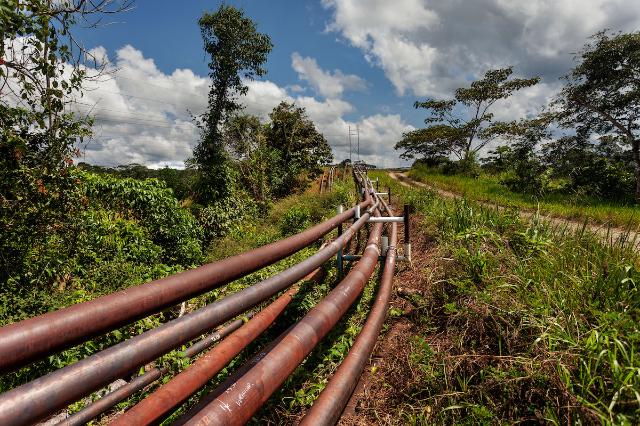 Oil pipelines run alongside roads in Ecuador's Amazon rainforest near Lago Agrio. April 23, 2022. Thomson Reuters Foundation/Fabio Cuttica |
The Amazon rainforest is being pushed towards a "tipping point" by climate change, deforestation and fires that threaten to alter the forest irreparably. This is, in turn, has a dramatic impact on the global climate.
Indigenous groups have campaigned for decades to keep oil companies out. Far from benefitting from oil, they say that building roads and rigs has led to deforestation and environmental damage, be it from oil spills or air pollution.
In May, the government set up a ministerial commission to oversee the closure that included Petroecuador, but not Indigenous organisations. They are now considering taking the issue to the Inter-American Commission on Human Rights.
Far from the end of oil in Yasuni, it seems the referendum was just the start of a much longer battle.
See you next week,
Jack |
|
|
|