|
 |
Border Lines and Factual Divides
Factual Divides Are Widening the Border Crisis—It's Time for Honest Conversations
|

| |||||||||||||||


How do we talk to each other these days? It’s a question I keep wrestling with as I campaign across the state. We all know that our information world has changed—no more shared TV anchors or morning papers shaping our views. Now, it’s a decentralized barrage of fragmented facts and opinions, each with its own spin, each spinning us further apart. We recognize this shift, but adapting to it? That’s a different story.
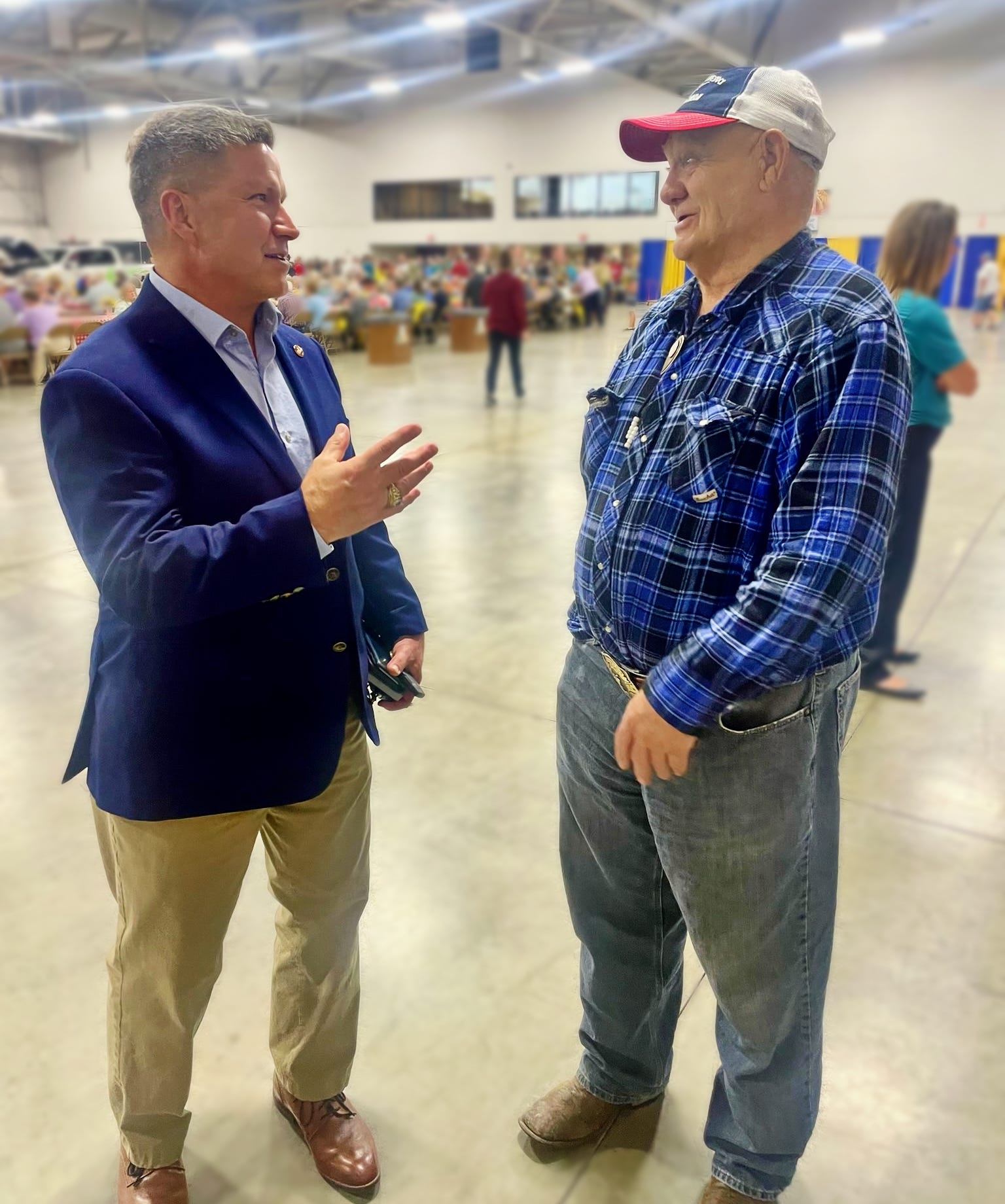
On the campaign trail, this reality hits you every day, and in a place like North Dakota, it’s especially pronounced. You don’t just meet voters; you meet neighbors, cousins, and friends of friends. Our plains may be vast, but our connections are close, often just a handshake away from someone you know. Here, every conversation matters, and every relationship counts because, in a small state, you can’t afford to turn people off or grandstand. You have to listen, really listen, because every voter you win over – or lose – echoes far beyond that one interaction. So, I talk to people, I listen. When you do that – really listen – you learn just how many different versions of the truth people are working with.
I was having breakfast with a group of elderly veterans, the kind of folks who’ve seen a lot and aren’t shy about sharing their thoughts. One gentleman asked me what I planned to do about ‘all the illegals President Biden was flying into the country.’ The question caught me off guard. I’d heard about certain governors pulling political stunts like this, but Biden? Flying in illegal migrants? It didn’t add up.
My knee-jerk reaction was to discount what seemed to me an absurd question. When you’re not operating from the same factual basis, it really tests your ability to have a conversation with folks, especially when your BS radar is flashing red. However outlandish the question seemed to me, it also seemed sincerely asked. So, instead of brushing it off, I tried to ignore my flashing red BS radar to engage. If what he said was true, if the president were flying in illegal immigrants unsanctioned, it would be unsettling. I considered where the truth might be in his question.
The claim wasn’t wholly true, but there was truth in his claim. Biden was flying migrants into the country, albeit legally, using the parole authority Congress first granted the executive branch in 1952 and reaffirmed in 1996. Both Republican and Democratic administrations have used parole. In Biden's case, he negotiated with Mexico, who agreed to accept the same number of migrants who attempted to illegally cross at the southern border as the legal migrants Biden was flying into the country. But that’s not what the headlines screamed, and it wasn’t what he had heard.
We talked it through. He had real concerns about border security—concerns I share. It wasn’t an easy conversation, but it was necessary.
I also think about another conversation I had with a Filipino math teacher who came to North Dakota on humanitarian parole. His town out west desperately needed teachers, and he’s been a lifeline for them. But now his parole is running out, and despite applying to stay two years ago, his future is uncertain.
What would that veteran think if he knew the person he was worried about wasn’t some anonymous “illegal” but a teacher helping to keep our schools open? What would he say to the business owners struggling to find workers, or to the towns watching economic opportunities slip away because they don’t have the people to fill the jobs?
Immigration and border security are complicated issues, and we need to address them head-on. We need a secure border—that’s non-negotiable. But we also need reforms that acknowledge the reality on the ground. We need policies that help our communities thrive, not ones that tear them apart.
But more than that, we need to talk to each other. We need to bridge these factual divides, to listen and to learn, even when it’s uncomfortable.
That’s why I’m running. For North Dakota, for our country, and for the conversations we need to have. It’s time we had leaders who are willing to listen, willing to engage, and willing to find the truth, no matter how complicated it might be.
If you believe in the power of conversation and the necessity of finding common ground, I ask for your support.
 |
With the U.S. House seat open, the race for North Dakota’s sole congressional district has never been more competitive.
Trygve Hammer is a Navy and Marine Corps veteran, a former public school teacher, and a freight rail conductor. He was appointed to the Naval Academy from the fleet and served as a Marine helicopter pilot, forward air controller, and infantry officer.
 |
From bunking down in oilfield camps to engaging uninterested teenagers in the classroom, Trygve’s career has been a tour of duty in the trenches of American life. Trygve’s commitment to public service is unwavering. He lives by the ethos “Officers Eat Last” and is ready to serve as North Dakota’s next Congressman, putting the people's needs first.
Watch Trygve’s campaign launch video here.
| ||||||||||