
Message From the Editor

The urgency of taking action about climate change was a key focus on the last night of the Democratic National Convention this week. “Kamala Harris and Tim Walz will fight for a future where we all have clean air, clean water, and healthy communities,” said Secretary of the Interior Deb Haaland, a former U.S. Representative from New Mexico who has long fought for environmental justice.
But will Democrats follow through on climate action as promised? This week we looked at a new bill in Pennsylvania that will put lawmakers to the test: H.B. 2525. The bill would enact an anti-greenwashing law similar to one in Canada that left polluters scrambling to scrub misleading environmental marketing claims. PA State Representative Chris Rabb is hoping the bill will stop corporations from attempting to gain a greener reputation while covering up their polluting ways.
“This is a state-based approach to cracking down on corporations that take advantage of environmentally conscious consumers,” Rabb said.
And if the Pennsylvania approach shows promise, climate activists must urge the next democratic administration to take similar action at a national level.
Since June, when UN Secretary-General António Guterres said that advertising agencies had “aided and abetted” the fossil fuel industry, “acting as enablers to planetary destruction,” challenging the ad industry has become even more urgent, as evidenced by the PA bill proposal. That’s why it’s shocking to find out that the venerable BBC, which runs the most viewed news platform in the world, has been “greenwashing” the image of companies and countries contributing to global emissions.
In an exclusive investigation, DeSmog’s Sam Bright reveals that BBC StoryWorks, a studio that produces videos, podcasts, and articles paid for commercial clients, has produced dozens of films and articles for oil and gas companies, agricultural giants, fossil fuel states, and high-emission transport firms in recent years.
“This is a huge disservice to the BBC’s audiences, and a betrayal of the many brave and conscientious BBC journalists around the world who see holding power to account and telling the truth as their raison d’etre,” Patrick Howse, the BBC’s former Baghdad bureau chief, told DeSmog.
Send us your story tips or feedback: [email protected]. Want to know what our UK team is up to? Sign up for our UK newsletter.
Thanks,
Brendan DeMelle
Executive Director
P.S. Readers like you power our journalism dedicated to climate accountability. Can you donate $10 or $20 right now to support more of this essential work?
Image credit: Tess Abbot

BBC Accused of Doing PR for Major Polluters
— By Sam Bright (15 min. read) —
The BBC has produced dozens of films and articles for oil and gas companies, agricultural giants, fossil fuel states, and high-emission transport firms in recent years, DeSmog can reveal.
Experts say the BBC has been “greenwashing” the image of companies and countries contributing to global emissions by trumpeting their dubious climate credentials and promoting their favoured solutions to the crisis.
How U.S. governments could crack down on greenwashing
— By Emily Sanders (6 min) —
“Experts agree: [carbon capture and storage] is one of the most important low-carbon technologies required to achieve societal climate goals.”
So says ExxonMobil, in a Facebook ad targeting hundreds of thousands of people across the United States. The ad, which launched last October and ran most recently this month, leads viewers to a 30-second video with computer-generated models and captions describing a seemingly idyllic process. “The CO2 is safely and permanently stored beneath impermeable rock,” one says.


eSportswashing: How the Youth Gaming Market Is Being Targeted by Major Climate Polluters
— By Andrew Simms (4 min. read) —
As an insurgent sport among the sweat and strain of more traditional exertions, esports — short for electronic sports and synonymous with gaming — had a chance to chart a new course. Free from the sponsorship links with polluting industries that tarnish many established sports, and with an overwhelmingly young and growing player and fanbase, esports could have created a blueprint for sport in the 21st century and the critical climate issues it faces.
Unfortunately, esports have fallen into the same trap as football, cricket, and many other popular but easily exploited sports: It has become a playground for some of the world’s biggest polluters to promote themselves and mislead fans. Competitive gaming has made the leap from dimly lit bedrooms to the world stage, but, in the process, has slipped on an oil slick.
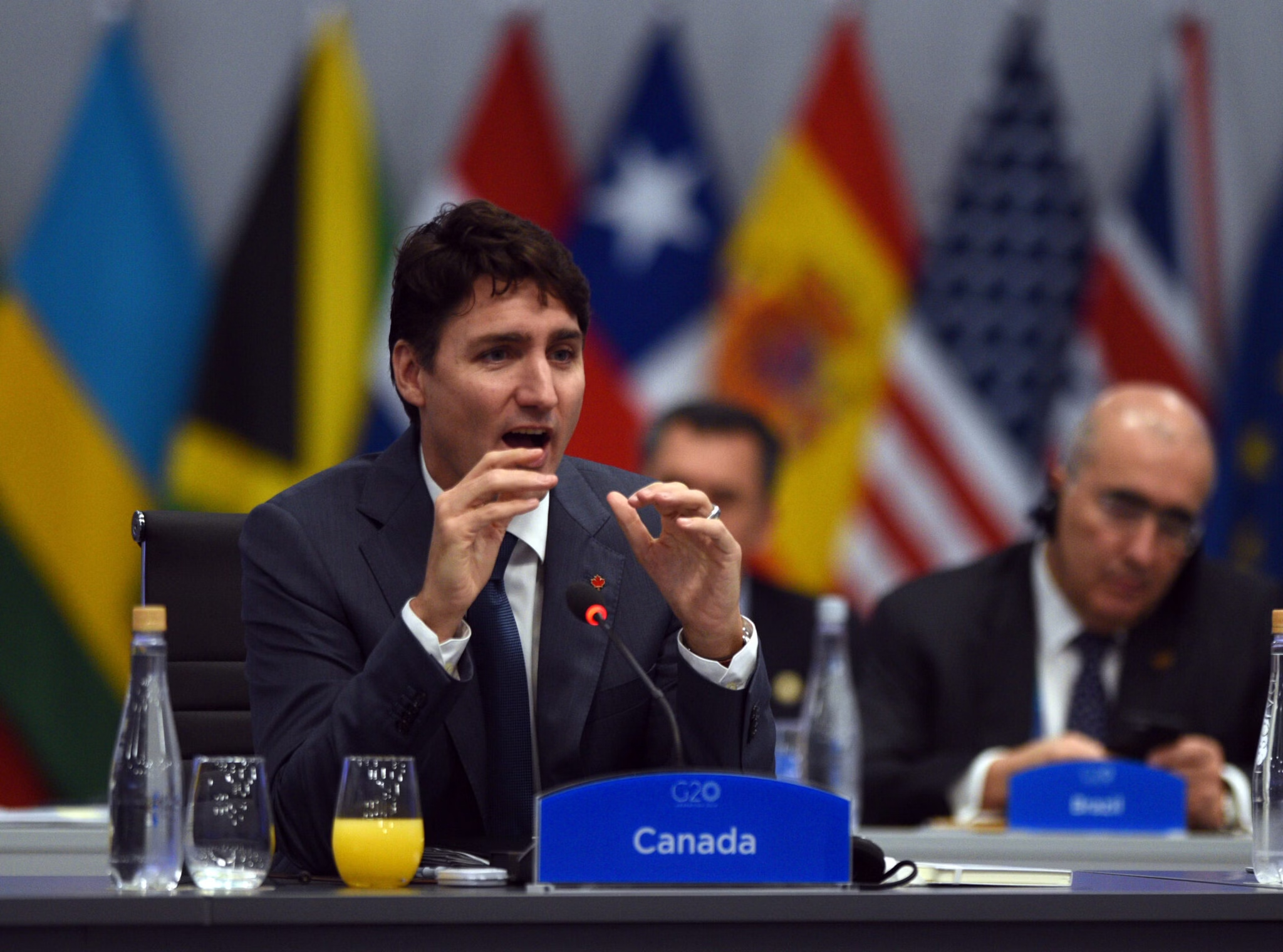
Strathcona CCS Announcement Another Billion Dollar Handout to Canada’s Oil Industry
— By Mitch Anderson (3 min. read) —
Margaret Thatcher once observed “the problem with socialism is that you eventually run out of other people’s money.” This will never be a problem it seems for the Canadian fossil fuel industry.
The latest example of apparently bottomless public largess towards this planet destroying sector is Strathcona Resources, which will access up to $1 billion from the Canada Growth Fund toward building a $2 billion carbon capture facility for their bitumen extraction operations in Alberta and Saskatchewan.

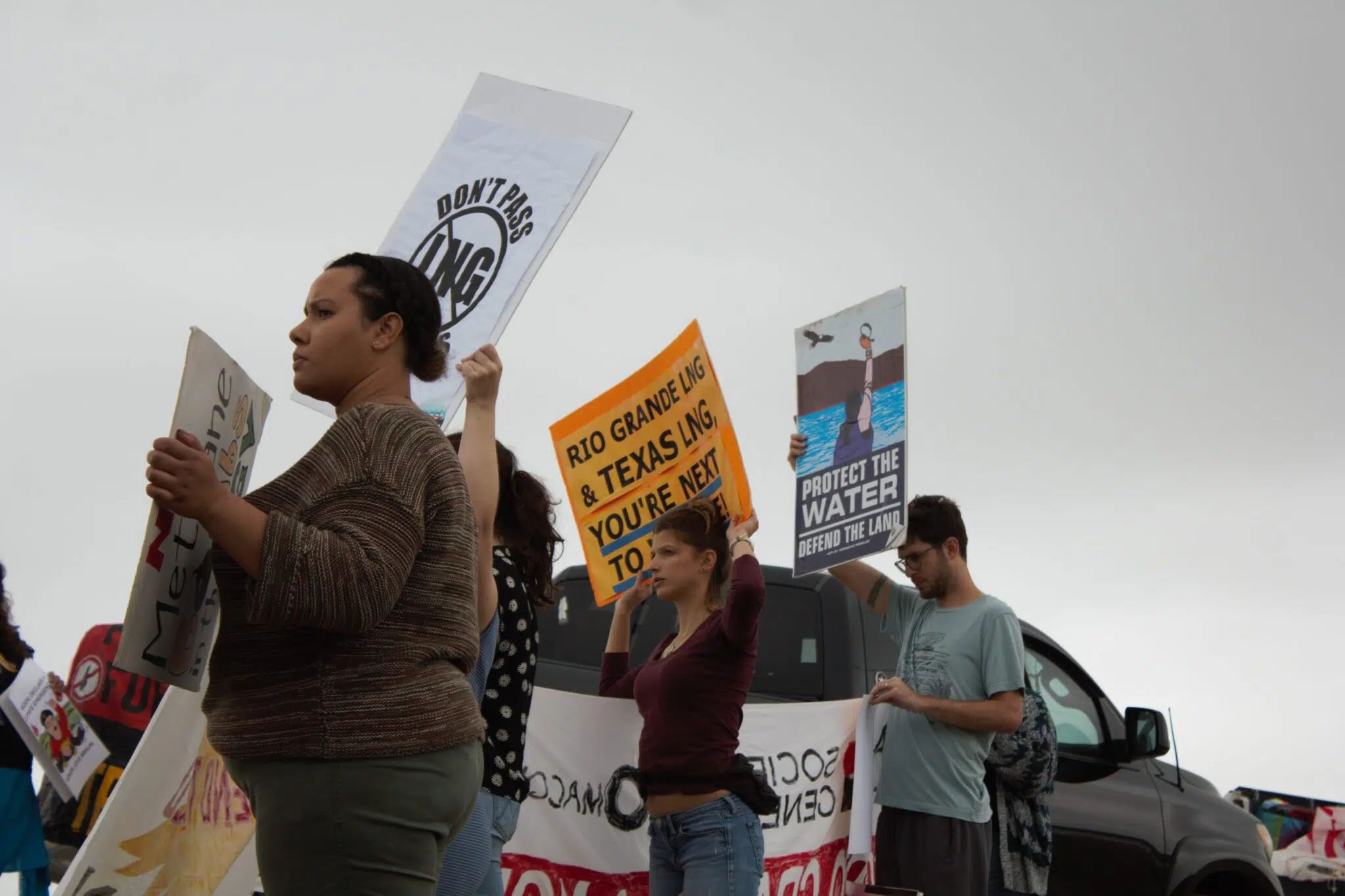
NextDecade Scraps Carbon Capture Plans for Its Rio Grande LNG Terminal
— By Sharon Kelly (4 min. read) —
The NextDecade Rio Grande LNG terminal won’t have a carbon capture component, the company told federal regulators in a filing Tuesday, walking back the company’s heavily marketed plans to make a “lower carbon intensive LNG project.”
“[A]s demonstrated by Rio Grande’s inability to respond to the outstanding data requests, the Project is not sufficiently developed to allow Commission review to continue,” attorneys for Rio Grande LNG wrote in a letter to the Federal Energy Regulatory Commission (FERC) filed today.
From the Climate Disinformation Database: T Brand Studio

T Brand Studio is an advertising firm owned by The New York Times and operating within The New York Times’ New York offices.T Brand Studio specializes in native advertising within the New York Times, in which an advertisement mimics the newspaper’s news articles and graphics. The ad agency’s clients include major fossil fuel polluters including BP, Shell, ExxonMobil and Chevron. In 2022, the U.S. House Natural Resources Committee obtained a Telly Awards submission for ExxonMobil’s “Unexpected Energy” campaign, which emphasized ExxonMobil’s renewable energy investments across all platforms of the New York Times. To fix the public’s misunderstanding of Exxon’s climate commitments, Universal McCann turned to T Brand Studio “to reach our target audience where content would be in a ‘Timesian’ voice.” This involved an ExxonMobil takeover of the science section of the New York Times print edition, ads in the New York Times’ popular “The Daily” podcast, one-minute videos, and longform, journalistic-style advertisements. The New York Times has not committed to stopping fossil fuel advertising. Clean Creatives, an initiative of Fossil Free Media, put T Brand Studio on its 2022 F-List for its work for ExxonMobil.
Read the full profile and browse other individuals and organizations in our Climate Disinformation Database, Ad & PR Database, and Koch Network Database.


