Supporting Michigan Libraries - 8/22/2024
|
Checking Facts for Deeper Understanding
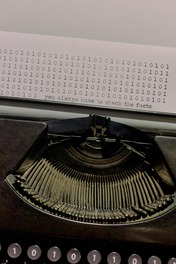
In the fall of 2022, with midterm elections coming, I wrote about leading more information literate lives. Heading back to school and college this fall, as well as with the 2024 election coming in November, now is the perfect time to highlight some recent MeL updates on this topic. The Michigan eLibrary (MeL) includes content that educators and library staff can use to help students and patrons navigate the abundance of information that they are inundated with daily.
Working to identify credible sources using checklist methods such as CRAAP or SIFT has been common practice. However, other strategies might prove more effective. In Communications in Information Literacy (indexed in Library & Information Science Source 2010-present), Mark N. Lenker III presents "Dwindling Trust in Experts: A Starting Point for Information Literacy." He notes that recent studies have shown that people have less trust in experts and provides alternative teaching strategies that might help people think about sources differently. For example, he suggests research should be more about understanding ideas than settling a question with certainty since we can always learn more about a topic and gain further knowledge that might shift perspectives. He also devises questions that can be asked about a source to better determine if the information it contains can be trusted.
Media Smart: Lessons, Tips and Strategies for Librarians, Classroom Instructors and Other Information Professionals by Joanna M. Burkhardt in the eBook Academic Collection provides background information about how technology and media intersect. The content is accompanied by exercises to help demonstrate the ideas. Timely topics include artificial intelligence, statistics and data visualization, deepfakes, and fact checking.
In Computers in Libraries (indexed in Library & Information Science Source 1993-present), "Voices of the Searchers" by Mary Ellen Bates asserts that information literacy is still being taught as it was in the 1970s. She suggests that we all need to be more like professional fact-checkers using skills such as lateral reading and learning about technology including GenAI to successfully determine the legitimacy of a source.
Information literacy continues to be a hot topic in the library profession. Additional content MeL eResource content on the topic includes:
|
|
Brought to you by Laura Warren-Gross from the MeL Team
Supporting Michigan Libraries by Putting You First.
Want more information on MeL? Stay tuned for the next MeL Minute available on many Michigan library listservs, visit http://mel.org, or sign up for the MeL Minute and other Library of Michigan e-mail lists via GovDelivery. We encourage you to share MeL Minutes with your colleagues and networks.
MeL eResources are available to Michigan residents or for Michigan library or school access only.
This project was made possible in part by the Institute of Museum and Library Services through the Library of Michigan.
#IMLSGrant
|