Frequently asked questions on the Badger State’s August 2024 referendum |
Q: What are the basics of the constitutional amendment on major federal spending?
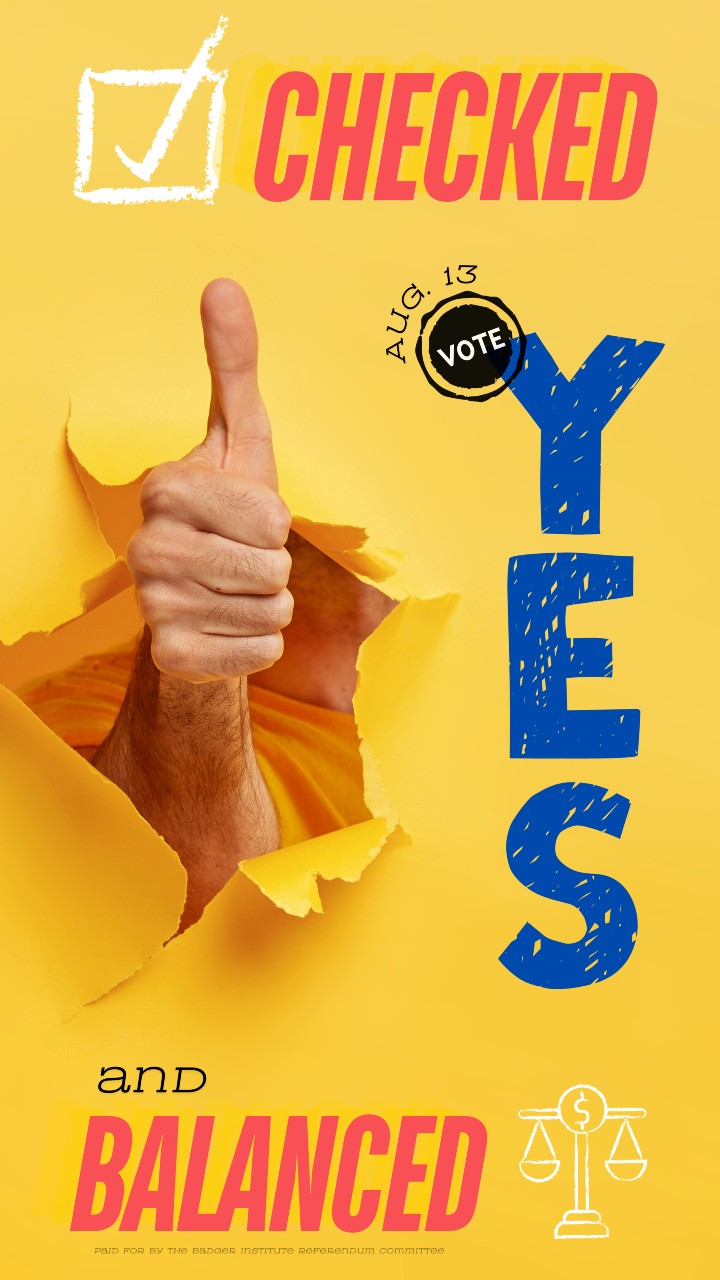
A: On Aug. 13, voters across the state should vote “yes” to two questions that would amend the state Constitution. The first would prohibit the legislature from ceding its “sole power to determine how moneys shall be appropriated” and the second would prevent the governor from spending money from major federal allocations without legislative approval. |
|
|
|
“We’ve spent years researching and reporting on how ‘free’ federal grants are used in often wasteful, harmful ways with no accountability,” said Mike Nichols, Badger Institute president. “A ‘yes’ vote on the constitutional amendments on the August ballot will help hold the politicians accountable for billions of dollars in spending.”
“This is a non-partisan issue that all Wisconsinites should be able to agree upon. ... Federal debt is exploding and we need to make sure there are appropriate checks and balances. All voters, all taxpayers, deserve a say through their elected officials.” |
|
|
How much tax revenue can states raise on legal cannabis before driving users into the illegal market?
|
Every state with an adult-use cannabis market has chosen to impose a special, additional tax on such products, but their tax regimes vary widely depending on the state.
The most popular approach — used by half of the states with adult-use markets — is to apply both a general state sales tax and an additional excise tax equal to a set percentage of the retail sales price. The other half of states use a variety of approaches, such as imposing a set-dollar tax on the cultivation of each plant or a certain weight of product, utilizing product potency to impose different tax rates, or solely applying a special excise tax without a general sales tax.
There is also a wide diversity in the severity of tax burdens imposed by states. These burdens range from 9% in states such as Maryland and New York to 43.5% in Washington. In a handful of states, it is very difficult to quantify the tax burden given their weight- or potency-based approaches and the unpredictable fluctuations in product prices. |
Segment begins around 21:40 |
“Legalization will also cut into alcohol abuse, as it provides an alternative for alcohol as a stress-management tool. In a state with Wisconsin’s record, that should be a consideration.” |
— Erik Anderson; North Freedom, WI |
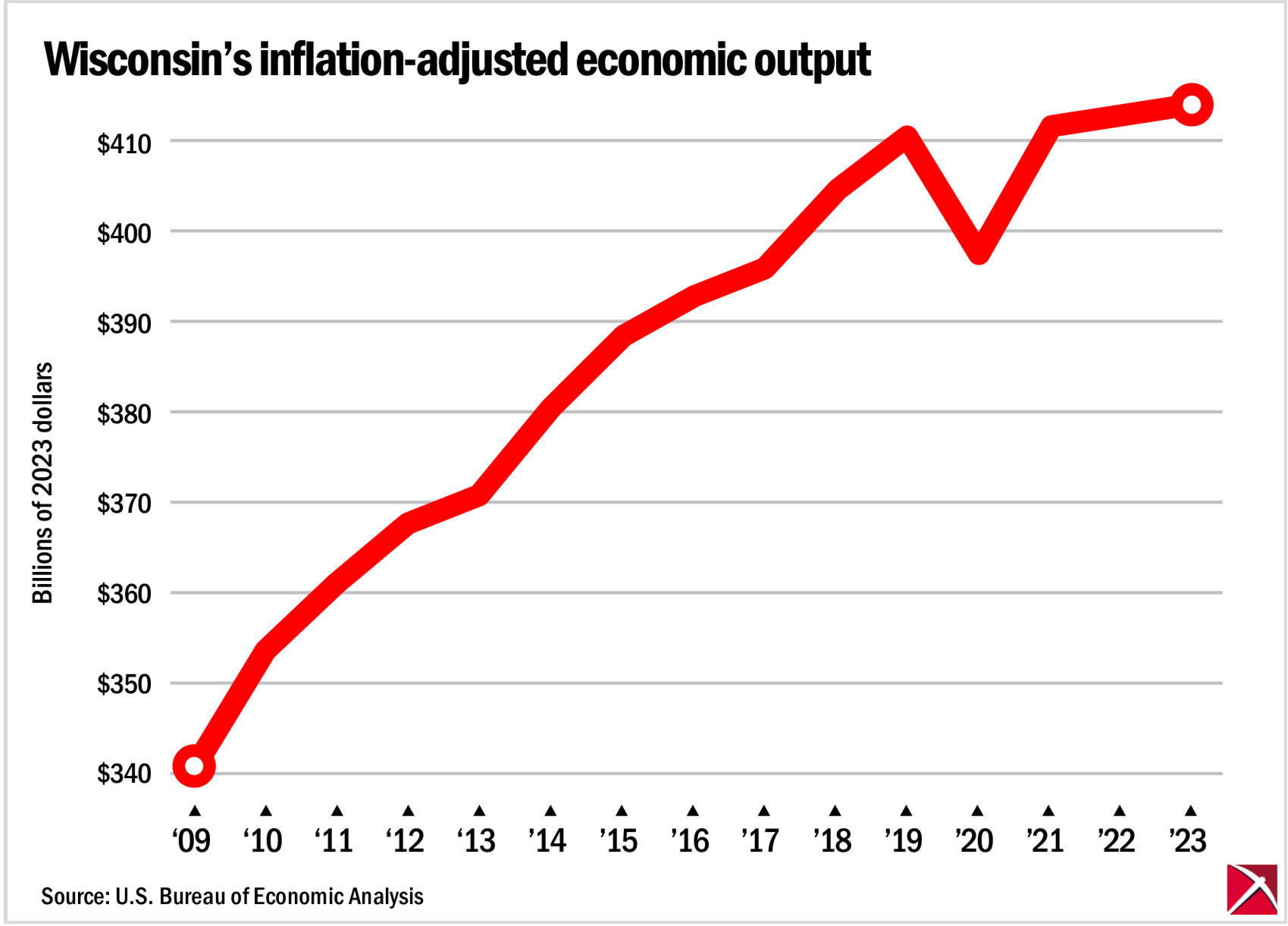
Wisconsin’s economic output has been sluggish since recovering from a pandemic-induced contraction, inflation-adjusted data from the U.S. Bureau of Economic Analysis show.
Year-over-year growth rates in real output were just 0.35% and 0.23% in 2022 and 2023, respectively. |
|
|
Katie Colson is the office manager at the Badger Institute, providing a wide variety of support and organization to the team. Prior to joining the Badger Institute, she spent time living and working at Lake Geneva Youth Camp. There she was a summer staffer and part of the gap year program. Katie is from the northwest suburbs of Chicago, but now lives in a suburb of Milwaukee. In December of 2022, she graduated from Judson University in Elgin, Illinois.
Welcome, Katie! |
|
Policy and Legislative Associate |
Wyatt Eichholz graduated from the University of Alabama in 2024 with a Master of Arts in economics. Wyatt previously interned with the Badger Institute in 2022 and is an alumnus of the Heritage Foundation’s Young Leaders Program. He has also interned for U.S. senator Ron Johnson and state senator Dale Kooyenga. While at Alabama, Wyatt served as the chairman of the University of Alabama chapter of Young Americans for Freedom and was a senior correspondent for the Leadership Institute’s Campus Reform.
Welcome back, Wyatt! |
|
|
Badger Institute’s Annual Dinner is set for Tuesday, October 1, 2024 — at the Wisconsin Club in Milwaukee, WI. The Institute is honored to welcome Rich Lowry, editor-in-chief of National Review, as the keynote speaker.
Registration information coming soon! Email Angela Smith for sponsorship opportunities. |
|
|
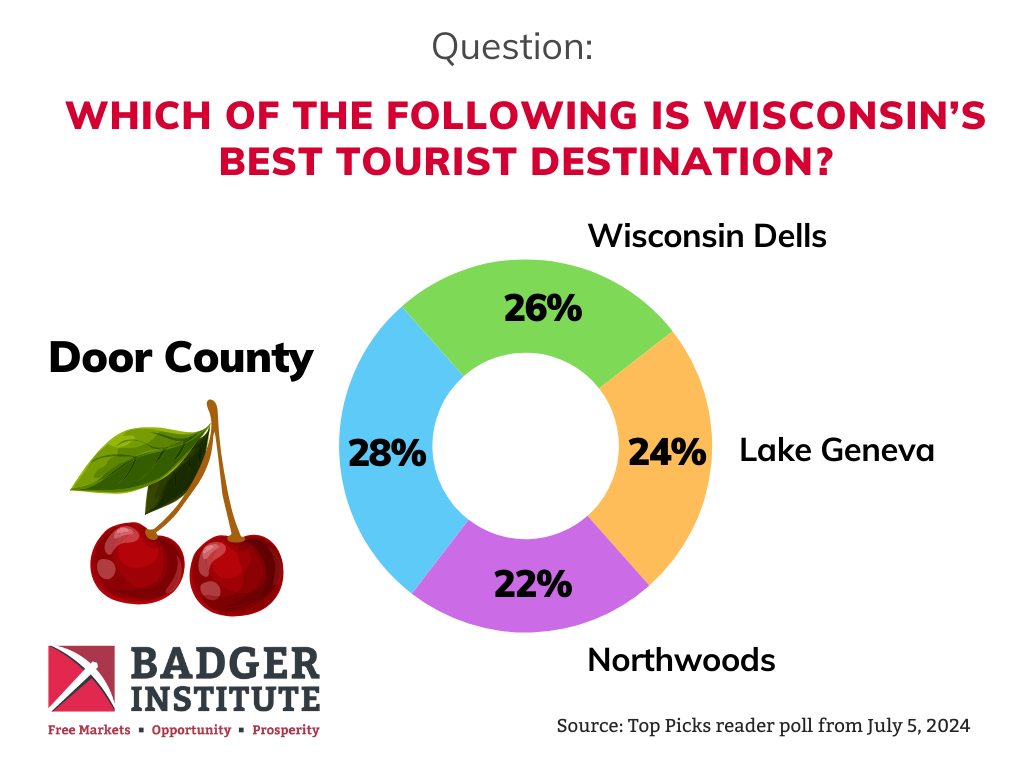
August referendum preview poll:
|
On Aug. 13, Wisconsin voters will weigh in on two questions related to government spending. We’re previewing the first question this week, and we’ll preview the second next week. Click below to participate in the poll. |
Question 1: Delegation of appropriation power. Shall section 35 (1) of article IV of the constitution be created to provide that the legislature may not delegate its sole power to determine how moneys shall be appropriated? |
|
|
Invest in the Badger Institute |
|
|
|
The Badger Institute, formerly known as the Wisconsin Policy Research Institute (WPRI), has long been at the forefront of the fight for school choice, right to work, welfare reform, tax restructuring, limited government, civil society and so much more. If you appreciate the Institute’s legacy and want to support free markets, opportunity and prosperity, please consider donating today. Your support will help the Institute continue to advocate for conservative principles now and in generations to come.
|
|
|
The Institute never has, and never will, accept government funding. We gratefully welcome your online donation or email Angela Smith, Executive Vice President.
The Badger Institute is a 501(c)(3) tax-exempt nonprofit organization funded solely by the generosity of foundations, companies and individuals. |
|
|
Badger Institute
700 W. Virginia St., Suite 301
Milwaukee, WI 53204 |
|
|
|