|
Working with partners to restore and protect Minnesota's waters |
|
|
July 2024
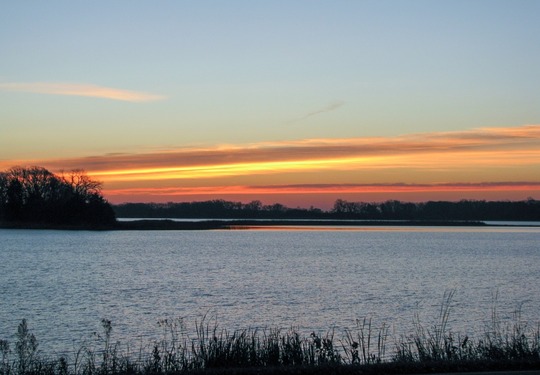
MPCA water scientist Scott MacLean spoke with KMSU Radio's Karen Wright about the health of Minnesota Lakes. Click here to hear the conversation. Pictured: Middle Lake in Kandiyohi County is one of 15 lakes the MPCA removed from the impaired waters list in 2024.
The MPCA prepares two reports that help direct watershed restoration. A total maximum daily load (TMDL) report addresses impaired waters by establishing the amount of each pollutant that a water body can accept and still meet water quality standards, or the reductions needed to meet the standards. The second report, a watershed restoration and protection strategy (WRAPS) report, uses TMDL reports, monitoring results, and other information to develop strategies for restoring polluted waters and protecting healthy ones.
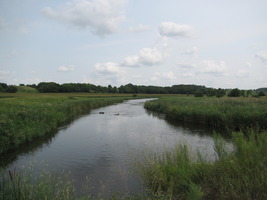
Pomme de Terre
The MPCA completed a public-notice period for the Pomme de Terre River Watershed June 27. Scientists identified 13 new impairments to bodies of water in this west-central Minnesota watershed, which includes the counties of Otter Tail, Douglas, Grant, Stevens, Swift, and Big Stone. They include three aquatic recreation impairments on lakes, two aquatic life impairments on lakes, and eight impairments on stream reaches. One stream segment that the MPCA previously listed as impaired, Pelican Creek in Grant County, was found to no longer have impaired macroinvertebrates communities. However, some water resources that already meet standards need additional protection.
Findings include:
- For the lakes with long-term trends, 29% are seeing improvements in water quality as measured by water clarity and 62% are showing no change.
- Drywood Creek shows improved scores for both fish and macroinvertebrates over the last 10 years but not enough to delist the impairments.
- Monitoring in Appleton between 2008 and 2020 showed a small but statistically significant increase in nitrates.
- Flows in the Pomme de Terre River and its tributaries are increasing.
|
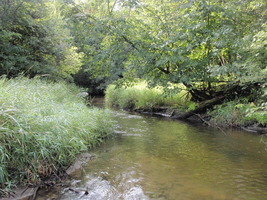
Mississippi River-St. Cloud
The MPCA completed a public-notice period for the Mississippi River-St. Cloud Watershed June 12. Scientists found significant progress in the surface water quality over the past decade. Positive trends were found on 17 lakes and included eight delistings from Minnesota's Impaired Waters List. Two of the delistings, Plum Creek and Lake George, are featured as Success Stories on the U.S. Environmental Protection Agency website.
This watershed is upstream from the Twin Cities, and the conditions in it affect water supplies for nearly a million residents. The area includes the counties of Benton, Meeker, Mille Lacs, Morrison, Sherburne, Stearns, and Wright.
Findings include:
- The area has some of the fastest-growing communities in the state.
- Seven lakes and six stream segments were added to the Impaired Waters List.
- Of 34 lakes with data, 20 had improving trends, 13 indicated no change, and one was declining.
- Bacteria continues to be a significant issue in waterways.
|
Mississippi River-
Lake Pepin Tributaries
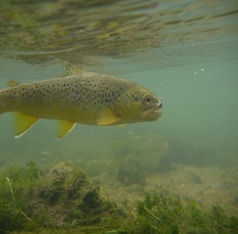
The MPCA will provide the opportunity for public comment on the draft Mississippi River-Lake Pepin Tributaries Watershed WRAPS report this summer. This report covers a small area in southeastern Minnesota that includes six coldwater streams, five of which are designated trout streams, that flow into Lake Pepin.
Overall, conditions in the watershed are improving, however, excess sediment continues to be a threat, especially during rain and high-flow events. This small watershed is located in the Driftless region, which is dominated by karst (limestone) topography. The limestone rock, as it erodes, leads to underground streams, springs, sinkholes, and caves. This land has limited capacity to store water on the land surface, and there is a substantial connection between surface and groundwater resources.
Findings include:
- Hay and Gilbert creeks were removed from the Impaired Waters List.
- Wells Creek was added to the Impaired Waters List and will receive federal grant funding to address pollution.
- The presence of fecal pathogens in surface water continues to be a regional problem in southeast Minnesota.
- The biggest pollution sources are poor riparian vegetation cover, streambank erosion, and leaching from fertilizer and manure.
- Landowners are the key to restoration and protection of this watershed through voluntary implementation of best management practices on the landscape.
|
MPCA aids in fuel-spill cleanups
- Cleanup of a diesel fuel spill in Silver Bay, Minnesota, was completed Wednesday, June 5. The spill happened May 29 near the Northshore Mining Co. facility and was contained to a small area the same day. The U.S. Coast Guard estimated it to be 373 gallons of red dye diesel fuel.
- An oil spill on Green Lake in Spicer, Minnesota, was cleaned June 4. A city official estimated the spill at about 5 gallons. The cause was under investigation.
 |
|
We Are Water exhibit
moves to North Branch
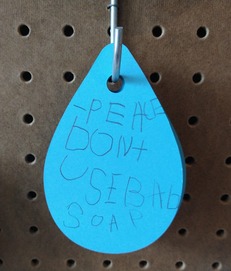
The traveling We Are Water exhibit examines water issues statewide through personal stories, histories, and scientific information. It will be at the library in North Branch, 6355 379th St., June 20-Aug. 12. The interactive displays are fun and informative for all ages, including the young participant who shared the advice to "please don't use bad soap."
|
|
|
In the news
Collecting data on
New London pond
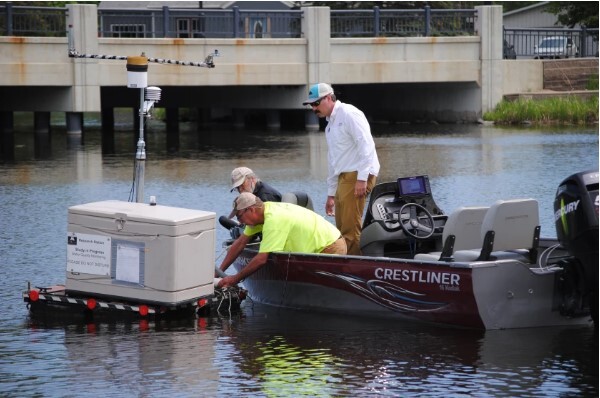
A new buoy might help ease the rotten-egg smell of hydrogen sulfide in New London's Mill Pond. Scientists from the University of Minnesota and Crow River Watershed District will record the level of dissolved oxygen, temperature, turbidity, pH, weather conditions, concentration of blue green algae, and more. — West Central Tribune (Willmar)
|
Sleepy Eye City Council OKs Minnesota River Basin resolution
The Sleepy Eye City Council unanimously approved a resolution in May to support efforts to protect the environment by increasing water storage and reducing sedimentation. Action came on a motion to support an initiative by the Minnesota River Congress, a citizen-led group focusing on the natural resources and economic health of the Minnesota River Basin. — The Journal (New Ulm)
UM offers new climate mapping tool
A new online tool was launched recently by the University of Minnesota Climate Adaptation Partnership and state Department of Commerce. Users can create either a map or a spreadsheet that visualizes climate change predictions. The data can be grouped by county, watershed, and other delineations.
Stream restoration begins in Stillwater
A stream restoration project has begun in the Stillwater area. It's designed to reduce bank erosion and improve habitat for fish along a half-mile stretch of water, according to a report May 13 from Minnesota's East Metro Water Resource Education Program. "While the initial tree clearing and earth-moving might appear alarming," the report said, "the project promises major ecological benefits for the stream and surrounding wetlands."
Lawmakers direct $16 million to clean up wells
Advocates say they're pleased the Minnesota Legislature put $16 million toward solving southeast Minnesota's nitrate pollution problem, but some are concerned lawmakers shortchanged efforts to treat private wells in the region. — Minneapolis Star Tribune
Bone Lake removed from impaired waters list
The water in Bone Lake in Scandia is clean enough for fishing, swimming, and water recreation for the first time in 20 years, thanks to a comprehensive watershed restoration effort led by the Comfort Lake-Forest Lake Watershed District, in partnership with the Bone Lake Association. — The Gazette (Stillwater, Oak Park Heights, Bayport, Lake Elmo)
Lake Elmo, Oakdale residents lobby for bottled water
Residents from the Tri-Lakes area in Lake Elmo and Oakdale are asking Minnesota officials to provide bottled water until they can get testing done to show whether their private wells have PFAS chemical levels exceeding the new limits for drinking water announced in April. — twincities.com

Detroit Lakes residents discuss lake health
The 79th annual meeting of the Lake Detroiters Association on June 15 discussed how spring ice-out rose the lake level 11 inches before dropping, invasive flowering rush is still a problem, speeding boats are a hot topic, and more. (Detroit Lakes Tribune photo) — DL-Online
|
Training programs will help wastewater operations
Southern Minnesota officials hype the benefits that two new training programs for water and wastewater operators will offer. In the 2024 session, the state legislature appropriated $350,000 over the course of three years to create a program through Riverland Community College. — Austin Daily Herald
|
|
 Become a volunteer water monitor
For 50 years, volunteers have gathered critically important water clarity data on Minnesota lakes and streams. Anyone can do it — no prior experience is needed.
|
|
|
The MPCA Waterfront Bulletin newsletter welcomes news from partners about
watershed projects, people, and upcoming events throughout Minnesota.
Email submissions to: [email protected].
|
|
The Minnesota Pollution Control Agency is a state agency committed to ensuring that every Minnesotan has healthy air, sustainable lands, clean water, and a better climate. |
|
|
|
|