
Message From the Editor
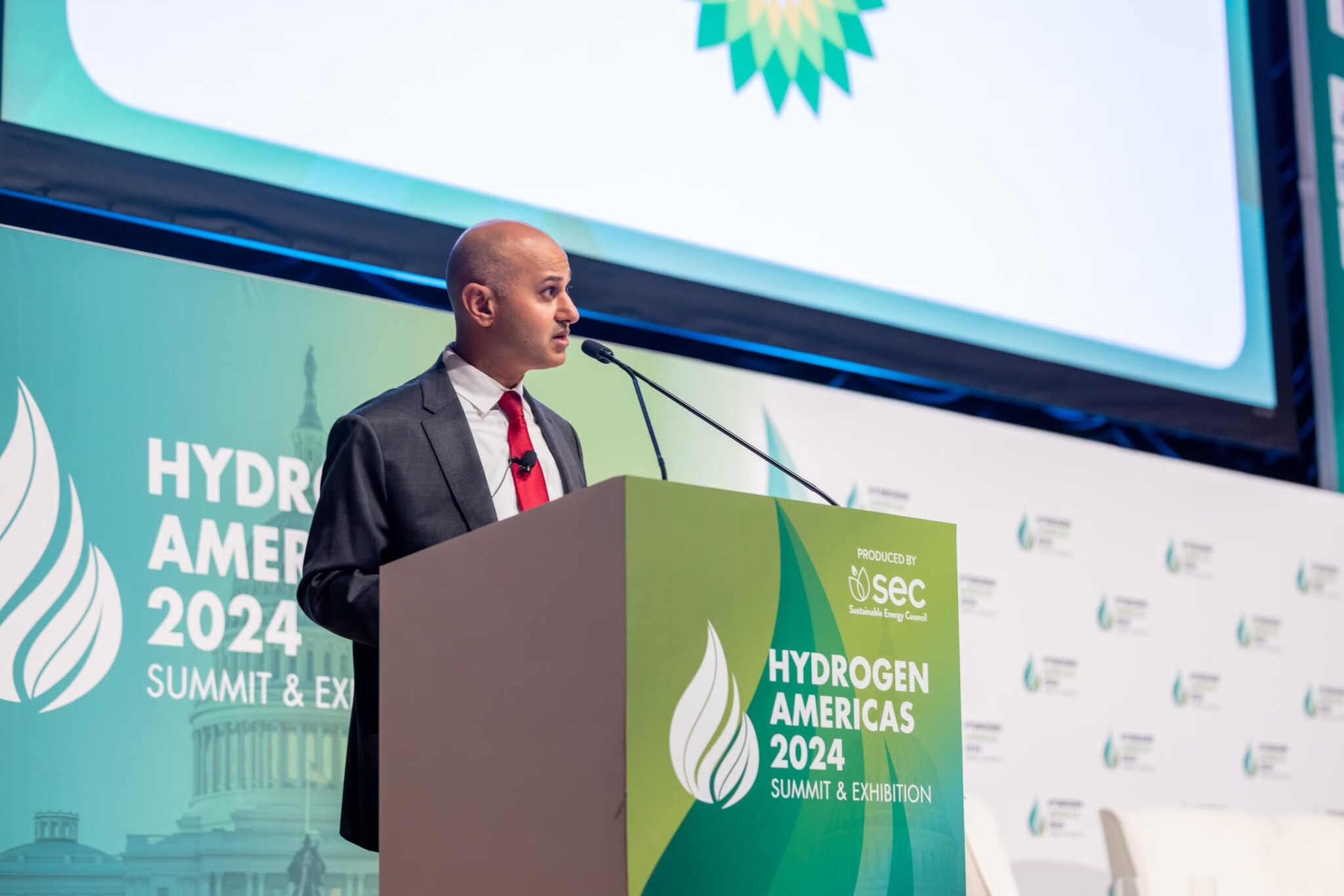
You might have noticed that alongside carbon capture, one of Big Oil’s next favorite supposed solutions to climate change is the “H” word: Hydrogen. It’s starting to creep more and more into the fossil fuel hype machine, which means you should watch out for some important nuances of language.
“The world needs ways to reduce carbon emissions. We’re working on solutions in our own operations,” an ExxonMobil ad recently claimed on The New York Times podcast The Daily, “like carbon capture and clean energy from hydrogen.”
“Clean energy from hydrogen”? What does that mean coming from a multinational oil and gas firm?
As reporter Adam Lowenstein reports from the Hydrogen Americas Summit this week, so-called “clean hydrogen” for Exxon, BP, and other major oil companies means hydrogen derived from natural gas and reliant on capturing carbon emissions using unproven and unreliable technology.
The Biden administration is finalizing a potentially lucrative hydrogen tax credit that favors projects generating hydrogen from renewables, but as Lowenstein reports: “oil and gas companies are pushing for a ‘technology neutral’ approach that would allow them to cash in on the hydrogen tax incentives while continuing to produce hydrogen using natural gas – rather than shifting toward genuinely zero-emissions sources of energy like wind or solar.”
“When they talk about [being] ‘agnostic to the technology,’ it’s because … they want to use natural gas to produce the hydrogen,” Cornell University professor Robert W. Howarth told DeSmog.
At the same time, Dan Holton, an executive at ExxonMobil’s Low Carbon Solutions division, warned at the summit that his company might not move forward with its “world-scale hydrogen facility” at a refinery near Houston, Texas, without a hydrogen tax credit that caters to the oil and gas industry’s interests.
Read the full story to hear how oil majors are cloaking demands for subsidies in the U.S. and European Union using “clean” but not “clear” language.
And speaking of problematic climate “solutions,” reporter Sara Sneath reports this week on flimsy climate pledges from European and Asian banks, including some that claimed to stop financing new oil and gas production. Yet many of these banks are financing what could become Europe’s largest liquefied natural gas import terminal, which is slated to receive fracked gas from Texas and north Louisiana, by way of two massive new LNG export facilities on the Gulf coast. Get the full story.
Since 2006, DeSmog has been uncovering the fossil fuel industry’s deceptions in advertising. If you want to see more investigations, help us help you: Send us your story tip or feedback: [email protected]. Want to know what our UK team is up to? Sign up for our UK newsletter.
Thanks,
Brendan DeMelle
Executive Director
P.S. Readers like you power our journalism dedicated to climate accountability. Can you donate $10 or $20 right now to support more of this essential work?
Image credit: Sustainable Energy Council

Climate Pledges Haven’t Stopped These European Banks From Financing LNG
— By Sara Sneath (4 min. read) —
A liquified natural gas import terminal that could become one of Europe’s largest such facilities has received financing from a dozen European and Asian banks, many of which have existing climate pledges.
A list of the 12 banks financing the proposed Stade LNG Terminal in Germany was created by Reclaim Finance, a Paris-based research organization focused on decarbonizing financial flow, and shared exclusively with DeSmog. The list includes French lender Credit Agricole, which received praise for pulling out of LNG projects in Mozambique and Papua New Guinea this year. Dutch lender ING Bank, which claims not to finance new oil and gas production, is also among the financiers of Stade LNG, according to Reclaim.
‘Thumb on the Scale’: Big Oil Aims to Cash in on Hydrogen Tax Credits – with Natural Gas
— By Adam M. Lowenstein (6 min) —
Less than two years after securing generous subsidies in President Joe Biden’s landmark climate legislation, some of America’s largest oil and gas companies are directing their advocacy toward shaping one of the law’s obscure but potentially lucrative provisions: a tax credit for hydrogen production.
The hydrogen tax credit – known among advocates and industry players as “45V” for the section of the Inflation Reduction Act (IRA) that created it – felt at times as if it were the sole focus of the Hydrogen Americas Summit, a two-day industry confab held June 11-12, that wrapped up yesterday in Washington, D.C.

Carbon Capture Will Extend Oil Production by 84 Years, Industry Study Finds
— By Geoff Dembicki (5 min. read) —
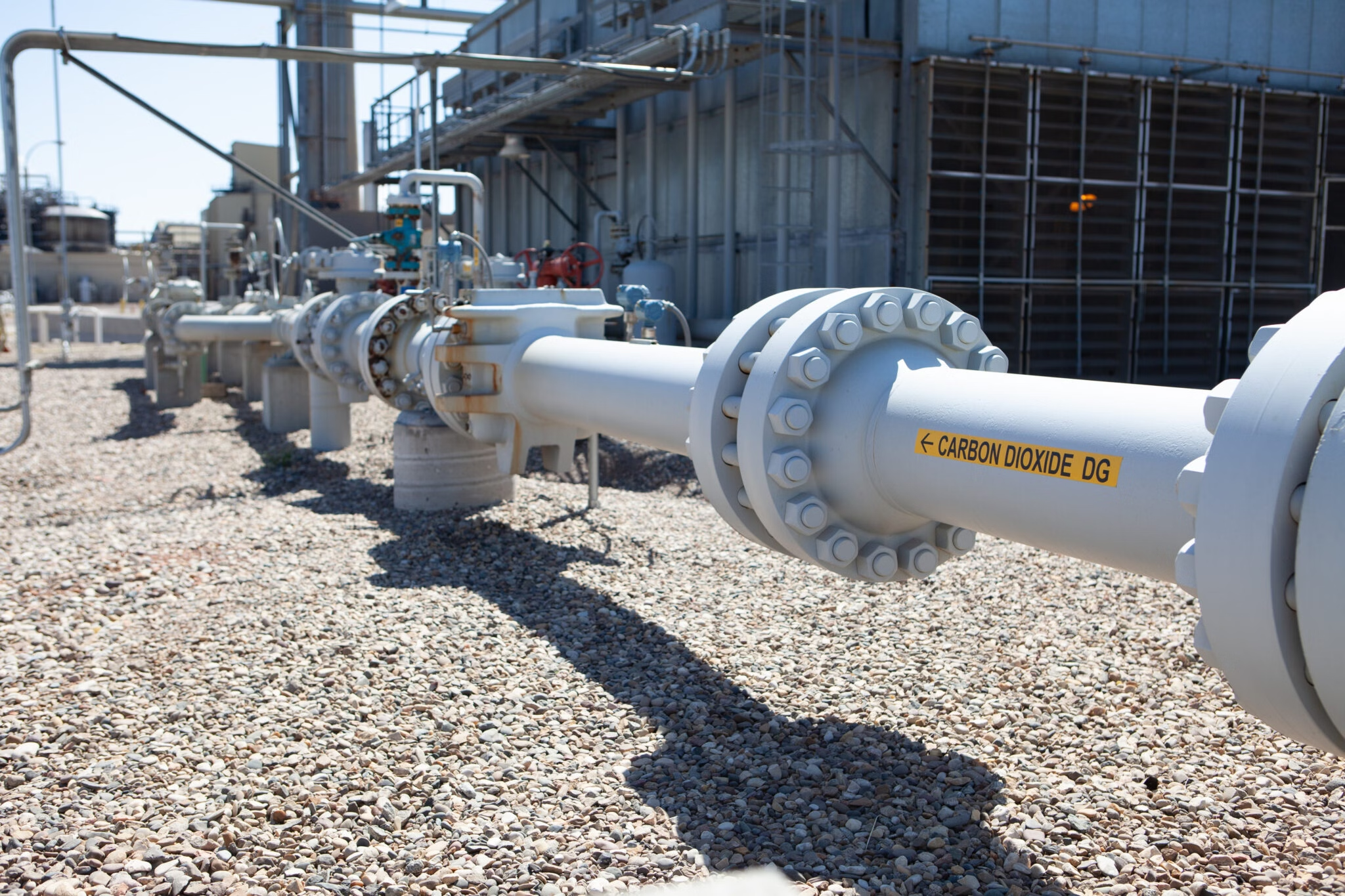
A major Canadian oil field in the province of Saskatchewan would likely have reached the end of its life eight years ago. But thanks to carbon capture and storage, a technology widely touted by the oil and gas industry and some political leaders as a key solution for climate change, the field could still be producing 1.5 million barrels of oil annually by the year 2100.
That’s according to calculations from Calgary-based senior geological advisor Menhwei Zhao, who authored a paper about his findings in the February 2024 issue of the AAPG Bulletin, a journal published by the American Association of Petroleum Geologists.

Big Banks Have Funded Climate Crisis With Nearly $7 Trillion Since Paris Agreement
— By Olivia Rosane (4 min. read) —
The world’s 60 biggest banks funded fossil fuels to the tune of $6.9 trillion in the eight years following the Paris agreement.
That’s the conclusion of the 15th annual “Banking on Climate Chaos” report, which was published on May 13, and also found that the financial institutions lavished $705 billion on oil, gas, and coal in 2023—the hottest year on record.
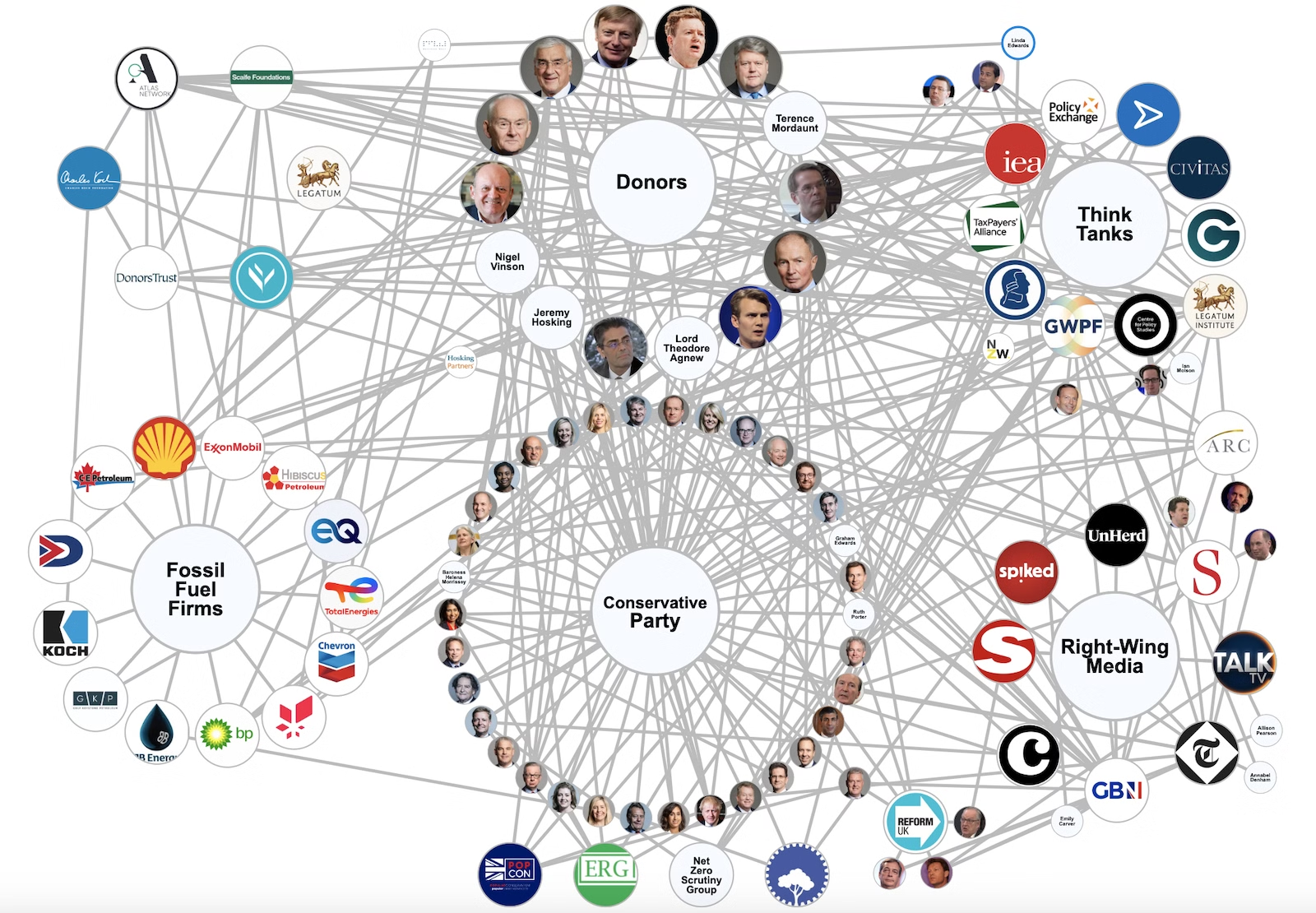
Mapped: The Tory Network of Climate Denial and Fossil Fuel Funding
— By Adam Barnett (12 min. read) —
Speaking outside Downing Street on 23 May, announcing a general election for 4 July, Prime Minister Rishi Sunak took a swipe at what he dubbed “environmental dogma”. It was a sign of how much has changed since 2021, when the UK hosted the flagship COP26 UN climate summit with a promise “irrefutably to turn the tide and to begin the fightback against climate change”.
Since then, the Conservative government has made a series of U-turns on its own net zero policies, attacked Labour’s green spending plans, and doubled down on its support for new fossil fuel projects, approving more than 100 new North Sea oil and gas licences.

From the Climate Disinformation Database: John F. Clauser

John F. Clauser is an experimental physicist and member of the board of directors of the CO2 Coalition, a group that claims that both CO2 emissions and associated global warming would be “of great benefit to life on earth.” Clauser has declared “there is no real climate crisis.” He was one of three physicists to share the Nobel Prize in Physics in 2022 “for experiments with entangled photons, establishing the violation of Bell inequalities and pioneering quantum information science.”
Read the full profile and browse other individuals and organizations in our Climate Disinformation Database, Ad & PR Database, and Koch Network Database.


