As the decline in natural pollinators becomes a critical threat to our ability to feed
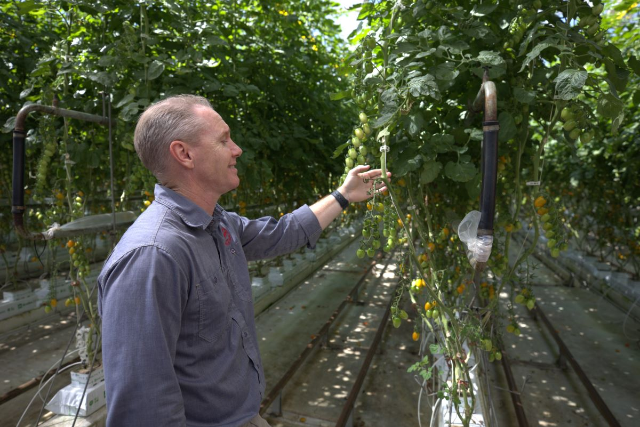
the world, one indoor farm in Two Wells, South Australia, is looking to a couple of airborne heroes to step up: Maverick and Goose.
Named after the characters from the "Top Gun" movies, these two mini drones - measuring about 38cm (15 inches) diagonally - cover 10 rows of tomatoes, hovering over the plants at a fixed speed and loosening pollen with their downward draft.
The drones were designed by a Singapore-based tech firm called Polybee. Its founder and CEO Siddharth Jadhav said drones are perfectly suited for self-pollinating crops like strawberries and tomatoes, but the tech must be easy for farm workers to use with minimal training.
"Drones are an elegant way to solve the problem - you just programme them, and it's a big risk off the table for growers who have so many other risks to deal with," he said.
Bees vs elephants
More than a third of the world's food production depends on bees, so finding alternative pollination methods to make up for nature's decline has become urgent.
But new technologies like drones, as well as other innovations like forecasting yields with AI, are harder for poorer nations to afford and access.
And what if we supported bees instead? Give more help to nature's original drones, along with the queens and workers.
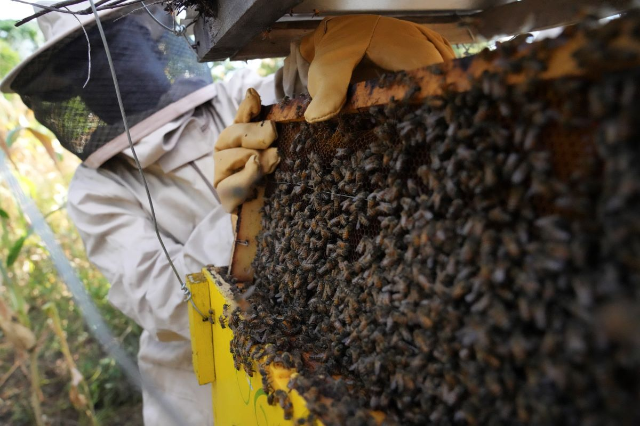
Kenyan farmer Alexander Mburung'a checks one of his beehive which form part of a fence which keeps elephants from straying onto his farm near Meru National Park in central Kenya on Feb. 7, 2024. Thomson Reuters Foundation/Stringer