CEO Picks - The best that international journalism has to offer!
 S8 S8Albert Camus on Happiness and Love, Illustrated by Wendy MacNaughton   For more literature-inspired art benefiting some favorite organizations, dive into the artist series visual archive. For more of MacNaughton’s own fantastic work, see her book Meanwhile in San Francisco and her illustrations for The Essential Scratch and Sniff Guide to Becoming a Wine Expert and Lost Cat: A True Story of Love, Desperation, and GPS Technology.
Continued here
|
S1'Hysterical strength'? Fight or flight? This is how your body reacts to extreme stress - National Geographic Premium (No paywall)  A 16-year-old boy lifts a Volkswagen off his pinned neighbor. A mother fights off a polar bear to protect her children. A daughter heaves an overturned tractor from atop her father. These feats are made possible by a rush of adrenaline and by unlocking bodily systems and muscle capacity that are only fully accessed in moments of extreme duress.While these incidents of so-called "hysterical strength" are real, the phenomenon is tricky to study in the lab because doing so would be dangerous to participants. Instead, neuroscientists build on what’s known about the brain and body's fight-or-flight response and the stress feedback mechanisms associated with it that fuel these acts of extreme strength.
Continued here
|
S2Investors Are Souring of Food Tech Companies. Here's Why - Inc.com (No paywall)  The total value of venture capital deals for food tech companies fell by half for the second year in a row, according to a report released today by Pitchbook. Overall, global VC funding for food tech fell to $9.2 billion in 2023 from $22.5 billion in 2022--and well off the high of $39 billion in 2021. The number of deals in 2023 dropped to 1,393, from 2,052 the year before.The report attributes the drop to difficult market conditions, including inflation and high interest rates, as well as limited options for exits through acquisitions or initial public offerings. The environment might be particularly challenging for newcomers, with an increasing share of deals happening at the late and venture-growth stages.
Continued here
|
S3How the Cupcake Queen Broke Free of Her Brand - Inc.com (No paywall)  In 2012, after nearly a decade of building Sprinkles, my husband and I sold a majority stake of the company to a private equity firm. We were excited to pursue new opportunities, but while my husband quickly embraced the freedom of his new chapter, I faced a unique challenge with mine. The loyal audience I had cultivated was tightly linked to my identity as a baker and integral to my personal brand, and managing its expectations started to weigh heavily on me. I yearned to share my growing identity as an entrepreneur, to mentor other businesswomen, to be recognized as more than just Mrs. Sprinkles. But that was not what my followers had signed up for.
Continued here
|
S4What Is the Ideal Retirement Age for Your Health?  Von Bismarck resigned shortly after the policy passed, but his legacy remained, and Germany’s retirement benefit (which was lowered to age 65 in 1916) became the model for many other nations. When President Roosevelt established the Social Security Act of 1935, 65 was similarly chosen as the national retirement age, despite the fact that less than 60 percent of American adults lived that long.Today though, many more people live long enough to have access to a national retirement fund, often for years if not decades. Average life expectancy in the United States is 76, and in many European countries it’s even higher. The U.S. national retirement age — when you can start claiming full Social Security benefits — has crept up much more gradually, to 67 for people born after 1960.
Continued here
|
S5
S6The Global Effort to Make an American Microchip  The first steps for making this particular semiconductor, known as a silicon carbide chip, happen in a factory in New Hampshire. The chip ends up in cars driven on American roads and elsewhere. But in between, the process will depend on raw materials, machinery and intellectual property from dozens of foreign suppliers and factories.The first step begins inside Onsemi's New Hampshire plant, with a jet black powder of silicon and carbon from Norway, Germany and Taiwan. The powder is added to graphite and gases that come from the United States, Germany and Japan, then heated to a temperature close to that of the sun, producing a crystal that will form the backbone of millions of chips.
Continued here
|
S7The Biggest Takeaways From Oprah's Ozempic Special - The Cut (No paywall)  “For 25 years, making fun of my weight was national sport,” Oprah said in the special’s introduction. She recalled a TV Guide cover that referred to her as “lumpy, bumpy, and downright dumpy” along with several other tabloid headlines about her weight. The theme of the night was shame, specifically shame felt by people who find that the only way they can lose weight and keep it off is through medication.“In an effort to combat all the shame, I starved myself for nearly five months and then wheeled out that wagon of fat that the internet will never let me forget,” Oprah said, referring to a famous 1988 episode of The Oprah Winfrey Show. “And after losing 67 pounds on a liquid diet, the next day, y’all, the very next day I started to gain it back.”
Continued here
|
S9Why supersonic, diamond-spewing volcanoes might be coming back to life - New Scientist (No paywall)  Twenty years ago, deep beneath Botswana’s Kalahari desert, Thomas Gernon found himself walking in what seemed like hell. The temperature soared as the sound of explosions echoed off the walls. “It was like a baptism of fire,” he says. It was his first trip into a kimberlite diamond mine.The place teemed with cameras and Gernon, now at the University of Southampton in the UK, had been warned of trouble should any gemstones be found – accidentally or otherwise – on his person. But he wasn’t here to find his fortune. He wanted an answer to one of Earth’s greatest mysteries.
Continued here
|
S10Beyond Narcissism: How Leaders Can Avoid the Hubris Trap  An extreme example is Xerxes, king of the Persian Empire. Feeling invincible from past triumphs, Xerxes sought to conquer Greece. However, when a storm destroyed his bridge across the Hellespont, derailing his plans, he reacted outlandishly. Xerxes had the engineers who built the bridge beheaded and ordered his soldiers to whip the sea with chains and poke it with red hot irons. It's evident that Xerxes, blinded by overconfidence, couldn't fathom the possibility of setbacks. In essence, he was intoxicated by hubris.Naturally, such an attitude contributes to irresponsible behaviour, a sense of recklessness and even immoral actions. Unchecked self-absorption drives many leaders on a path of self-destruction, dragging their organisations or countries down with them.Why hubris is more dangerous than narcissism
Continued here
|
S11How to Make Tough Choices in a Morally Exhausting World  Modern life is morally exhausting. And confusing. Everything we do seems to matter. But simultaneously: nothing we do seems to matter. My friend, an outspoken environmentalist, recently posted to social media a picture of herself on a beautiful beach, celebrating a moment of quiet with nature. And predictably—the internet being what it is—within a few moments of posting it, one of the first comments came in: “How much carbon did you emit to go on your vacation?” The implication, of course, being that she’s a hypocrite, preaching environmentalism for thee, but not for me. And despite the comment seeming like a childish jab, she—like most of us—cares about justifying her actions, and so she responded, citing all of the ways that she minimizes her carbon footprint and arguing that never getting to enjoy her life seems like an unreasonable standard.This sort of debate plays out in my head, with me playing both sides, regularly—many times a day, if I let it. This morning at breakfast, I poured almond milk on my cereal, which is the result of a judgment I made years ago when I decided that cow milk is too environmentally expensive to justify. In general, animal-based foods have a higher carbon footprint than their plant-based counterparts, and so I have, to varying degrees over the years, reduced or eliminated them from my diet. But while working on a recent food ethics project, I learned that almond milk might not be a great substitute. Although it does have a lower carbon footprint, almond trees require huge amounts of water—like, over three gallons of water to produce a single nut—and more than 80% of the world’s almonds are grown in California, which suffers from severe drought. Switching from cow milk to almond milk thus traded a high carbon footprint for high water use.
Continued here
|
S12Europe Yearns to Be an Indo-Pacific Player - Foreign Policy (No payall)  Rebounding from years of anemic defense spending and a seeming aversion to hard power, Europe as a whole and many key member states are quickly boosting their attention to maritime security, both close to home and half a world away. That’s evident not just in the flurry of ambitious strategy papers raining out of Brussels, Paris, and London, but also in the increasing deployments of Europe’s small but capable navies to do more and in more places, securing contested waterways and clawing back respect for free navigation and global rules.What began almost a decade ago with local maritime policing operations in the Mediterranean is now spreading to more ambitious deployments farther afield, including the Indian Ocean. Just last month, the European Union launched a naval operation to secure shipping lanes in the Red Sea, the Persian Gulf, and the Arabian Sea, separate from the more belligerent U.S. and U.K. mission in those same waters.
Continued here
|
S13What Does an SAT Score Mean Anymore? - Intelligencer (No paywall) 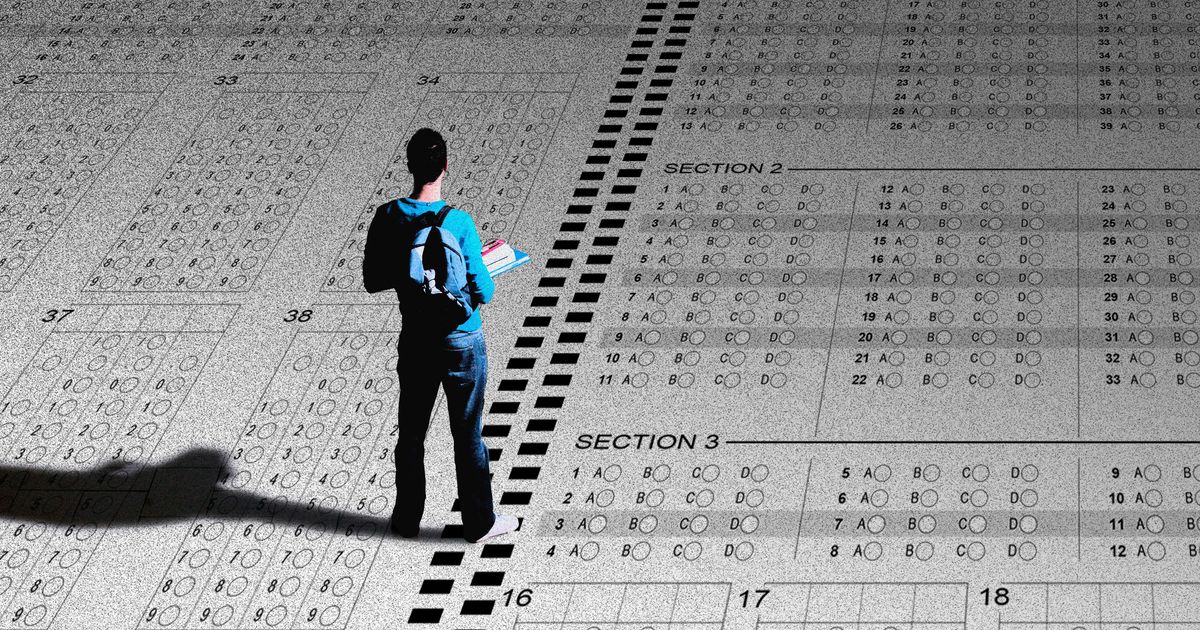 In November 2022, Intelligencer published this story about MIT’s decision to require applicants to submit SAT and ACT scores again, two years after nearly every elite college in the country made test scores optional. In early 2024, Dartmouth reinstated a standardized testing requirement, followed a few weeks later by Yale.On the last Monday of March 2022, two weeks after MIT finished notifying 1,337 applicants that they had been accepted (and rejected some 32,000 others), a post appeared on the website of the university’s admissions office. After two pandemic-disrupted application cycles, during which basically every college in America ditched its SAT and ACT requirements, the dean of admissions, Stu Schmill, announced that MIT would be asking for test scores again, starting with the high-school seniors applying this fall. MIT had determined that it needed tests to make sure its students could do the work — a conclusion reached after “careful research,” Schmill wrote. The 1,400-word post was accompanied by nearly 3,000 words of endnotes, citing everything from academic journals to MIT’s own graduation data.
Continued here
|
S1461 Unexpected 'Forever Chemicals' Found in Food Packaging - Scientific American (No paywall) 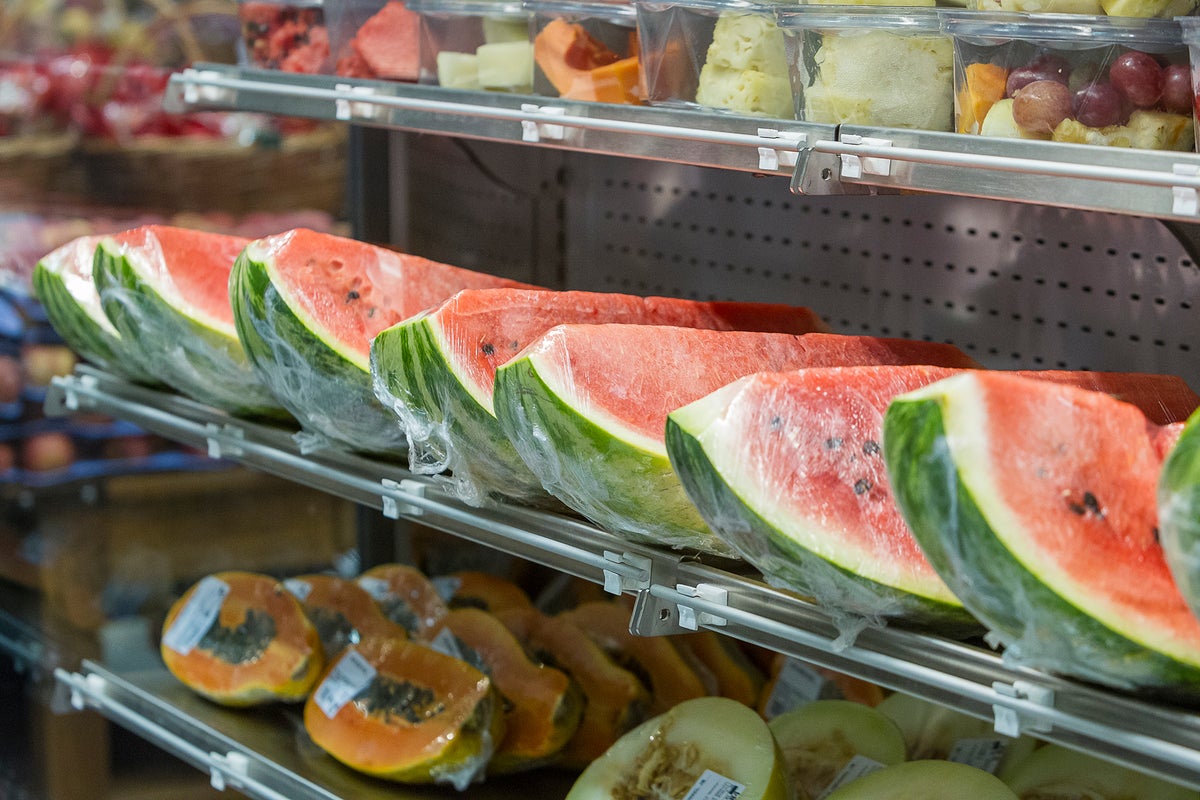 The study, published on Tuesday in Environmental Science & Technology, focused on a class of chemicals called perfluoroalkyl and polyfluoroalkyl substances (PFASs). For decades, these substances have been used in a wide range of consumer products, from cookware to pesticides to cosmetics, because of their ability to repel water and grease.PFASs are sometimes called “forever chemicals” because they don’t break down readily in the environment or in the body. That’s because their characteristic carbon-fluorine bond—part of what makes them so useful in the first place—is one of the strongest in nature. PFASs have been found in human blood and breast milk, drinking water, soil and other startling places around the world. In March 2023 the U.S. Environmental Protection Agency announced a drinking water standard for six PFAS compounds. Exposure to some of the most studied PFASs has been associated with cancer, reproductive problems and lessened responses to vaccines. “There’s an incredible body of scientific evidence linking these chemicals to health harms,” says David Andrews, a chemist and toxicologist at the Environmental Working Group, a nonprofit environmental advocacy organization, who was not involved with the new study.
Continued here
|
S15Should schools lock up kids' phones?  The Akron schools are part of a growing movement across the US and Europe to ban phones in schools or require them to be locked up in pouches made by a startup named Yondr. School districts in at least 41 states have bought the pouches in recent years, a response to behavior issues as well as concerns about students’ mental health and learning, which have ramped up since the pandemic.“The results for us were just a game-changer,” Patricia Shipe, president of the Akron Education Association, which represents teachers and other educators in the district, told me. Fights in the schools have decreased since the bags were introduced to all middle and high schools in 2022, and kids report engaging with their friends more.
Continued here
|
S16Uber-style pricing is coming for everything 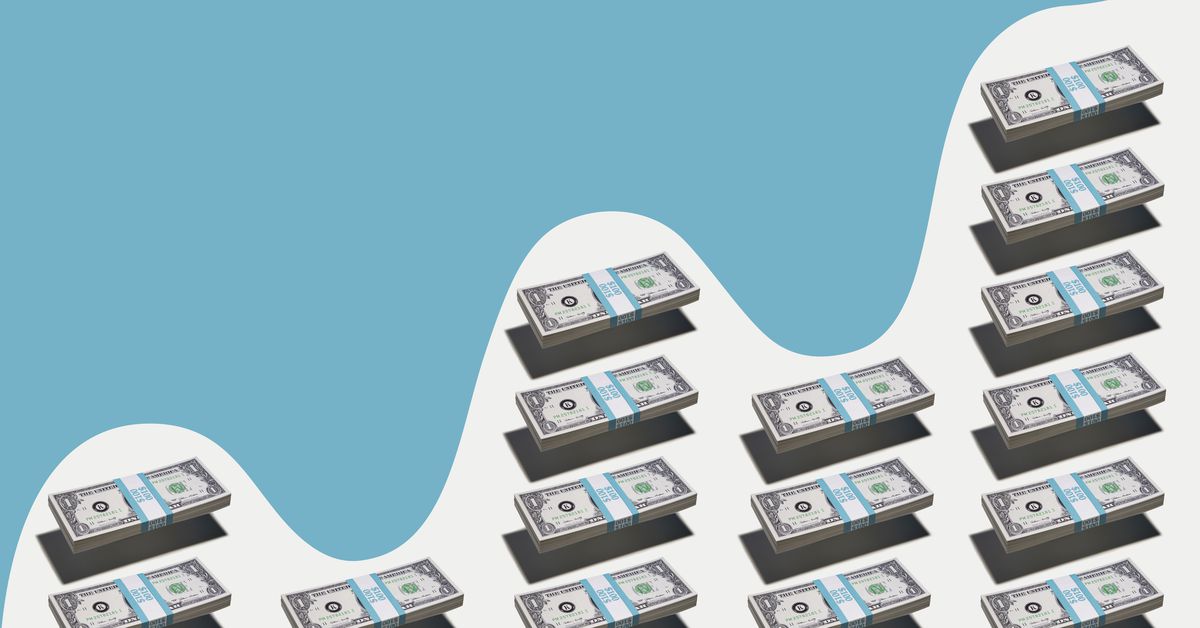 In the future, the ideal time to eat a burger won’t be when you’re hungry and really hankering for one. It’ll be the oddest, most awkward hours — late mornings or afternoons, the middle of the night on a Tuesday — the slices of time when prices will be lowest. Not unlike your Uber ride, fast food prices will go up or down depending on demand.At least, this is the world people imagined when fast food chain Wendy’s revealed it would be tinkering with “dynamic pricing,” a broad term that describes any strategy where prices fluctuate based on supply and demand — like flights and Uber rides. The uproar was swift and sonorous; Wendy’s tried to clarify that it would use the strategy to offer lower prices, not to raise them when traffic is highest, but the reputational damage was done. In countless headlines, Wendy’s was accused of using surge pricing on food at a time when steep food prices at both restaurants and grocery stores have left many people drastically tightening their belts.
Continued here
|
S17Hypnotizing Myself to Fly - The Cut (No paywall)  “Excuse me,” I said to the flight attendant greeting passengers and handing out packs of disinfectant wipes and headphones as she reached my aisle. My heart was pounding at the speed of hummingbird wings in mid-air, and I felt lightheaded. Taking full breaths felt like trying to lift cement with my lungs. I’d been in my seat for just five minutes as passengers were still filing in, cramming too-big carry-ons into too-small overhead bins; the jumbo Airbus felt like a tuna can. Despite my best efforts, I hadn’t been able to convince myself to sit down and buckle up. Every time my ass landed on the seat, I sprang back up as if it was covered in pushpins.“Headphones? Hand sanitizer?” the flight attendant asked me with a plastered smile. “I have to get off this plane,” I replied. The inside of my skull alternated between images of the plane crashing into the Atlantic Ocean and an engine dislocating, sending us into a tailspin. “Can you please tell me what to do?” I asked desperately, realizing I was being side-eyed by oncoming passengers and the crew. “You want to get off the aircraft?” she asked in a now-serious tone two octaves lower than her greeting voice. “Well, I thought I wanted to go on a solo vacation for a long weekend,” I blurted back, “but now I just want to be home with my family.” My face was flushed with embarrassment. “Okay, well, you need to collect your belongings and go speak to the gate attendant.” she said. I scurried off the plane, keeping my eyes on my shoes the entire walk up the lengthy jet bridge. I watched as the gate agent typed for seemingly 20 minutes into a computer to dismiss me from the flight record. Luckily, I only had a carry-on, so fleeing was relatively easy. While humiliation lingered, my throat opened to take a full breath and my pulse settled as I walked out of JFK into a yellow cab headed home to Brooklyn. That was two summers ago.
Continued here
|
S18This concrete can eat carbon emissions - WIRED (No paywall)  Concrete: upon this rock-like composite we have built our church – and our houses, roads, bridges, skyscrapers, and factories. As a species we consume more than 4.1 billion tonnes of the stuff every year, more than any other material except water. (You’re almost certainly sitting or standing on it right now.) That’s a problem, because concrete – and in particular cement, concrete’s key ingredient – is catastrophic for the environment. The cement industry alone generates 2.8bn tonnes of CO2 every year, more than any country other than China and the US – and somewhere between four and eight percent of all global man-made carbon emissions.According to the Paris agreement, carbon emissions from cement production need to fall by at least 16 percent by 2030 for the world to reach its target of keeping global warming within the limit of 1.5C and well below 2C. (At present, those emissions are actually increasing, driven in large part by mega construction projects in China.) Now, the concrete industry is in a race against time to solve a very hard, very grey problem.
Continued here
|
S19Is it safe to microwave food? 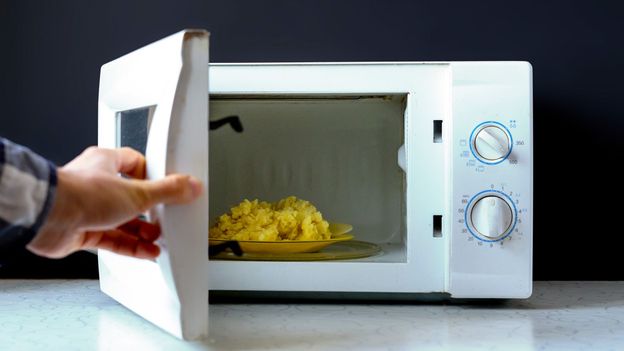 There’s nothing risky about microwave radiation – but there are health concerns about heating up plastic. Here’s what the latest research says about how to safely microwave your food.
Continued here
|
S20S21Google DeepMind's new AI assistant helps elite soccer coaches get even better - MIT Technology Review (No paywall) 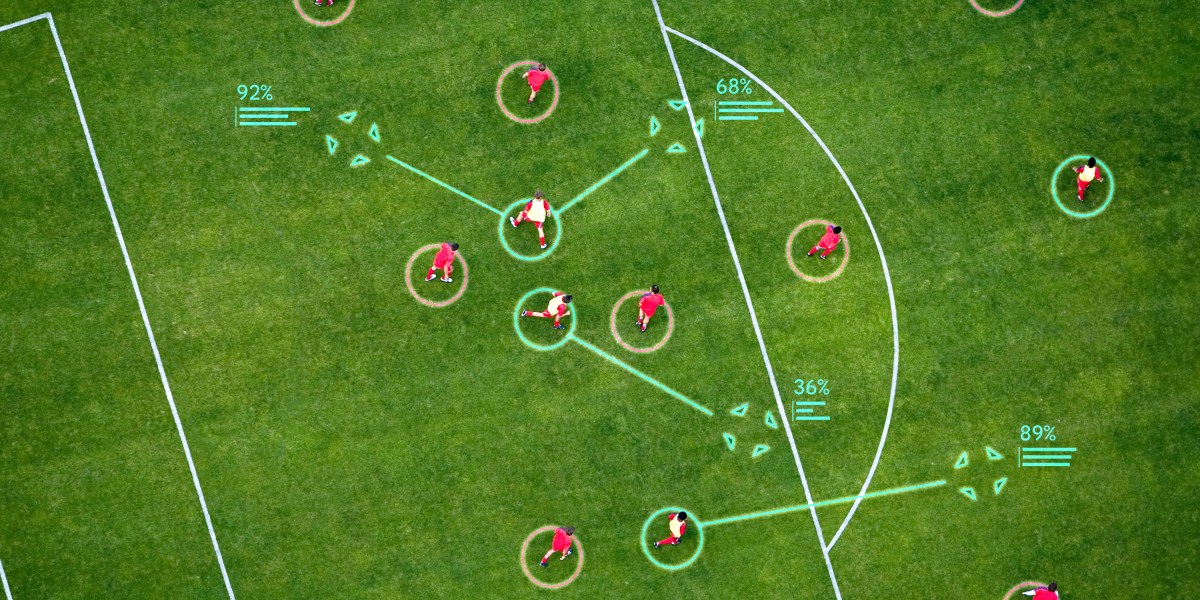 Corner kicks are awarded to an attacking team when the ball passes over the goal line after touching a player on the defending team. In a sport as free-flowing and unpredictable as soccer, corners—like free kicks and penalties—are rare instances in the game when teams can try out pre-planned plays.TacticAI uses predictive and generative AI models to convert each corner kick scenario—such as a receiver successfully scoring a goal, or a rival defender intercepting the ball and returning it to their team—into a graph, and the data from each player into a node on the graph, before modeling the interactions between each node. The work was published in Nature Communications today.
Continued here
|
S22S23 Diverse Teams Thrive With Four Elements of Belonging  The spring 2024 issue’s special report looks at how to take advantage of market opportunities in the digital space, and provides advice on building culture and friendships at work; maximizing the benefits of LLMs, corporate venture capital initiatives, and innovation contests; and scaling automation and digital health platform.The spring 2024 issue’s special report looks at how to take advantage of market opportunities in the digital space, and provides advice on building culture and friendships at work; maximizing the benefits of LLMs, corporate venture capital initiatives, and innovation contests; and scaling automation and digital health platform.Jessica is an ace data analyst; her mind excels at seeing connections that others miss. For many years, she delivered outstanding work and supported her company with system improvement suggestions. And then her work life crumbled — along with the walls of her cubicle, which the company decided to take down.
Continued here
|
S24Return-to-Office Mandates: How to Lose Your Best Performers | Brian Elliott  The spring 2024 issue’s special report looks at how to take advantage of market opportunities in the digital space, and provides advice on building culture and friendships at work; maximizing the benefits of LLMs, corporate venture capital initiatives, and innovation contests; and scaling automation and digital health platform.The spring 2024 issue’s special report looks at how to take advantage of market opportunities in the digital space, and provides advice on building culture and friendships at work; maximizing the benefits of LLMs, corporate venture capital initiatives, and innovation contests; and scaling automation and digital health platform.Recent return-to-office (RTO) mandates like those at UPS and Boeing have a simple message: Come back to the office five days a week. CEOs cite productivity as a core reason for these proclamations, even in the face of employee resistance. Many executives simply don’t trust that employees are as effective as possible when managers can’t see them at their desks.
Continued here
|
 |
TradeBriefs Publications are read by over 10,00,000 Industry Executives About Us | Advertise Privacy Policy Unsubscribe (one-click) You are receiving this mail because of your subscription with TradeBriefs.
Our mailing address is GF 25/39, West Patel Nagar, New Delhi 110008, India |