| ? |
 |
|
Don't like ads? Go ad-free with TradeBriefs Premium
   
CEO Picks - The best that international journalism has to offer!
S1Want More Out of Generative AI? Here Are 9 Useful Resources - WIRED (No paywall)   That said, there's still a lot to learn about how to get the most out of these tools and about the technology underpinning them, especially if you want to do something truly creative with the help of these tools. Spend some time with the resources we've listed here and you'll quickly become a smarter-than-average AI operator.
Some of the best resources out there when it comes to generative AI are Substacks, and Inside My Head is a case in point. Run by technologist Linus Ekenstam, it features a host of useful AI-related material, covering tutorials on getting the optimum results from these tools and crafting the smartest prompts.
Continued here
|
S2S3Anti-AI sentiment gets big applause at SXSW 2024 as moviemaker dubs AI cheerleading as 'terrifying bullsh**' | TechCrunch  A whiff of anti-AI sentiment got big applause at the SXSW conference in Austin on Tuesday afternoon. Award-winning writers and directors Daniel Kwan and Daniel Scheinert, collectively known as “DANIELS,” originally premiered their film “Everything Everywhere All at Once” at SXSW in 2022. The movie later went on to win seven Oscars, including Best Picture, Best Director, and Best Screenplay. In a conversation about the future of storytelling at this year’s SXSW on Tuesday, the duo commented on the inevitable rise of AI and how to approach it, calling the technology both “amazing” and “terrifying.”
“We had to change the story we told ourselves and say that ‘your value is your job,” he told the audience. “You are only worth what you can do, and we are no longer beings with an inherent worth. And this is why it’s so hard to find fulfillment in this current system. The system works best when you’re not fulfilled,” he said, then paused. “Which brings me back to AI,” Kwan continued to a thunder of applause and cheers.
Continued here
|
S4S5How rerouting planes to produce fewer contrails could help cool the planet - MIT Technology Review (No paywall)  The common climate concern when it comes to airlines is that planes produce a lot of carbon dioxide emissions as they burn fuel. But jets also release heat, water vapor, and particulate matter that can produce thin clouds in the sky, known as “contrails,” in particularly cold, humid, icy parts of the atmosphere.
Last summer, Breakthrough Energy, Google Research, and American Airlines announced some promising results from a research collaboration, as first reported in the New York Times. They employed satellite imagery, weather data, software models, and AI prediction tools to steer pilots over or under areas where their planes would be likely to produce contrails. American Airlines used these tools in 70 test flights over six months, and subsequent satellite data indicated that they reduced the total length of contrails by 54%, relative to flights that weren’t rerouted.
Continued here
|
S6What Sets Successful Startup Accelerators Apart - Harvard Business Review (No paywall)  What role do business accelerators play in boosting the growth of early-stage companies? Accelerators provide a structured environment of mentorship, education, and resources in exchange for equity. And they work. Research involving numerous accelerator programs and interviews with various stakeholders reveals that startups in these programs typically achieve higher funding and survival rates. Three key strategies identified for their effectiveness include compressed advice, which offers intensive mentorship and customer feedback to refine business strategies quickly; friendly sibling rivalry, encouraging open sharing and competition among startups for accelerated learning and execution; and schedule transitions, enforcing structured developmental activities to balance broad learning with focused execution. These strategies, effective in the high-paced startup environment, are also applicable to broader organizational contexts for driving innovation and growth.
Business accelerators, often termed “startup accelerators” or “startup factories,” are organizations dedicated to fostering the rapid growth of early-stage companies. Typically operated by investors, corporations, or independent entities, they offer structured programs that usually span three to four months, providing selected startups with a combination of mentorship, educational workshops, networking opportunities, and often a modest amount of capital and office space. In exchange for these resources, accelerators usually require a small percentage of equity in participating startups.
Continued here
| ? |
|
|
| ? |
|
|
|
|
S7Nobel Laureate Louise Glück’s Love Poem to Life at the Horizon of Death  A generation after Walt Whitman declared himself “the poet of the body and the poet of the soul,” animated by an electric awareness of how interleaved the two are — how the body is the locus of “the real I myself” — the pioneering psychologist and philosopher William James revolutionized our understanding of life with his theory of how our bodies affect our feelings. In the century-some since, scientists have begun uncovering what poets have always known — that spirit is woven of sinew and mind of marrow. The body is the place, the only place, where we live — it is where we experience time, it is where we heal from emotional trauma, it is the seat of consciousness, without which there is nothing. And yet we spend our lives turning away from this elemental fact — with distraction, with addiction, with the trance of busyness — until suddenly something beyond our control — a diagnosis, a heartbreak, a pandemic — staggers us awake. We remember the body, this sole and solitary arena of being. The instant we remember to reverence it we also remember to mourn it, for we remember that this living miracle is a temporary miracle — a borrowed constellation of atoms bound to return to the stardust that made it.
That is what poet Louise Glück (April 22, 1943–October 13, 2023), laureate of the 2020 Nobel Prize in Literature, explores in the short, stunning poem “Crossroads,” originally published in her 2009 book A Village Life, later included in her indispensable collected Poems 1962–2012 (public library), and read here by the poet herself for the 2010 Griffin Poetry Prize.
Continued here
|
S8S9Ketamine’s unlikely conversion from rave drug to mental health therapy - New Scientist (No paywall)  LAST year, to much ado in the press, Prince Harry wrote candidly in his memoir Spare about taking ketamine to help him deal with his mother’s death. He isn’t the only one talking about the substance, which has previously been known mainly as a horse tranquilliser and a psychedelic rave drug. It is hard to keep track of the many celebrities speaking openly about taking ketamine in an effort to improve their mental health.
Across the US, hundreds of clinics have opened to provide intravenous infusions of the drug in a therapeutic setting, a trend that has now reached the UK too. Trailblazing firms, worried about their employees’ mental health, are starting to offer this therapy as a benefit. One even floated the idea of installing a ketamine clinic at its corporate headquarters. Meanwhile, pharmaceutical companies are developing over-the-counter ketamine products such as lozenges and topical creams. The drug has become the most commonly available psychedelic therapy.
Continued here
|
S10George Saunders on How to Live an Unregretting Life  The price we pay for being children of chance, born of a billion bright improbabilities that prevailed over the staggering odds of nothingness and eternal night, is the admission of our total cosmic helplessness. We have various coping mechanisms for it — prayer, violence, routine — and still we are powerless to keep the accidents from happening, the losses from lacerating, the galaxies from drifting apart.
Because our locus of choice is so narrow against the immensity of chance, nothing haunts human life more than the consequences of our choices, nothing pains more than the wistful wish to have chosen more wisely and more courageously — the chance untaken, the love unleapt, the unkind word in the time for tenderness. Regret — the fossilized fangs of should have sunk into the living flesh of is, sharp with sorrow, savage with self-blame — may be the supreme suffering of which we are capable. It poisons the entire system of being, for it feeds on the substance we are made of — time, entropic and irretrievable. It tugs at our yearning for, in James Baldwin’s perfect words, “reconciliation between oneself and all one’s pain and error” and stings with the reminder that eventually “one will oneself become as irrecoverable as all the days that have passed.”
Continued here
|
S11Shrinkflation is coming for your home - Fortune (No paywall)  Maybe it’s the starter home that’s dead. Almost a year ago, Ali Wolf, chief economist at the housing-market data company Zonda, told me the $300,000 starter home was going extinct. The share of new-home projects under $300,000 was declining all across the country. We’ve got to go back a few years to understand why that is.
The pandemic fueled a housing boom. People were working from home and wanted more space, and they could move wherever they wanted. Historically low mortgage rates helped, too. Home prices skyrocketed in light of demand, and not too long after, mortgage rates reached a more than two-decade high as a result of surrounding economic conditions (which sent the cost of building and land values up, too). That’s all to say, housing affordability has deteriorated—so homebuilders are building smaller homes.
Continued here
|
S12Is China a climate saint or villain? - The Economist (No paywall)  AMONG THE words mentioned most often by Li Qiang in his “work report”—a sort of state-of-the-nation address—on March 5th was “green”. His predecessor as prime minister used it nine times in last year’s speech; Mr Li nearly doubled that (see chart 1). This is hardly surprising. China is a green-technology powerhouse: its batteries, solar panels and electric vehicles (EVs) lead the world. Chinese officials want such industries to spur future economic growth and China’s own pursuit of energy self-sufficiency.
Continued here
|
S13S14S1511 reasons why we’ve stayed in academia 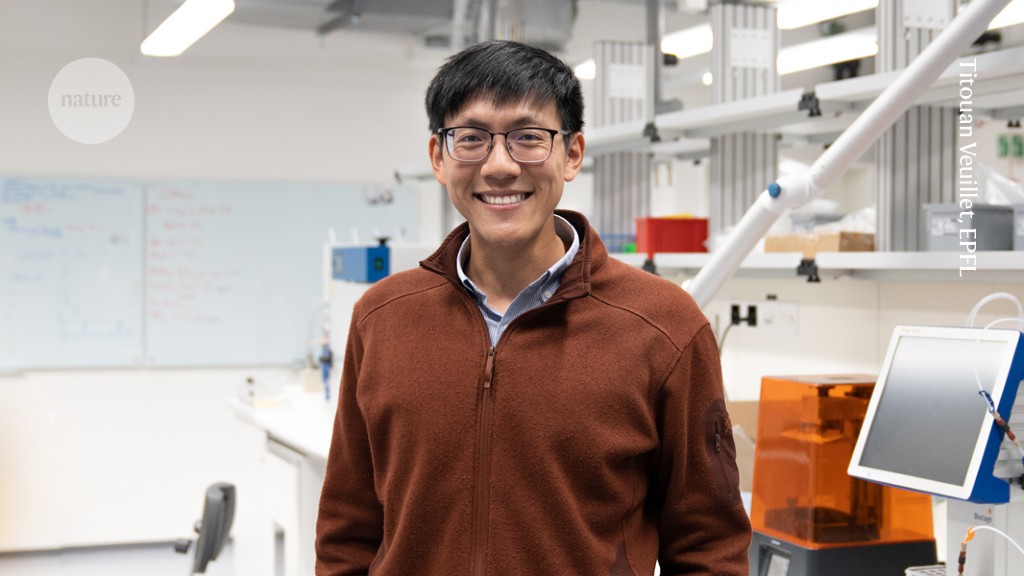 Two things come to mind: risky research and mentorship. I love that my job lets me work on risky, interesting problems, such as 3D printing DNA, that might or might not align with what industry is currently exploring. It’s fun to approach problems from unusual perspectives and see what we can learn along the way.
Being in academia is a privilege and I never forget that. My dad was a heavy-equipment operator for more than 40 years, and in our tribe’s traditional ceremonies, he always prayed for me to have a job in which I would stay clean all day and have an office. I not only have an office with views of the Rocky Mountains, I also have a laboratory full of pristine equipment and lead a successful research programme that trains students and collaborates with Native American communities on pharmacogenomics and the cultural, ethical, legal and social implications of genomics research. My main responsibility is to think all day and write. My community motivates me to continue in academia and to hold my culture and traditions closely in my work. I’ve stayed in academia because no one has kicked me out yet (haha), and because I love it.
Continued here
|
S16How quickly is the Universe disappearing from our reach?  For nearly all of the 20th century, the biggest question over the expanding Universe had to do with understanding what its fate would be. The Universe, if it’s expanding, had to be a race between two seemingly irresistible factors:
Ever since the 1920s and 1930s, when the expanding Universe became well-established both theoretically and observationally, the primary quest of cosmology was to measure the present expansion rate as well as how it changed over time. Those two pieces of information, together, would allow us to infer the ultimate fate of the Universe.
Continued here
|
S17The office is broken: Can conceptual "atom smashing" repair it?  In the mid-1990s, we developed a restaurant and bar concept that collided the cultural phenomenon of the hit TV shows Seinfeld and Friends with the societal needs and fears many Gen-Xers had in finding suitable partners, buying a home, and starting a family. In that era, there weren’t many fast-casual restaurants and options were limited to fast-food joints like Burger King or more formal-dining establishments. Asking for a “table for one,” however, at a traditional restaurant and eating by yourself at a two- or four-top table seemed humiliating. The environment did not help facilitate the ability to meet others, as asking other patrons seated at neighboring tables about their food felt like an invasion of privacy.
On top of this social discomfort, having to endure the standard structured meal courses of cocktails, appetizers, main meal, dessert, and check didn’t fit this generation’s eating habits or work/life/gym balance. To counter this, we tapped into a different cultural model and form and shape. We created a restaurant based on living room vignettes—like those we saw on Seinfeld and Friends. This innovative design approach allowed guests to pop in and out and eat whatever menu items suited their schedule while enjoying the company of a prosocial setting.
Continued here
|
S18Stanford duck syndrome: How the myth of effortless genius hurts learning  Just like a muscle, our brain gets stronger through hard work. The idea sounds catchy, but is it true? After all, our brain isn’t a muscle — it’s far more complex.
Hoping to answer this question, a group of researchers placed study participants in an fMRI machine, then monitored their brain activity while they listened to two tones. Their task was to press a button to indicate whether the second tone was longer or shorter in duration than the first. In the “easy” portion of the test, the tones were more clearly differentiated, whereas in the “difficult” portion, the second tone was more like the first. As the researchers dialed up the difficulty, the participants’ brains began to light up: The more challenging the task was and the more effort it required, the more areas of the brain were recruited to help.
Continued here
|
S19Liquid Death, the Canned Water Company for Hipsters and Head Bangers, Doubled Its Valuation Overnight 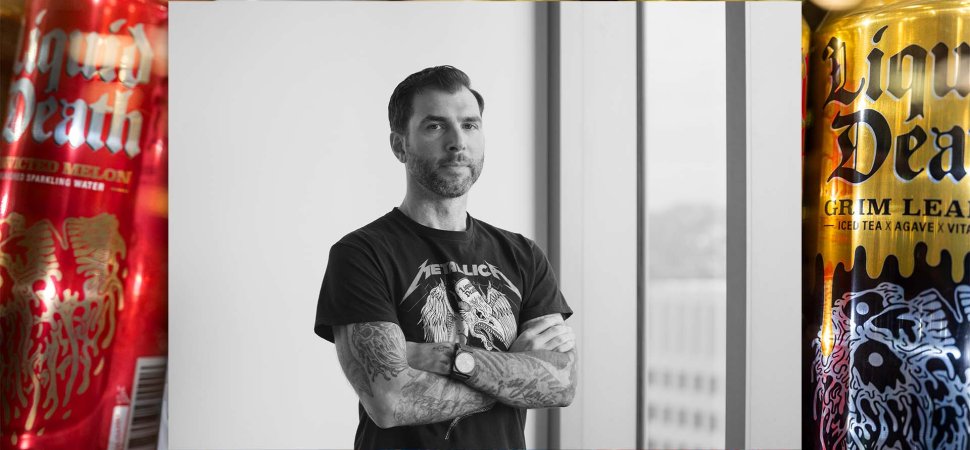 The Los Angeles-based company, co-founded by CEO Mike Cessario in 2017, raised $67 million from a group of new and previous investors, bumping its valuation to $1.4 billion, the company announced in a statement. Investors in the round include SuRo Capital, Gray's Creek Capital Partners, the actor Josh Brolin, NFL star Deandre Hopkins, and Chappelle's Show co-creator and comedian Neal Brennan. The concert promotion company Live Nation, which has stocked Liquid Death at its events since 2021, also participated.Â
Cessario hailed consumer appetites for the quirky water brand, telling Inc.:Â "Crossing the $1.4 billion valuation threshold with an oversubscribed, up round is an exciting milestone and a testament to our world-class team and the outsized retailer and consumer demand."Â
Continued here
|
S20Shake Shack Founder Danny Meyer's Latest Venture? Indoor Golf, With Booze  New York City restaurateur Danny Meyer is taking a big swing on indoor golf. Meyer's investment firm Enlightened Hospitality Investments is investing $20 million for a minority stake in Five Iron Golf, a New York City startup that has 24 indoor golf simulator facilities, including a just-announced 16,390-square-foot space near Manhattan's Grand Central Station.
Founded in 2017, Five Iron previously raised $30 million in 2021 from investors including TopGolf Calloway Brands, according to CrunchBase. Mike Doyle, one of the company's co-founders, had been teaching golf simulator lessons in the back of a department store in Manhattan, when he and his student Mike Doyle, now Five Iron's CEO, began dreaming up the concept of a urban golf club with simulators, leagues, lessons--and a sports bar attached.
Continued here
|
S213 Companies Share Their Winning Formula for Retaining Top Talent  Despite ongoing challenges in the labor market --Â including tension between employees and bosses over the return-to-office battle and reports of a further 85,000 layoffs just last month -- savvy entrepreneurs view this time as an opportunity to attract and keep top talent.Â
Angela Hood, CEO and co-founder of This Way Global, an Austin, Texas-based artificial intelligence company specializing in bias removal from talent acquisition, recommends clear, straightforward communication. "The answer is, we need to talk to the people and the talent that work for us that we want to keep," she says.Â
Continued here
|
S22Airbnb Co-Founder Joe Gebbia on Why You Need to Make It Easy for Customers to Buy Your Product 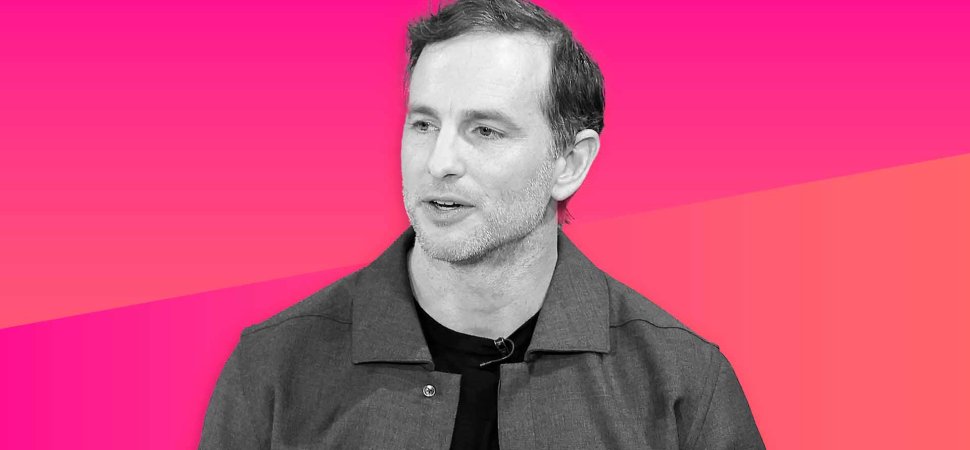 This time, he's building small, pre-fabricated, energy-efficient dwellings known as ADUs, or accessory dwelling units, that are designed to be installed in backyards. If it sounds like a perfect match for Airbnb, it is: Gebbia incubated the company, called Samara, inside of Airbnb before officially launching it along with Mike McNamara, the former CEO of electronics manufacturer Flex.
At SXSW in Austin on Monday, Inc. editor-in-chief Mike Hofman asked Gebbia what he's applied from his learnings at Tesla to Samsara. "There is inspiration in the sense that Tesla has made it really easy to buy a car," Gebbia explained. "You don't have to go to a dealer anymore. You can literally just buy it online."
Continued here
|
S23How a Fintech Investor Picks Future Unicorns Out of the Crowd  As a founding partner of Acrew Capital, and longtime fintech investor, Lauren Kolodny has made savvy investments in a number of billion-dollar companies, including Plaid and Gusto. Here's how she determines if a founding team has what it takes. --As told to Rebecca Deczynski
"I'm looking for founders who have strong beliefs, loosely held. They have to be willing to change quickly on the basis of substantiated data. A founder who takes too long to accept that something isn't working correctly can kill their business.
Continued here
|
S24Biden's Budget Proposes New Direct Lending Program for SBA  The president's 2025 budget requested $971 million for the Small Business Administration-while that's 25 percent more than the funding the agency received in 2021, it's still $16 million less than what was requested from the year prior.
Notably, the budget suggests creating a new direct lending 7(a) lending program, one that "would further enable SBA to address gaps in access to small dollar lending," according to the proposal. The SBA's 7(a) loan program is the agency's speciality: while lenders are the ones that directly dole out loans to a small business, the SBA guarantees a portion of the debt. In essence, it helps reduce some of the risks in lending to a small business.Â
Continued here
|
S25No VC Funding? Founders Share Ways They Made Ends Meet  Most startups do not have access to venture capital funding. In fact, reports indicate that less than 1 percent of all startups receive VC capital. Everyone else has to look for other ways to finance their business.
Deepa Gandhi, Cate Luzio, and Paige Mycoskie have all gotten creative when it comes to funding their businesses. From bootstrapping -- or, as Luzio calls it, "stiletto-strapping" -- to securing strategic non-VC investments, they've done it all.
Continued here
|
S26With a Few  Going to In-N-Out Burger after the Oscars has become a bit of a "thing" for a lot of people who attend the ceremony. As a former Californian who does in fact hit In-N-Out almost every time I wind up back in Los Angeles, I can empathize.
As a result, I have to respect the fact that she flew in, honored this year's nominees, and then took off. It's someone else's turn. So let's follow Curtis's example, by ending this article with Da'Vine Joy Randolph. Because if you haven't seen her speech yet, it's well worth a few minutes of your time.Â
Continued here
|
S27Emma Stone's Bold Oscar Acceptance Speech is a Must Watch for Workplace Teams  In her heartfelt acceptance speech at the 2024 Oscars, Emma Stone shared an insightful message that resonates far beyond the glitz and glamor of Hollywood. Amid the celebration of her second Oscar win, Stone emphasized a profound insight from director Yorgos Lanthimos: to "take yourself out of it." It's a nod to the collective effort over individual accolades, reminding us that even the most personal achievements are the fruits of collaborative endeavors.
Stone's acknowledgment of her peers and the entire team behind the film underscores the critical role of collaboration in achieving greatness. This message is particularly relevant to workplace teams, where the allure of 'star performers' can overshadow the collective contributions that drive success in companies.Â
Continued here
|
S28Here We Are, 2  I think the way to tell this story is to roll it out backward, starting toward the end of the show, when Kimmel said he wanted to share, in real-time, a review that someone had posted about his performance as Oscars host on social media.Â
Now, I try not to get into politics on Inc.com. It's just not why people are here. But I do think there's something very interesting going on with this exchange. In fact, we can break it down to three parts.
Continued here
|
S29What Sets Successful Startup Accelerators Apart What role do business accelerators play in boosting the growth of early-stage companies? Accelerators provide a structured environment of mentorship, education, and resources in exchange for equity. And they work. Research involving numerous accelerator programs and interviews with various stakeholders reveals that startups in these programs typically achieve higher funding and survival rates. Three key strategies identified for their effectiveness include compressed advice, which offers intensive mentorship and customer feedback to refine business strategies quickly; friendly sibling rivalry, encouraging open sharing and competition among startups for accelerated learning and execution; and schedule transitions, enforcing structured developmental activities to balance broad learning with focused execution. These strategies, effective in the high-paced startup environment, are also applicable to broader organizational contexts for driving innovation and growth.
Continued here
|
S30What's Your Interviewing Style?  There’s a lot of advice out there on how to get job interviews right, whether you’re the one trying to get hired or the one evaluating the candidates. But the dos and don’ts aren’t always applicable to every person. In fact, author Anna Papalia thinks we’re better served by understanding and leveraging our own natural interviewing style. Having spent years as a corporate recruiter, organizational consultant, and coach to students and professions, she’s conducted thousands of real and mock interviews and noticed that people tend to fall into one of four categories: charmer, examiner, challenger, or harmonizer. She outlines the strengths and weaknesses of each and explains how this framework can help us get better from both sides of the desks. Papalia wrote the book Interviewology: The New Science of Interviewing.
Continued here
|
S31Use Experimentation to Design Better Health Care Benefits  U.S. employers face enormous challenges in designing their employee health care benefits that effectively address the myriad problems confronting them, including rising health care costs, employee burnout and obesity. At the same time, health and wellness options abound. By applying a test-and-learn approach, Walmart has succeeded in finding those that are the most effective in achieving multiple goals.
Continued here
|
S32How to Bring Good Ideas to Life: The Paul English Story  Paul English is one of the most imaginative and successful innovators of his generation. He cofounded several companies, including Kayak, before starting Boston Venture Studio, where he is currently a partner. This multimedia case, “Bringing Ideas to Life: The Story of Paul English,” explores his process of creative idea generation, examining how he was able to bring so many ideas to market.
Continued here
|
S33How to Protect Your Boundaries When Your Company Is Struggling  Working longer hours for a struggling company may make you feel like a hero, but one person’s efforts will not save an at-risk organization. In this article, the author outlines strategies for how to focus your energy so you can have the most significant impact while also considering what makes sense for you in the long run.
Continued here
|
S34Why African startups don't always need to expand across the continent  Odunayo Eweniyi is the co-founder and chief operating officer of PiggyVest, a Nigerian startup that operates as a digital wealth-management platform. The 8-year-old company has over 4.5 million users, and is one of Nigeria’s biggest fintech startups.
When you think of expansion as a Nigerian company, you think of [moving into] Ghana, Kenya, and South Africa. But besides the similarities in macroeconomics, you’ll realize that products aren’t necessarily replicable in African countries. For instance, product adoption is slower in countries like Ghana, and scaling a digital savings product in Kenya will be a huge challenge. For a country like Egypt, you can’t exactly take a product called PiggyVest and expect adoption.
Continued here
|
S35The Best Sheets (2024): Linen, Percale, and Budget Bedding ![]() Sweet dreams start with soft sheets. Or, at the very least, great sheets mean I sleep better, whether my dreams are peaceful or a hallucination of failed superpowers and the internet. There's a lot to navigate when buying sheets for your bed, from understanding percale and sateen to thread counts. But the right set of sheets can make your old bed feel like a hotel, or be the perfect pairing with a brand-new mattress (because what's the point in pairing your new mattress with stale sheets?).
We have tested dozens of sheets to find the best of nearly every style of bedsheet. However, there are an innumerable number of sheets out there, so we'll keep updating this guide as we test more. All of the prices shown are for queen-size models. Be sure to read our Best Mattresses, Best Mattresses for Side Sleepers, Best Organic Mattresses, and Best Pillows guides for more bedding recommendations.
Continued here
|
S36Europe Lifts Sanctions on Yandex Cofounder Arkady Volozh ![]() Arkady Volozh, the billionaire cofounder of Russia's biggest internet company, was removed from the EU sanctions list today, clearing the way for his return to the world of international tech.
On Tuesday a spokesperson for the European Council confirmed to WIRED that the Yandex cofounder was among three people whose sanctions were lifted this week.
Continued here
|
S37The First Rule of the Extreme Dishwasher Loading Facebook Group Is ... ![]() How you stack and load your dishwasher is extremely important. Journalists, YouTubers, and dishwasher experts have all written guides on how to do it properly. One PhD student even wrote a 300-page thesis on the science behind dishwasher loading. Failing to load a dishwasher properlyâÂÂor not at allâÂÂhas led to at least one divorce.
But for the past eight years, one corner of the internet has devoted every single day to determining the ideal method, debating the pros and cons of prerinsing, cutlery trays, dishwasher tablet brands, and whether hand washing is a crime.
Continued here
|
S38Plufl's Human Dog Bed Is on Sale for Sleep Week ![]() We trip over the phrase "human dog bed." Is it a human bed for dogs or a dog bed for humans? The Plufl Human Dog Bed (9/10, WIRED Recommends) is definitely made for people, which is why WIRED reviewer Medea Giordiano tested it instead of a furry friend. She loved lounging, reading, and even napping in it, thanks to the plush sides and memory foam base.
If you, too, like to rest while curled into a little ball instead of stretched out on a mattress like a normal person, now's your chance: The Plufl is nearly half off. The company is running a Sleep Week deal from now until Saturday, March 16. You won't want to miss your chance to get a Plufl for such a good priceâor the chance to get a discounted additional cover, if you're already a Plufl owner.
Continued here
|
S39What's Behind the Bitcoin Price Surge? Vibes, Mostly ![]() Bitcoin fever has returned. On March 5, the price of the cryptocurrency swelled to a record highâÂÂand has continued its upward march. In 2024 it has provided investors with a greater return than almost any other asset. But as enthusiasm for bitcoin spreads anew, so do myths and confusion around the forces moving the price.
In the last month alone, the price of bitcoin has risen by almost 70 percent. The surge has been celebrated in crypto circles as an inevitable return to formâÂÂthe fun part of a predictable boom-and-bust cycle.
Continued here
|
S40The 48 Best Shows on Disney+ Right Now ![]() Disney+, if you didn't know, isn't just for kids. With its ownership of the Lucasfilm brand and the Marvel titles, the streaming service offers plenty of grown-up content in its bid to compete with Netflix and Amazonâand we're not just talking movies. Since launching the service, Disney has used the name recognition of Star Wars and Marvel to launch scores of TV shows, from The Mandalorian to Loki. In the list below, we've collected the ones we think are the best to watch, from those franchises and beyond.
Want more? Head to our best movies on Disney+ list if you're looking for movies, and our guides on the best shows on Netflix and best shows on Apple TV+ to see what Disney's rivals have to offer. Don't like our picks, or want to suggest your own? Head to the comments below and share your thoughts.
Continued here
|
 |
TradeBriefs Publications are read by over 10,00,000 Industry Executives
About Us | Advertise Privacy Policy Unsubscribe (one-click)
You are receiving this mail because of your subscription with TradeBriefs.
Our mailing address is GF 25/39, West Patel Nagar, New Delhi 110008, India
|