| ? |
 |
|
Don't like ads? Go ad-free with TradeBriefs Premium    
CEO Picks - The best that international journalism has to offer!  S12 S12Stephen King Revealed Why Humans are Fascinated With Horror. It's a Hidden Masterclass in Leadership  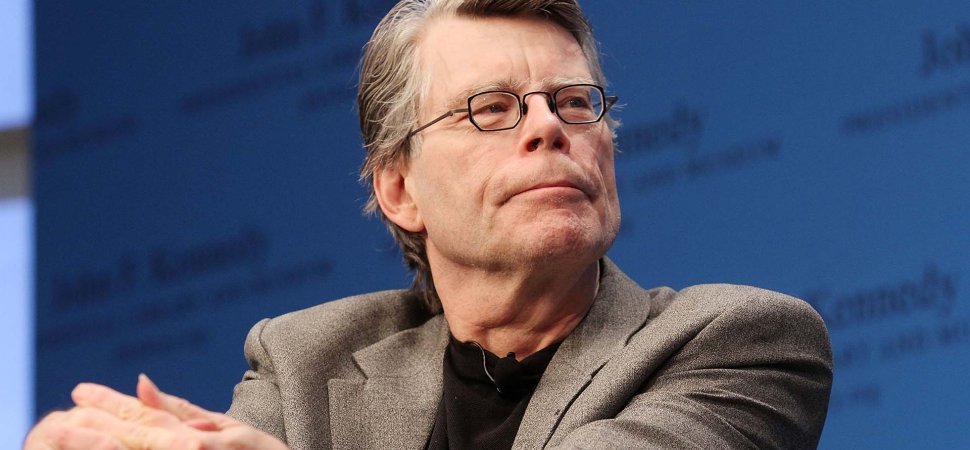 In an interview with David Letterman more than three decades ago, Stephen King delves into the human psyche's dark corners, revealing why we're irresistibly drawn to the thrills and chills of horror. This dialogue is not just a deep dive into the nuances of fear but also unravels an unexpected blueprint for leadership in modern business and organizational settings.King posits that horror, at its core, plays on the fundamental human condition of fear, transforming it into a source of entertainment. He says, "People like to be scared... it's the same as the old joke about the guy who beat his head against a wall because it feels good when he stops." It's the appeal of horror: the exhilaration of facing our fears in a controlled environment, leading to a profound sense of relief and safety afterward.
Continued here
|
S1How the new generation of weight-loss drugs work - The Economist (No paywall)  WEIGHT-LOSS DRUGS are everywhere. In newspapers, on social media or by the water cooler, the gossip about injections that can help to melt away 10-20% of one’s body weight is hard to avoid. The real news is getting buried. These drugs offer a powerful new option to treat obesity, which is now widely accepted by doctors as a chronic disease. Being seriously overweight raises a person’s risk of suffering from diabetes, heart disease, strokes and 13 cancers. But there is evidence that, for most people, dieting is not an effective way to lose and keep off large amounts of weight: the body fights attempts to shift more than a little. How might new drugs help?The history of weight-loss medication is a sorry tale. In 1934 as many as 100,000 Americans were using dinitrophenol to shed excess pounds. It is toxic, causing cataracts and, occasionally, deaths. By one estimate 25,000 people were blinded by the drug; it was banned as a drug for human use in 1938 but deaths continue to this day as people are still enticed to buy it online. Next amphetamines became popular—until the risk of addiction and other side-effects became apparent. Ephedra, a herbal medication which in 1977 was taken by an estimated 70,000 people, was also banned in America after it led to deaths. Two other weight-loss drugs, rimonabant and sibutramine, were withdrawn from sale because of safety concerns.
Continued here
|
| ? |
|
S2The Fastest Path to the CEO Job, According to a 10-Year Study - Harvard Business Review (No paywall)  A 10-year study of more than 17,000 C-suite executive assessments looked at who gets to the top and how. A close look at “CEO sprinters” — those who reached the CEO role faster than the average of 24 years from their first job — shows that formative experiences play a key role. Specifically, these ladder-climbers made bold career moves that catapulted them to the top ahead of others. Three types of career catapults were most common. First, lateral or even backward moves allowed the future CEO to build something from the ground up (like leaving a large, prestigious company to start their own business). Second, big leaps allowed the future CEO to skip a level, or even two levels, even if they felt unready. And third, big messes brought the opportunity to turn around a failing unit or division.
Continued here
|
S3The Sound of Cruelty - The Atlantic (No paywall)  Jonathan Glazer’s new film, The Zone of Interest, begins with a black screen that lingers for at least a full minute. There’s music in the form of a groaning score, as well as a smattering of noises—faint whispers, rustling leaves—that can be heard through the discordant notes. Otherwise, though, nothing appears.That nothingness continued for so long at my screening that I began to question whether a technical difficulty—a defective projector, maybe?—had occurred. It had not; Glazer, who’s known for making unsettling, experimental movies such as Birth and Under the Skin, intended to teach the audience how to absorb his new film, his first in 10 years. “It’s a way of saying, ‘Ears first,’” he told me earlier this month. “What you’re going to hear in this film is as important as what you’re going to see. Arguably more so.”
Continued here
|
| ? |
|
S4A Subtle Shift Shaking Up Sibling Relationships - The Atlantic (No paywall)  Growing up with a sibling who is much younger than you are can be a profoundly humbling experience. In casual conversation, you might suddenly find yourself fumbling to parse Gen Z terminology or pretending to know the identities of the alleged celebrities they keep name-dropping. You don’t even duke it out in the same way. Whereas siblings close in age might skirmish over whose turn it is to pick the night’s TV show, these debates take on a different contour when one is in middle school and the other is in college. You probably can’t convince a sixth grader to watch The Bear with you, so you may have to settle for Dash & Lily every time.Siblings with a several-year age gap were once considered exceptional, but they are quietly becoming more common. From 1967 to 2017, the average time between sibling births increased by about three-quarters of a year, according to data from a study published in 2020. Siblings are now, on average, 4.2 years apart. The tit-for-tat arguments—over, say, who gets to shower first—that have been associated with the sibling relationship for decades are not going away completely. Yet these larger age gaps have opened the door for a new kind of dynamic—one premised more on mentorship than on a battle for limited attention or resources. Squabbles for parental attention are giving way, at least in some families, to a sense that there is enough to go around for everyone.
Continued here
|
| ? |
|
|
| ? |
|
|
|
S5Jonathan Glazer's Warning at the Oscars - The Atlantic (No paywall) 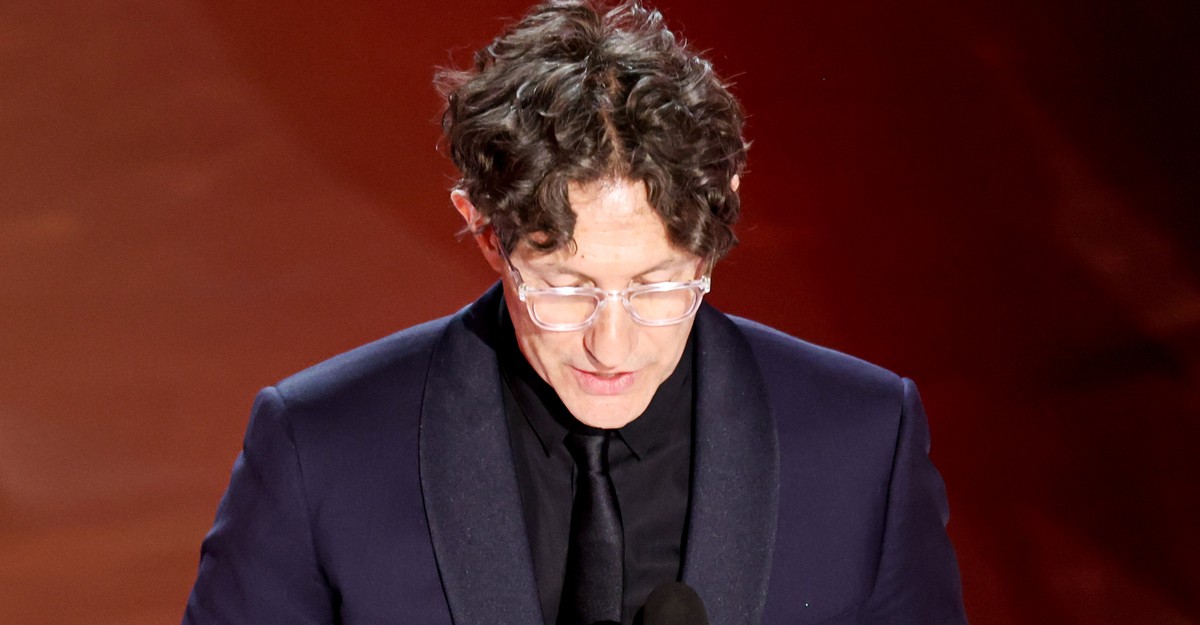 The Oscars are not built for somber appeals about current events, though the show has tried in the past to balance celebration with seriousness. Sometimes that effort has worked: In 2002, after 9/11, Tom Cruise opened the evening with a vague but elegant speech about needing movie magic “more than ever,” which eased the apparent anxiety in the room. Other times, it couldn’t completely control the proceedings: In 2003, shortly after the Iraq War began, the show tried to dissuade flashy displays of emotion and even scrapped the red carpet. But the notoriously vocal director Michael Moore had other ideas, using his Best Documentary acceptance speech to criticize President George W. Bush until he was booed offstage.This year seemed poised for another festive but dry evening, devoid of any real reminders of life outside Hollywood. But then the historical drama The Zone of Interest won for Best International Feature, and the director, Jonathan Glazer, flanked by two of the film’s producers, used his speech to deliver a stark message to the audience. “Right now,” he said, his hands shaking as he held the piece of paper on which he’d written his remarks, “we stand here as men who refute their Jewishness and the Holocaust being hijacked by an occupation which has led to conflict for so many innocent people. Whether the victims of October the 7th in Israel or the ongoing attack on Gaza—all the victims of this dehumanization.”
Continued here
|
S6You Are a Wonder, You Are a Nobody, You Are an Ever-Drifting Ship: Melville on the Mystery of What Makes Us Who We Are  “The self is a style of being, continually expanding in a vital process of definition, affirmation, revision, and growth,” the poet Robert Penn Warren wrote in his impassioned and insightful challenge to the notion of “finding yourself” — something the Harvard psychologist Daniel Gilbert captured half a century later in his memorable quip about our blind spots of becoming: “Human beings are works in progress that mistakenly think they’re finished.”Two millennia after Plutarch probed what makes you you in his enduring thought experiment, two decades before Nietzsche admonished that “no one can build you the bridge on which you, and only you, must cross the river of life,” and a century before James Baldwin turned to the sea for existential evidence that nothing in this world is fixed, including us, Melville considers the myriad twists and turns, the forward leaps and backward steps, the detours and digressions by which the story of life tells itself through us. At the heart of his meditation is a warning: We must set ourselves free from the illusion that there is a steady vector of personal growth, along which we glide unperturbed toward some final completeness, where we at last become our fully realized selves and where life is at last permanently becalmed. He writes:
Continued here
|
S7Analyzing the CEO-CMO relationship and its effect on growth  Robert Tas: Across the industry, there are lots of titles and changes in the definition of marketing. We’ve seen new roles such as the chief growth officer, chief digital officer, and chief customer officer. The traditional four Ps of marketing have been fragmented across multiple roles in the organization, which creates a challenge.Robert Tas: The standard Procter & Gamble definition is product, price, place, and promotion. The four Ps have been moved into different parts of the organization. Even though some of this is good, you still need that aggregator, that chief customer advocate across the organization, to make sure the four Ps are working together synergistically.
Continued here
|
S8Your Dream Job May Not Exist, and That's Okay  For decades, the mantra “follow your passion” has been one of the most popular pieces of career advice. Ever since Steve Jobs famously told Stanford graduates back in 2005 to “find what you love”, university students have been nudged to pursue careers that align perfectly with their personal interests. But this approach can be misguided. In her book, The Trouble with Passion: How Searching for Fulfillment at Work Fosters Inequality, Erin Cech argues that students from underprivileged backgrounds are particularly vulnerable to the pitfalls of this advice. This is because they lack the financial safety nets and don’t have the luxury to spend time exploring various career options before making a definitive decision.
Continued here
|
S9Globalisation may not have increased income inequality, after all - The Economist (No paywall)  Working out who earns what is surprisingly tricky. Both the very rich, who sometimes try to keep their wealth from the taxman, and the very poor, who are sometimes mistrustful of clipboard-wielding officials, are especially hard to pin down. Nevertheless, before the covid-19 pandemic, household surveys consistently found a fall in the number of people living in poverty. The World Bank counted 659m living on less than $2.15 a day in 2019, down from around 2bn in 1990.
Continued here
|
S10Robots who share your accent are more trusted, study shows  As robots become a bigger part of our everyday social lives, designers are increasingly considering how to get humans to trust them. A common expectation is that robots should behave in ways that align with our culture and social norms, and few aspects of these are more visible than the voices, accents, and dialects they use to talk to us. Imagine a “robot voice” in your head. If it is anything like a fictional robot inspired by decades of sci-fi, it might sound clinical, stilted, and authoritative, with a hard-to-place but generic accent. Today, however, machines are starting to talk more and more like people. How will that affect how we perceive them?
Continued here
|
S11How a second language can boost the brain  ven when you’re fluent in two languages, it can be a challenge to switch back and forth smoothly between them. It’s common to mangle a split verb in Spanish, use the wrong preposition in English, or lose sight of the connection between the beginning and end of a long German sentence. So — does mastering a second language hone our multitasking skills or merely muddle us up?This debate has been pitting linguists and psychologists against one another since the 1920s, when many experts thought that bilingual children were fated to suffer cognitive impairments later in life. But the science has marched on. In the Annual Review of Linguistics, psycholinguist Mark Antoniou of Western Sydney University in Australia outlines how bilingualism — as he defines it, using at least two languages in your daily life — might benefit our brains, especially as we age. He addresses how best to teach languages to children and lays out evidence that multiple-language use on a regular basis may help delay the onset of Alzheimer’s disease. This conversation has been edited for length and clarity.
Continued here
|
S13I Went to the Other Side of the World and Discovered an Unexpected Remedy for Burnout  After I hit nearly a decade of working full-time while pursuing startups and working in overdrive, I had hit a wall. But when I used my salary to bootstrap my businesses, the answer that so many others saw written on the wall -- to drop one of the balls I was juggling -- wasn't an option I was willing to entertain.I felt like I had tried just about everything. I exercised more, ate better, drank more water (and less alcohol), got more sun, better sleep, learned to meditate, changed companies, and changed positions (in fact, I fought for a demotion). I took time off and finally took something of a sabbatical. And while these changes helped move the needle, none of it changed the fact that I was still burnt out.
Continued here
|
S14A Taylor Swift Fan Asked For Help. Hundreds of Fellow Swifties Came to Her Rescue  I thought about this whole "customers to fans to community" concept recently when I saw that a 30-year-old bride-to-be who says she's been a big Swift fan "since the very, very beginning," faced a bit of a conundrum. Swift fan Emily Harris was engaged to her fiance Jacob McDaniel, but unsure how to pay for the wedding. She was considering selling a prized possession to raise funds: an autographed Taylor Swift guitar, which had been a 16th birthday present from her dad.Â
Continued here
|
S15In Just 1 Word, Philadelphia Eagles Center--and Travis's Brother--Jason Kelce Taught a Huge Lesson in Making Tough Choices 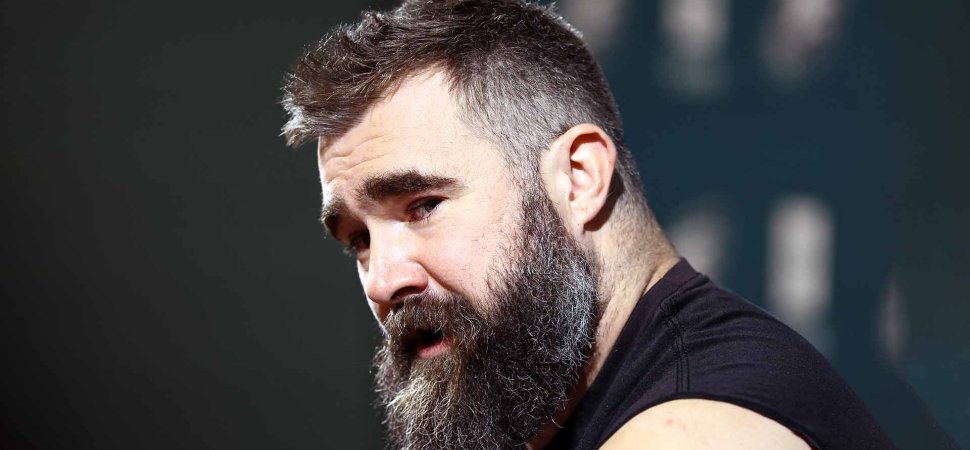 This week, Philadelphia Eagles Center Jason Kelce finally made the announcement the sports world has been waiting for. He is retiring and will not return to play another season with the team. The 36-year-old made the announcement in an unforgettable 40-minute speech full of pauses because he was overcome with tears. Kelce co-hosts the New Heights podcast with his younger brother Travis Kelce, tight end for the Super Bowl-winning Kansas City Chiefs and perhaps best known for his romantic relationship with Taylor Swift. In the latest episode, the brothers discussed Jason's retirement and how he decided to leave the sport after 13 seasons. As Eagles fans know, this was not a quick decision. Kelce has been considering retirement for at least the past two seasons, and openly discussed the topic in interviews and on the podcast. In January, the Eagles lost 32-9 to the Tampa Bay Buccaneers, putting them out of the playoffs. After that game, a tearful Kelce made a speech to his teammates, telling them how much he'd enjoyed being on the team and that they should cherish every moment they spent in the NFL. Many took this speech to mean that Kelce was retiring, but days later he used the podcast to set the record straight: He might retire, or he might not. He still hadn't made up his mind.Â
Continued here
|
S16With 4 Words, Apple's Response to Its $2 Billion Fine Highlights Its Most Glaring Weakness  Last week, the European Commission (EC) fined Apple roughly $2 billion over a complaint filed by Spotify that Apple was unfairly using the App Store to make it hard for streaming music services to compete. Apple has its own service, Apple Music, which doesn't have to pay a commission on subscriptions in the way that Spotify or other services do. Apple responded with a post on its Newsroom that disagreed with the fine--as you might expect--but then directed most of its ire not toward the EC but toward Spotify. Seriously, Apple's post is a little over 1,500 words. Less than 100 of them are about the decision. The rest of those words are about Apple's anger with Spotify.
Continued here
|
S17How a Combat Operations Process Can Help Entrepreneurs Gain the Upper Hand  As a third-generation executive of a family-owned printing business, I've had the good fortune to access incredible mentors and advisers who have bestowed amazing advice. Their counsel has followed me throughout my career, paying invaluable dividends over many decades. One of the most powerful processes I've learned from a mentor and adviser is the OODA loop, developed by military strategist and United States Air Force colonel John Boyd in the early 1970s. I've been applying it to new business challenges for years, and it has helped me confidently make some of my toughest, most consequential decisions. It can likely help you, too.As entrepreneurs, we repeatedly face challenges where we lack the time, information, or context to make weighty decisions. As a result, we make a lot of judgment calls. Slow or bad decision-making on the part of leadership can paralyze an organization, compromising your progress and holding back your potential. And sticking with bad decisions can cause ongoing, negative ripples throughout an organization.
Continued here
|
S18What the Research Says About Gender Differences in Communication  Understanding gender differences is one of the most common queries that I get from my clients in my role as an executive communication coach. People are curious whether the patterns that they observe anecdotally are based on bias or whether they are legitimate. Understanding the nuances of gender communication is critical for building a cohesive and inclusive workplace, not to mention to drive business results.The common stereotype is that women talk more so than men. Do women take up more than their fair share of the conversation? An analysis of research reveals that if anything, the opposite might be true!
Continued here
|
S198 Benefits to Starting a Business While Employed or Between Jobs  If you are one of the many business professionals still trapped between jobs by circumstances outside your control or are about to dump the loser job you have now, you should be actively defining and starting your own business, in parallel with looking for that ideal job. Let me explain why this is a win-win deal, no matter what the outcome.You have probably secretly always wanted to run your own show, but with an existing job, never took the time to consider starting your own business. Then there was always the risk of failure. Also, for most of us, not having done it before, we have no idea where or how to start.
Continued here
|
S20How to Use the Power of Conversational AI in HR  Artificial intelligence can help you recruit, hire, and engage with your employees better than ever before. However, expert insights are critical in helping businesses navigate and effectively implement AI solutions. Recent research from McKinsey indicates that AI-driven systems can handle up to 70 percent of routine HR inquiries. The goal is not just automation for small businesses but also aligning HR operations with strategic business objectives, leading to enhanced productivity and workforce satisfaction.Revolutionizing recruitment and onboarding includes providing a seamless and efficient experience for both employers and candidates. Through AI-driven chatbots and virtual assistants, the recruitment process becomes more interactive, with AI efficiently handling initial candidate queries, scheduling interviews, and even conducting preliminary screenings.
Continued here
|
S21What 'Oppenheimer' Can Teach Entrepreneurs About the Art of Inspiration  The buzz surrounding Christopher Nolan's Oppenheimer, a film exploring the life of physicist J. Robert Oppenheimer who oversaw the Manhattan Project, has been hard to ignore. One surprising aspect for viewers may be Oppenheimer's deep appreciation for the arts, vividly depicted in a scene masterfully portrayed by Cillian Murphy. Here, Oppenheimer is seen studying physics abroad while immersing himself in Pablo Picasso's Femme Assise Aux Bras Croisés and delving into T.S. Eliot's complex poem The Waste Land. Additionally, he listens to Igor Stravinsky's groundbreaking composition The Rite of Spring. Oppenheimer's intellectual brilliance becomes a guiding light, urging us to draw inspiration from diverse disciplines. Whether you're an entrepreneur or a business leader, exploring beyond your field can kindle essential notions and spark transformative ideas, highlighting the value of embracing varied inspiration.This unexpected intersection prompts us to explore the shared interests between Oppenheimer and Picasso's painting. The scientist and the artist both exhibited a profound fascination with the abstract concepts of time and space. As we reflect on Picasso's unconventional portrayal of a woman, a question arises: Could Picasso's disjunctive representation have played a role in shaping Oppenheimer's perspective on disjuncture itself? This intriguing convergence of scientific and artistic realms highlights the interconnectedness of intellectual pursuits and challenges traditional expectations of where inspiration can be found.
Continued here
|
S22What I missed when I went to North Korea  Two days after I visited North Korea with my father Eric — then Google’s executive chairman — in January 2013, I sent a trip report to my friends. The report went 2010s-era viral: millions of views, media requests, and rather a lot of feedback about my choice to publish on Google Sites. I found my one minute of fame overwhelming, so I hid and left the site alone. Recently, my colleague Michael Donohoe noticed that the original report had finally fallen into the internet’s abyss. He offered to reconstitute it for Rest of World. With a wince — who likes their old writing? — I said yes.Reading it now, I’m struck by how little I understood North Korea at the time. I had the conventional Western view but no grasp on how much human complexity can exist within a “closed” system.
Continued here
|
 |
TradeBriefs Publications are read by over 10,00,000 Industry Executives About Us | Advertise Privacy Policy Unsubscribe (one-click) You are receiving this mail because of your subscription with TradeBriefs.
Our mailing address is GF 25/39, West Patel Nagar, New Delhi 110008, India |
