CEO Picks - The best that international journalism has to offer!
 S37 S372023 was the year of generative AI. What can we expect in 2024?   In 2023, artificial intelligence (AI) truly entered our daily lives. The latest data shows four in five teenagers in the United Kingdom are using generative AI tools. About two-thirds of Australian employees report using generative AI for work.At first, many people used these tools because they were curious about generative AI or wanted to be entertained. Now, people ask generative AI for help with studies, for advice, or use it to find or synthesise information. Other uses include getting help coding and making images, videos, or audio.
Continued here
|
S1 AI on Mars: NASA's Vandi Verma  The winter 2024 issue features a special report on sustainability, and provides insights on developing leadership skills, recognizing and addressing caste discrimination, and engaging in strategic planning and execution.The winter 2024 issue features a special report on sustainability, and provides insights on developing leadership skills, recognizing and addressing caste discrimination, and engaging in strategic planning and execution.When Vandi Verma saw the Spirit and Opportunity rovers land on Mars while she was working toward a Ph.D. in robotics, it set her on a path toward working at NASA in space exploration. Perhaps unsurprisingly, today, as chief engineer for robotic operations at NASA's Jet Propulsion Laboratory (JPL), Vandi sees the biggest opportunities for artificial intelligence in robotics and automation.
Continued here
|
S2Nostalgia marketing is powerful. 'Nowstalgia' might be even more compelling.  The holiday season is always awash with nostalgia: both emotional and physical reminders that stoke memories of all kinds. Beyond the intangible, however, nostalgia often also finds its way into foil-wrapped boxes filled with toys and products inspired by the past.Nostalgia – a longing or yearning for the past – has power over consumers, who eagerly snap up wares re-issued in vintage packaging, or new takes on childhood favourites. Brands seize the rose-coloured yearning of memory to elicit strong feelings and positive associations, and ultimately move products off shelves.
Continued here
|
S3Why olive oil prices are soaring and what to do about it  The image of a celebrity chef dousing their Caprese salad, gazpacho or dolmas with extra-virgin olive oil is incredibly ambitious at the moment, with most Europeans facing record prices in the supermarket aisle. But why have olive oil prices risen so sharply?For the past decade, the oldest cultivated trees on Earth have been showing their vulnerability with many of the Mediterranean's olive groves drying up due to increasingly difficult weather conditions such as droughts and severe hailstorms leading to floods. And in 2023, the region – as well as the whole planet – experienced the hottest summer on record.
Continued here
|
S4In History: The first ever video game console, 50 years on  "Here is a brand-new idea from the US that turns your television into a game that two can play," says the avuncular presenter, Raymond Baxter, as he shows the British public their first glimpse of a device that would kickstart a multi-billion-pound industry.In the BBC Tomorrow's World episode, first broadcast 50 years ago, he goes on to demonstrate the world's first home-video game console, the Magnavox Odyssey.
Continued here
|
S5Strikes: when companies collaborate with unions, industrial action can benefit business 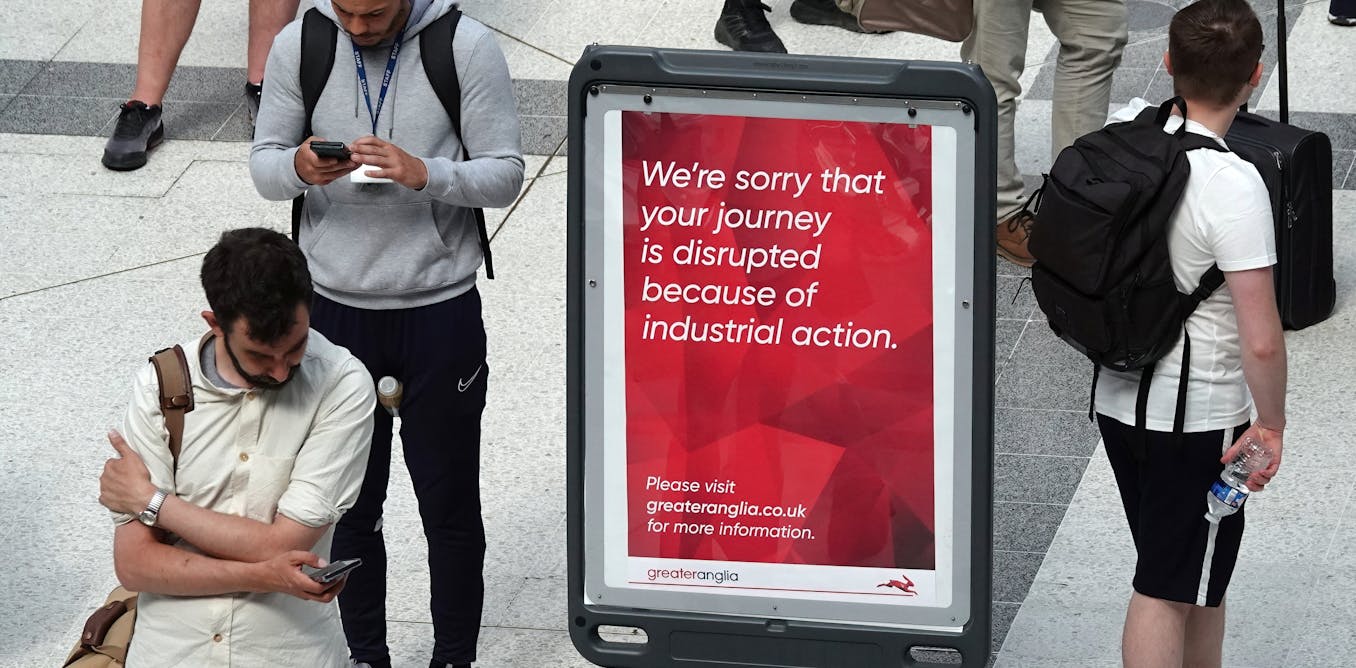 More than 4 million working days have been lost to industrial action in the UK in 2023. This is more than at any point since 1989 and around nine times more than the yearly average of 450,000 days in the 2010s. This is level of activity is particularly high given the lower union membership levels at the moment – 22% of workers were in a union in 2022, compared to 39% in 1989. But the uptick in industrial disputes has happened across a wide range of professions in which people are concerned about stagnating pay and conditions.
Continued here
|
S6Students could get more sleep and learn better if school started a little later  Nearly three-quarters of high school students do not get enough sleep on school nights, according to the Centers for Disease Control and Prevention.The National Sleep Foundation recommends that teens sleep for eight to 10 hours per night. But various factors hinder this, including early school start times and shifts in adolescents’ circadian rhythms – the biological internal clock that regulates the sleep-wake cycle and repeats roughly every 24 hours. Healthy sleep is crucial for teens’ physical, cognitive and emotional development. When teens don’t get enough sleep, it can have lifelong impacts. They range from poor mental health to lower attendance and graduation rates.
Continued here
|
S7
S8After 50 years of global effort to abolish torture, much work remains  The world’s first conference on the abolition of torture drew more than 300 delegates representing over 70 countries and international organizations. It opened with the news that the United Nations General Assembly had passed a resolution condemning torture, along with a personal message from the U.N. secretary general.Amnesty International, the nonprofit human rights advocacy group that organized the conference, preceded it by releasing a report documenting torture in 65 countries and collecting over a million signatures of citizens from 91 countries asking the U.N. to outlaw torture.
Continued here
|
S9More vulnerable people live in Philadelphia neighborhoods that are less green and get hotter  The ways an urban neighborhood is built and the characteristics of the people who live there are both related to how hot it gets. That is the result of our study, published by the Journal of Buildings.If you have ever noticed that some parts of a city feel significantly hotter than others, you have experienced a phenomenon known as the urban heat island effect. This effect is most noticeable at night and when comparing rural and suburban surroundings with urban ones.
Continued here
|
S10Teaching positive psychology skills at school may be one way to help student mental health and happiness  Youth mental health has worsened significantly over the past decade, but new interventions that teach positive psychology concepts in school may help.American young people are reporting historically high levels of hopelessness, sadness and loneliness. According to the most recent data from the U.S. Centers for Disease Control and Prevention, more than 20% of adolescents have seriously considered suicide – and suicide is the second-leading cause of death for children ages 10-14.
Continued here
|
S11S12Do you hear what I see? How blindness changes how you process the sound of movement 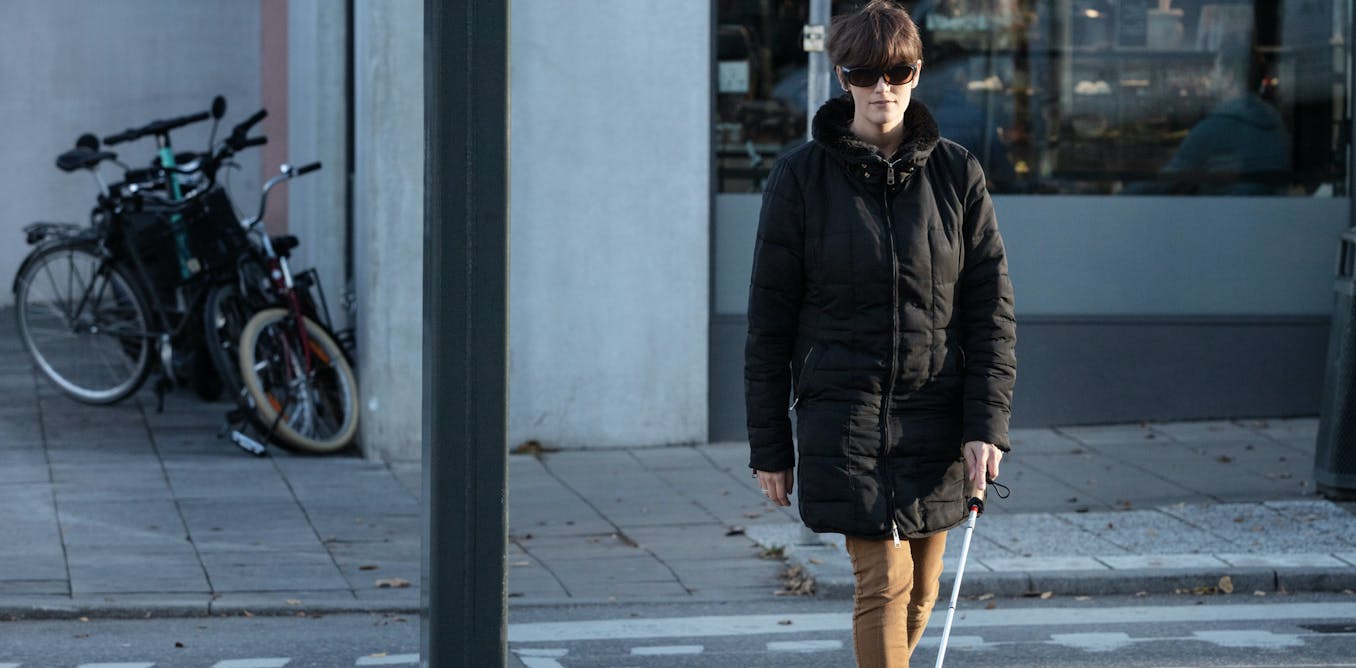 Almost nothing in the world is still. Toddlers dash across the living room. Cars zip across the street. Motion is one of the most important features in the environment; the ability to predict the movement of objects in the world is often directly related to survival – whether it’s a gazelle detecting the slow creep of a lion or a driver merging across four lanes of traffic.Motion is so important that the primate brain evolved a dedicated system for processing visual movement, known as the middle temporal cortex, over 50 million years ago. This region of the brain contains neurons specialized for detecting moving objects. These motion detectors compute the information needed to track objects as they continuously change their location over time, then sends signals about the moving world to other regions of the brain, such as those involved in planning muscle movements.
Continued here
|
S13Israel-Gaza war is having a chilling effect on academic freedom - podcast  Neve Gordon is vice president of the British Society for Middle Eastern Studies and the chair of its Committee on Academic Freedom. The Conversation UK receives support from UKRI. Across parts of academia, concerns are mounting that the Israel-Gaza war is having a chilling effect on academic freedom. In the second of two episodes of The Conversation Weekly exploring how the war is affecting life at universities, we speak to an Israeli legal scholar, now based in the UK, about the pressures that academics and students are facing to rein in their views about the war.
Continued here
|
S14mRNA COVID vaccines make 'unintended proteins' - we've discovered how to fix this problem 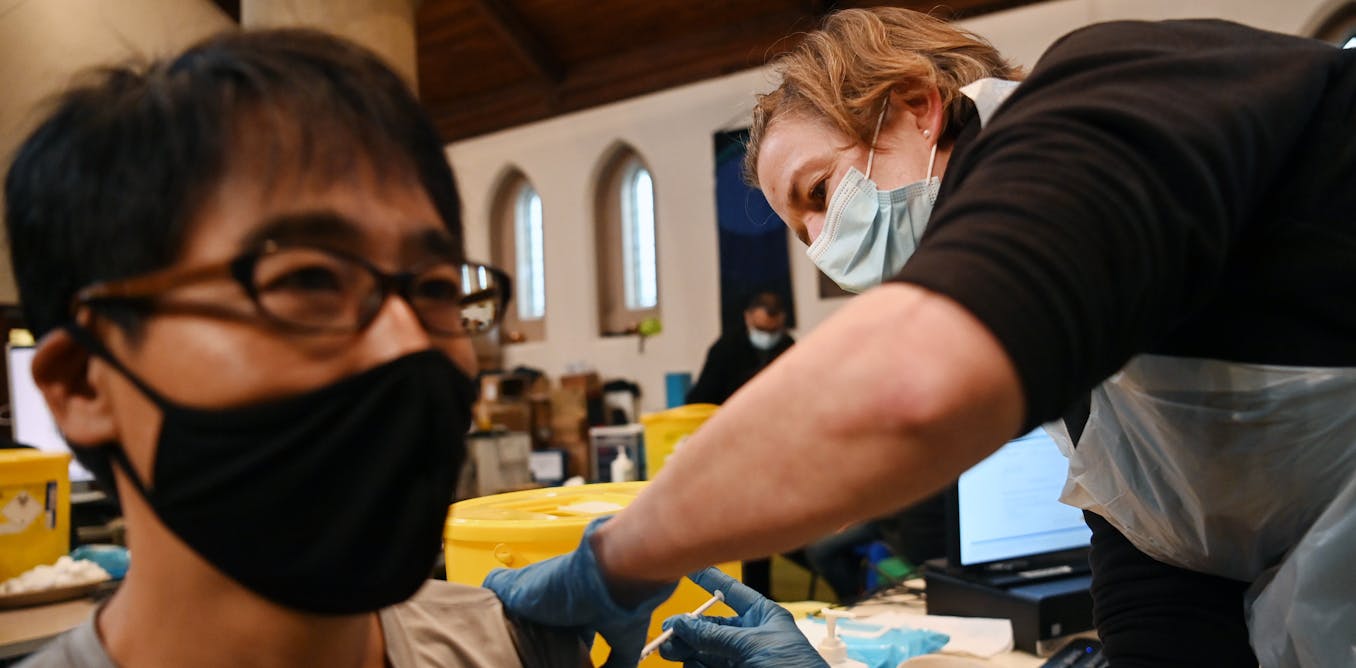 MRNA, a type of genetic material that provides the instructions your cells need in order to make proteins, used to be a term mainly used by scientists. But since COVID arrived many of us are now familiar with it thanks to the mRNA-based vaccines.The people behind the discoveries that made mRNA-based vaccines and treatments a possibility were awarded the Nobel prize earlier this year. That work showed that some of the mRNA’s chemical letters that make up its alphabet need to be switched out for synthetic equivalents for this technology to be viable.
Continued here
|
S15How a colonial trip to Palestine spurred modern ornithology - and left it with imperial baggage  Palestine’s natural splendour offered a landscape ripe for scientific “discovery”, description and expropriation by European imperial powers in the 19th century. And in the 1860s an English vicar named Henry Baker Tristram claimed its birds. Tristram was a co-founder of Ibis, the ornithology journal published since 1859 by the British Ornithologists’ Union. His articles on Palestinian ornithology began with the first issue, when he contributed a list of birds he’d collected during a brief visit there the previous year. The list included a species previously unknown to western science, which was named in his honour as Tristram’s grackle (now more commonly known as Tristram’s starling).
Continued here
|
S16S17Victorian Britain had its own anti-vaxxers - and they helped bring down a government 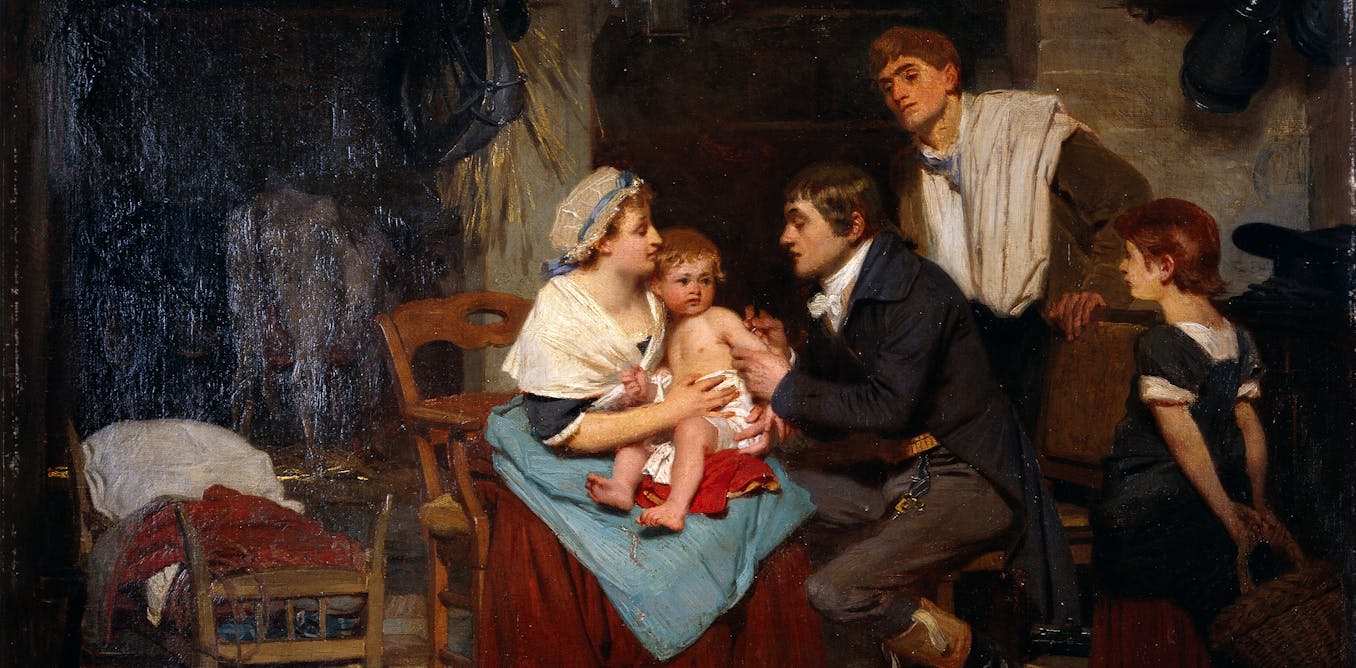 PhD Candidate, ESRC Centre for Corpus Approaches to Social Science, Lancaster University As the 1906 UK general election results rolled in, it became clear that the Conservative party, after 11 years in power, had suffered one of the most disastrous defeats in its history. Of 402 Conservative MPs, 251 lost their seats, including their candidate for prime minister, defeated on a 22.5% swing against him in the constituency he had held for two decades.
Continued here
|
S18Advertising toys to children is an environmental nightmare -- here's how parents can deal with it 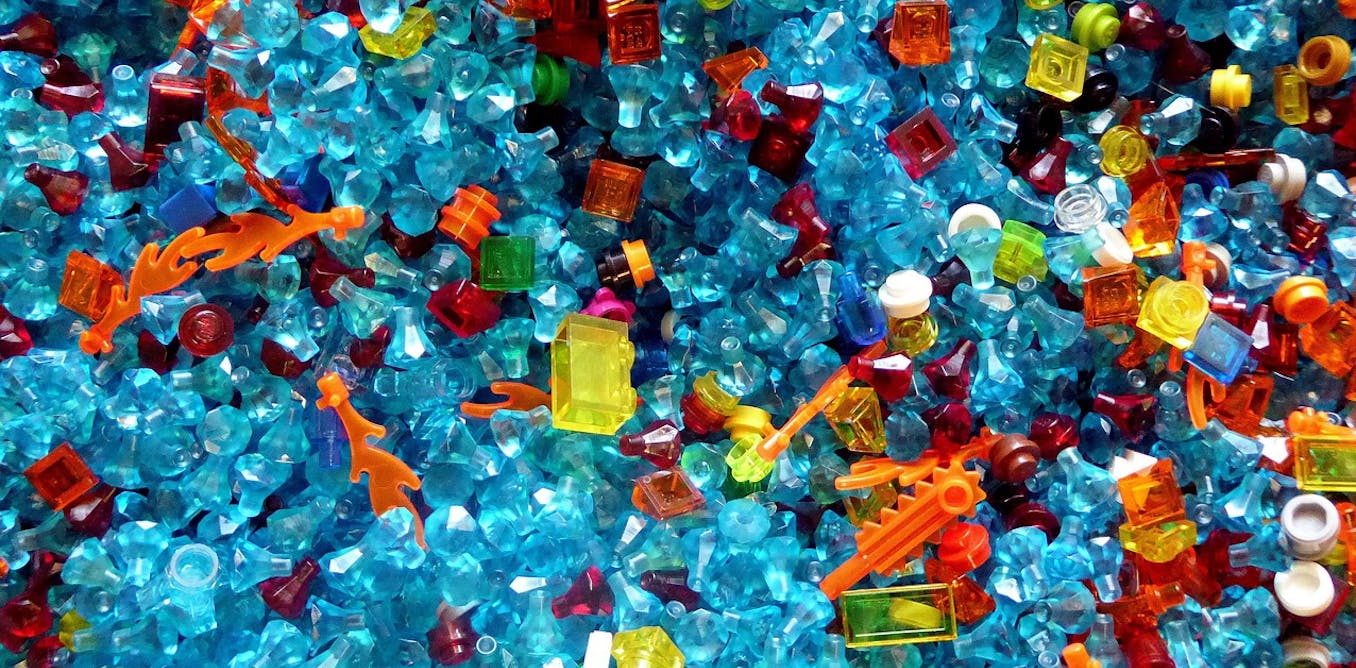 Michelle Cowley-Cunningham is a chartered psychologist of the British Psychological Society and an associate fellow of the Psychological Society of Ireland. She is affiliated with the Green Party, Ireland. As Christmas approaches, many children experience the “gimme-gimmes” and write a list of toys that they hope Santa will bring. This is to be expected. Toys give children a chance to learn and be curious, engage their imaginations in play and become socialised with others.
Continued here
|
S19The seven best TV shows of 2023 reviewed by our experts  This year has been a memorable one for television. From the scintillating Succession finale to animated AI dramas, these are the seven shows that had our academic experts glued to the small screen in 2023.First hitting screens nine years ago, the final episode of Happy Valley – the BBC crime drama created and written by Sally Wainwright – aired to an audience of over 7.5 million live viewers back in February.
Continued here
|
S20Studio Ghibli's layering of Japanese and western storytelling is key to their success  Studio Ghibli films are often put into the rather vague category of “Japanese animation”. Many viewers expect the studio’s films to be rooted in the culture and stories of it’s home nation, Japan. This makes its foray into adapting western stories all the more intriguing. Studio Ghibli has been critically lauded since 1985, with the release of its debut feature Laputa: Castle in the Sky. The studio later gained international reverence following the releases of Princess Mononoke (1997) and, more significantly, Spirited Away (2001), which won the Academy Award for best animated feature.
Continued here
|
S21Putin's four-hour Q&A is a valuable insight into the Russian president's version of reality 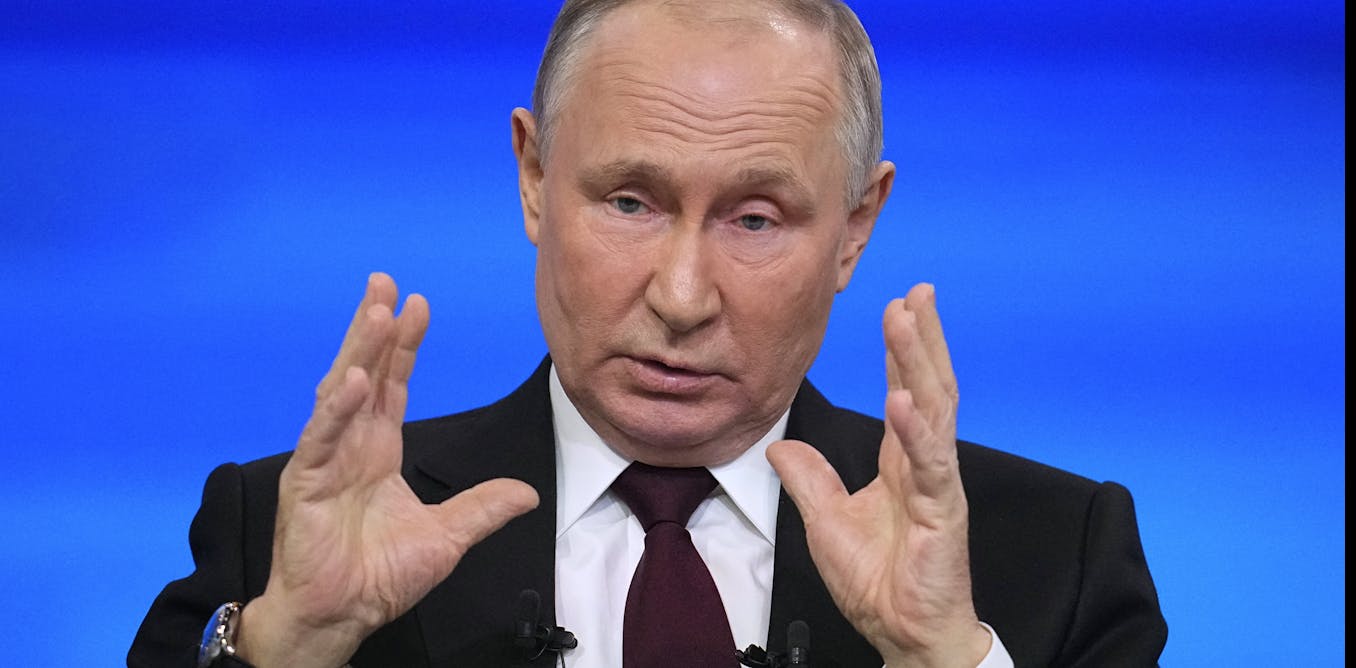 Russian television audiences didn’t have much choice but to watch Vladimir Putin’s annual press conference on December 14 – it was broadcast on all terrestrial TV networks. After a year’s hiatus in 2022, when the success of the Ukrainian autumn counteroffensive meant there was little good news to talk about, Putin returned to the airwaves for a four-hour press conference and phone-in Q&A session in which he answered pre-approved questions and boosted his candidacy for next year’s elections.There were reportedly 600 journalists present, the vast majority of them from Russian news outlets. Viewers were treated to Putin as the “man of the people”, willing to answer questions that were, on the face of it, mildly critical of the “special military operation” and the effect it had on ordinary people’s lives.
Continued here
|
S22Meta charging European users to remove ads is a privacy red herring  This November, Meta rolled out a new subscription model for Facebook and Instagram users in the European Union, where they could pay a fee in exchange for an ad-free browsing experience on Facebook and Instagram. Referred to by critics as a “Pay or Okay” model, and charging 9.99 to 12.99 euros monthly, the option is already an object of controversy.Meta, among many others, presented the new policy as a privacy-preserving measure. Meta explains it responds to EU privacy regulations.
Continued here
|
S23Planting pine or native forest for carbon capture isn't the only choice - NZ can have the best of both  Len Gillman is co-chair of the Waitakere Ranges Pest free Alliance. He has acted as an independent consultant for local government and carbon farmers on climate change mitigation, climate effects mitigation and native forest restoration ecology.New Zealand’s per-capita contribution to carbon emissions is very high by international comparison. But so too is its potential to mitigate climate change by planting forests to quickly sequester large amounts of carbon.
Continued here
|
 |
TradeBriefs Publications are read by over 10,00,000 Industry Executives About Us | Advertise Privacy Policy Unsubscribe (one-click) You are receiving this mail because of your subscription with TradeBriefs.
Our mailing address is GF 25/39, West Patel Nagar, New Delhi 110008, India |