CEO Picks - The best that international journalism has to offer!
 S36 S36Police Can Spy on Your iOS and Android Push Notifications   If you have push notifications turned on for sensitive apps, you may want to reconsider your settings.The United States government and foreign law enforcement can demand Apple and Google share metadata associated with push notifications from apps on iOS and Android, according to a US senator and court records reviewed by WIRED. These notifications can reveal which apps a person uses, along with other information that may be pertinent to law enforcement investigations.
Continued here
|
S1Is Your Job AI Resilient?  Leading Wall Street research firm Evercore ISI, in collaboration with venture studio Visionary Future, embarked on a comprehensive study to understand the profound effects of Generative AI on businesses, the broader economy, and its integration into future workforces. They conducted an in-depth analysis of over 160 million jobs in order to produce analytical insight to help leaders navigate this change. With AI’s influence, their projections suggest a potential resurgence in global GDP growth, envisioning a substantial boost to the global economy by 2032. The authors predict that AI will emerge not merely as a technological marvel, but as a beacon of hope in addressing demographic and productivity challenges. This article covers analysis on which jobs will be most affected by AI, including which stand to benefit the most from augmentation by AI.
Continued here
|
| ? |
 |
S2S3
| ? |
|
S4
| ? |
|
|
| ? |
|
|
|
S5S7S8S9S10S11S12Strategy, Not Technology, Is the Key to Winning with GenAI  The explosion of AI startups in dozens of sectors masks something many of them share: They are increasingly built on top of standardized technology from a few AI giants like OpenAI, Google, and Meta. This puts a premium on strategy over proprietary technology. Companies who use these tools will need to think about how they’ll create value beyond the technical features they offer and what they will do to stand out from the pack. They’ll also need to prepare for, among other things, higher employee turnover.
Continued here
|
S13S14S15What to Do When Stakeholders Have Competing Visions  It’s not uncommon for multiple stakeholders within companies to have differing visions or even competing agendas. In this article, the authors offer strategies for how to get everyone on the same page — and what to do if the confusion persists. Sometimes a simple one-on-one is all that’s needed to clear confusion and identify a workable set of success criteria for everyone. If that doesn’t work, the person managing the conflict can take the next step and gather all the interested stakeholders to discuss the situation. If we systematically focus on getting clear about the causes of conflict and working to solve them collectively, we can often help our organizations thrive, rather than devolving into a collection of self-interested in-groups.
Continued here
|
S16S17When Designing Employee Learning Programs, Less Is More  People now expect personalized experiences from websites, apps, and social media, yet organizations’ approach to learning programs and related content typically feels overwhelming, indiscriminate, and, above all else, impersonal. Since this overabundance of learning options seems to be the norm, learning and development leaders need to pause and reflect on something behavioral scientists have known for decades: Less is more. In this article, the authors unpack why that is and outline some strategies for offering employees higher-impact learning content.
Continued here
|
S18Taupo: The super volcano under New Zealand's largest lake 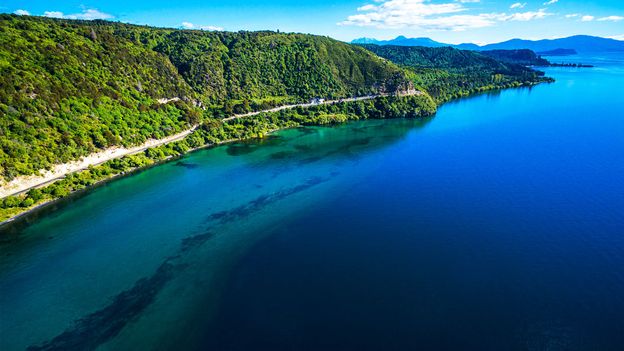 Located in the centre of New Zealand's North Island, the town of Taupo sits sublimely in the shadow of the snow-capped peaks of Tongariro National Park. Fittingly, this 40,000-person lakeside town has recently become one of New Zealand's most popular tourist destinations, as hikers, trout fishers, water sports enthusiasts and adrenaline junkies have started descending upon it.The namesake of this tidy town is the Singapore-sized lake that kisses its western border. Stretching 623sq km wide and 160m deep with several magma chambers submerged at its base, Lake Taupo isn't only New Zealand's largest lake; it's also an incredibly active geothermal hotspot. Every summer, tourists flock to bathe in its bubbling hot springs and sail through its emerald-green waters. Yet, the lake is the crater of a giant super volcano, and within its depths lies the unsettling history of this picturesque marvel.
Continued here
|
S19Message sticks: Australia's ancient unwritten language 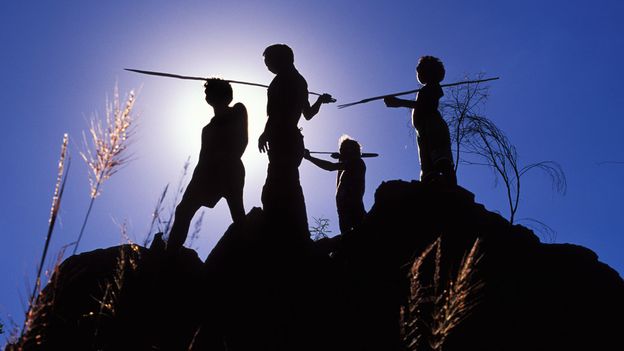 The continent of Australia is home to more than 250 spoken Indigenous languages and 800 dialects. Yet, one of its linguistic cornerstones wasn't spoken, but carved.Known as message sticks, these flat, rounded and oblong pieces of wood were etched with ornate images on both sides that conveyed important messages and held the stories of the continent's Aboriginal people – considered the world's oldest continuous living culture. Message sticks are believed to be thousands of years old and were typically carried by messengers over long distances to reinforce oral histories or deliver news between Aboriginal nations or language groups.
Continued here
|
S20Did Australia's boomerangs pave the way for flight? 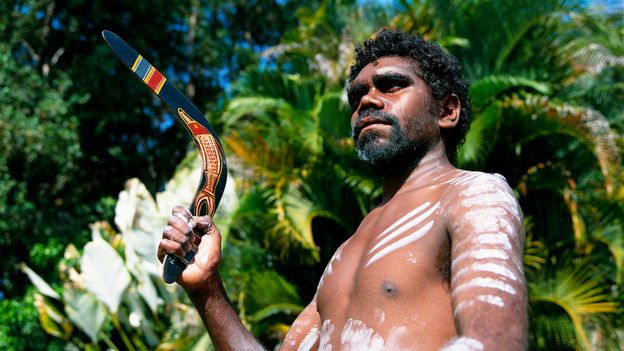 The aircraft is one of the most significant developments of modern society, enabling people, goods and ideas to fly around the world far more efficiently than ever before. The first successful piloted flight took off in 1903 in North Carolina, but a 10,000-year-old hunting tool likely developed by Aboriginal Australians may have held the key to its lift-off. As early aviators discovered, the secret to flight is balancing the flow of air. Therefore, an aircraft's wings, tail or propeller blades are often shaped in a specially designed, curved manner called an aerofoil that lifts the plane up and allows it to drag or turn to the side as it moves through the air.
Continued here
|
S21The powerful women of an ancient empire  The raiders came from the north. They came on horseback, the skilled bowmen shooting powerful arrows with expert precision. They ruined and burned the crops, which the Han Chinese villagers living on China's northern frontiers in about 200 BCE tended to with great attention. The Han Chinese called the invaders "Xiongnu", which meant "fierce slave", a pejorative term aimed to emphasise the barbarians' "inferiority".In reality, however, the Xiongnu outperformed their Chinese neighbours in military expertise and political organisation. Comprised of different ethnic tribes, the Xiongnu were the world's first nomadic empire, well-organised and formidable enough to cause so much trouble to the Han Chinese that the latter eventually resolved to build the Great Wall of China. More interestingly, behind the fierce bowmen, it was the powerful Xiongnu women who helped hold the empire together.
Continued here
|
S22The houses built to survive floods  Marites Babanto, a leader of the Manobo indigenous community in the southern Philippines, still remembers the time a terrible typhoon struck her village in 2012. Rainfall made the water levels of the Agusan Marshlands, a sprawling wetland area of rivers, lakes and swamps where Babanto and her community live, rise by 33ft (10m), the height of a three-storey house. But the villagers' homes, instead of being flooded, simply rose with the water, thanks to an ingenious ancient technique that allows them to float."Our community has never experienced a storm like this. The winds howled so loudly, and the rain poured for hours. We gathered everyone together to cower inside the floating tribal hall just hoping for the best," says Babanto, recalling the onslaught.
Continued here
|
 |
TradeBriefs Publications are read by over 10,00,000 Industry Executives About Us | Advertise Privacy Policy Unsubscribe (one-click) You are receiving this mail because of your subscription with TradeBriefs.
Our mailing address is GF 25/39, West Patel Nagar, New Delhi 110008, India |