|  | Know better. Do better. |  | Climate.
Change.News from the ground, in a warming world |
|
| | There’s good news and bad news in the early days of the COP28 U.N. climate summit in Dubai.
The good? An initial $420 million is now set to flow into a new hard-won “loss and damage” fund to help climate-vulnerable countries. And more than 100 nations have pledged to triple global use of renewable energy by 2030, and double energy efficiency by the same year.
Not quite so promising are efforts to win agreement to phase out – or at least rapidly phase down – use of fossil fuels, which produce about three-quarters of climate-heating carbon emissions.
COP28’s president, who is also head of the host nation’s state-owned oil company, described calls to get rid of oil and gas as “alarmist” and a move that would “take the world back into caves” during a fractious online event in the lead-up to the summit. 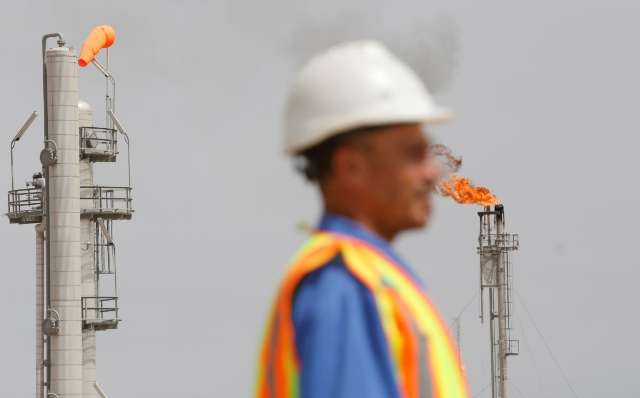 A flame burning off excess gas rises at the gas field of Siba in Basra , Iraq April 25, 2018. REUTERS/Essam Al-Sudani |
But many other major oil and gas-producing nations also show little sign of budging, even as scientists warn still-rising fossil fuel emissions must plunge by 2030 – and that the industry’s plans to keep pumping oil and gas and instead capture and store fossil fuel emissions would solve only a tiny share of the problem.
Carbon capture and storage technology “is a lifeline for the fossil fuel industry, not people and planet”, warned Oil Change International, a research and advocacy group that is among those pushing for a COP28 decision to curb fossil fuels.
Triple risks: Food, health and security
Elsewhere at bustling COP28, the risks to people as the planet rapidly heats are coming into ever clearer focus.
One in 12 hospitals globally are “at high risk of total or partial shutdown from extreme weather events” if fossil fuels are not phased out, a climate-risk data analysis company found - and climate extremes are fuelling a broad range of health risks, from malnutrition to dengue. Air pollution linked to fossil fuel use is also a persistent problem.
As well, climate impacts from extreme weather to sea-level rise are making it more difficult for farmers to grow nutritious food and for people to afford to buy it, raising concerns about global food security and how to curb the one-third of global emissions linked to food and farming. 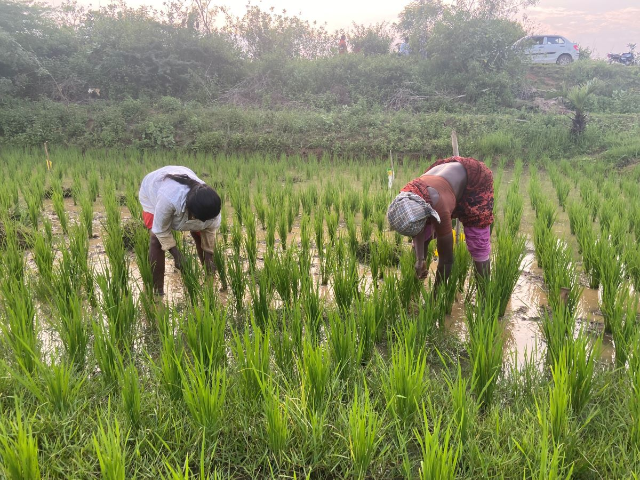 Farm workers transplant paddy seedlings on a natural farm in
Kothareddygudem village, Andhra Pradesh state, India, August 31, 2023. Thomson Reuters Foundation/Roli Srivastava |
For the first time at a COP meeting, countries that are home to 5.7 billion people committed to incorporate food and farming into their national climate action plans aimed at cutting emissions and adapting to climate impacts.
With many of the world’s most climate-vulnerable people also living in fragile or conflict-torn states, countries at COP28 also agreed to try to channel more aid and investment to them, despite the challenges involved in moving cash in countries where governments may be weak, non-existent or even part of the problem.
“We need to be able to take this risk. There are successful ways that we can still build resilience to the climate crisis even in these most challenging environments, said David Nicholson of aid agency Mercy Corps.
Harnessing AI, overcoming opposition
The need to make so many challenging shifts to battle climate change – particularly in a hurry – can seem daunting. But COP28 has also put a spotlight on some smart ideas that could speed action.  A mascot outside the rooms of the United Nations Climate Change Conference (COP28) in Dubai, United Arab Emirates, December 3, 2023. Thomson Reuters Foundation/Jack Graham |
The United States, for instance, needs to rapidly expand its electricity
grid to carry new, clean renewable energy. Local opposition to infrastructure projects can block that – but a new push to listen to communities and share the benefits with them is winning over opponents.
Artificial intelligence (AI) can guzzle electricity – not a good thing as the world races to cut fossil fuel emissions. But AI algorithms also show some early promise in making manufacturing more efficient, helping solar panels rotate with the sun and predicting where electrical grid faults might occur before they happen.
Don’t miss more great stories from our team on the ground in Dubai – and globally - here.
See you next week!
Laurie |
|
| | As negotiators arrive in Dubai, doubts persist about the decision to hold UN climate talks in a major oil-producing nation | U.N. climate talks launch long-awaited fund for vulnerable countries but far more finance will be needed | Lack of access to funding for women is holding back
effective climate action, analysts say | For the first time, global law enforcers meet at UN climate talks to discuss how to turn the heat up on environmental criminals | As COP28 kicks off in Dubai, global leaders will have to strike an ambitious deal to keep Paris Agreement emissions goals in reach | To speed electrical grid expansion, deliver green energy and overcome siting opposition, governments and companies are listening more to community needs | From water scarcity to food insecurity, women bear the brunt of environmental crises, yet their voices remain marginalized | The global finance system is giving fossil fuels a lifeline, indebting vulnerable countries and delaying a just energy transition | |
| | | | | | |
|