View online | Unsubscribe (one-click).
For inquiries/unsubscribe issues, Contact Us


?
Learn more about Jeeng

?
Learn more about Jeeng

?
Learn more about Jeeng

?
Learn more about Jeeng
?
?
Learn more about Jeeng


Want to accelerate software development at your company? See how we can help.


?
Learn more about Jeeng

?
Learn more about Jeeng

?
Learn more about Jeeng

?
Learn more about Jeeng
?
?
Learn more about Jeeng


Don't like ads? Go ad-free with TradeBriefs Premium


Want to accelerate software development at your company? See how we can help.


?
Learn more about Jeeng

?
Learn more about Jeeng

?
Learn more about Jeeng

?
Learn more about Jeeng
?
?
Learn more about Jeeng


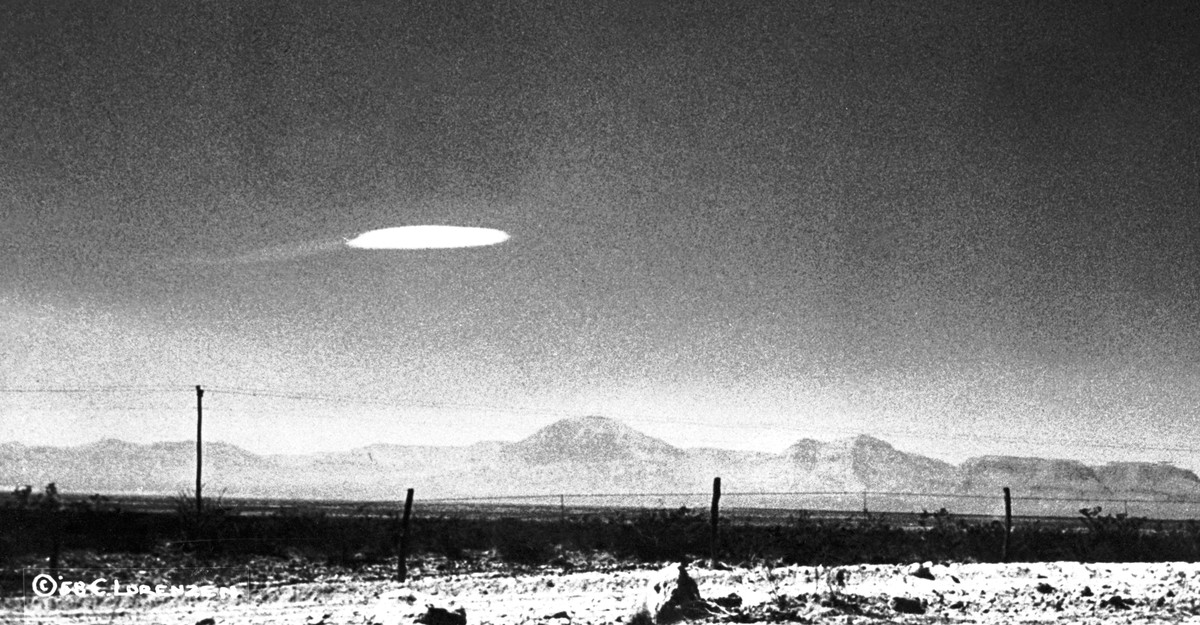
The U.S. Government UFO Cover-Up Is Real—But It’s Not What You Think - The Atlantic   

Decades of declassified memos, internal reports, and study projects create the sense that the government doesn’t have satisfying answers for the most perplexing sightings.

There aren’t many secrets that John Brennan doesn’t know. He spent 25 years in the CIA, became the White House homeland-security adviser, and then returned to the CIA as its director. If a question interested him, he could’ve commanded legions of analysts, officers, surveillance networks, and tools to find the answer. Yet in a December 2020 interview with the economist Tyler Cowen, Brennan admitted, somewhat tortuously, that he was flummoxed by the wave of recent reporting about UFOs: “Some of the phenomena we’re going to be seeing continues to be unexplained and might, in fact, be some type of phenomenon that is the result of something that we don’t yet understand and that could involve some type of activity that some might say constitutes a different form of life.”

That roundabout and convoluted comment piqued my interest. Anything that puzzled Brennan was worth looking into. For the next two years, I dove into the history of the U.S. government’s involvement in UFOs as part of writing my new book, and along the way I’ve become convinced that a cover-up is real—it’s just not the one that you think. Plenty of revelations, declassified documents, and public reports suggest active, ongoing deception. Even today, the government is surely hiding information about its knowledge and working theories about what exists in the skies above.

Continued here


?
Learn more about Jeeng

?
Learn more about Jeeng

?
Learn more about Jeeng

?
Learn more about Jeeng
?
?
Learn more about Jeeng


Which countries get the best night’s sleep? - The Economist   

SLEEP IS ESSENTIAL to human health. It takes up around one-third of people’s lives. And yet surprisingly little is known about it. Understanding of how sleep varies across countries is particularly limited. It is well known, for example, that people in east Asia tend to sleep less than those in America or Europe, but not whether the quality of their sleep is better or worse. Surveys show that some countries are peopled by night owls, but others by early birds. But why this is so remains an open question.

A new paper attempts to fill some of the gaps. Using anonymised data collected from a popular wearable device between January 2021 and January 2022, researchers from the National University of Singapore and Oura Health, a Finnish sleep-tech startup, analysed the sleep habits of more than 220,000 people across 35 countries. Whereas sleep research has historically relied on survey data collected from a small number of people at a single point in time, sleep-tracker apps can track sleep objectively, from the movements, heart rates and body temperatures of large samples of users over long periods. You can see how countries stacked up in our interactive Lie-in-dex below.

The researchers found that sleep patterns vary considerably across countries. As expected, the worst sleepers are mainly in Asian countries, where on a typical weeknight people snooze for less than six and a half hours—roughly 30 minutes less than those in the rest of the world. The best sleepers are mainly in northern European countries (Estonia, Finland, Ireland and the Netherlands) and in Australia and New Zealand, where users log a solid seven hours on average. Bedtimes and wake-up times tend to move together (see chart), though the authors note that Asian sleepers tend to fall asleep 35 minutes later than the average, and wake up around the same time as people elsewhere.

Continued here


?
Learn more about Jeeng

?
Learn more about Jeeng

?
Learn more about Jeeng

?
Learn more about Jeeng
?
?
Learn more about Jeeng


You are receiving this mailer as a TradeBriefs subscriber.
We fight fake/biased news through human curation & independent editorials.
Your support of ads like these makes it possible. Alternatively, get TradeBriefs Premium (ad-free) for only $2/month
If you still wish to unsubscribe, you can unsubscribe from all our emails here
Our address is 309 Town Center 1, Andheri Kurla Road, Andheri East, Mumbai 400059 - 93544947