|  | Know better. Do better. |  | Climate.
Change.News from the ground, in a warming world |
|
| | Forgotten farmersAt COP28, governments will be asked to commit to including food and agriculture in their next round of national climate plans - and to investing more in low-carbon, climate-resilient food systems. But for those efforts to succeed, they will need to put farmers at the centre.
Context's new series, "Growing Green", explores the path to a just transition in India's agriculture sector. The country's millions of small-scale farmers face rising pressure from climate change, which is hurting harvests and fuelling debt. Potential solutions like natural farming could help - but only if implemented in a way that boosts incomes and tackles social inequalities, experts say. 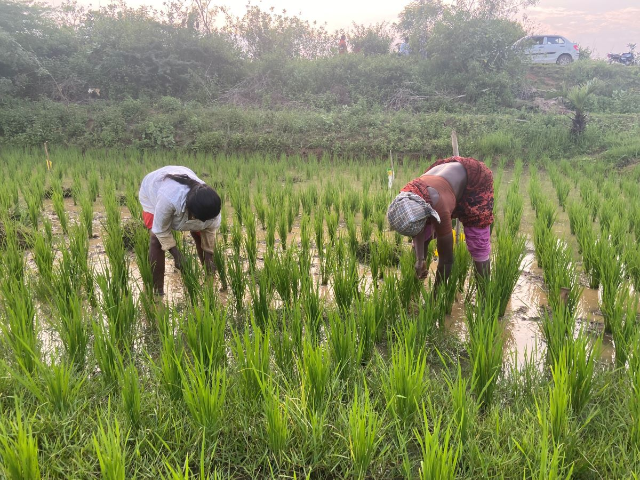 Farm workers transplant paddy seedlings on a natural farm in Kothareddygudem village, Andhra Pradesh state, India, August 31, 2023. Thomson Reuters Foundation/Roli Srivastava |
Our reporters travelled to the fields to find out how farmers - whose voices are often neglected in policy debates - are coping with climate challenges, and what they need to make greener practices work for them.
P. Sabarinath, for example, closed his cellphone repair shop seven years ago and went back to the family plot after he became worried about deteriorating soil health. Now he shows off the chillies, guavas, pulses and rice he grows on his solar-powered farm in Atlapragada Konduru village in Andhra Pradesh, where about 800,000 farmers like him have embraced natural farming under a state government scheme.
But many lack the courage to follow in his footsteps, put off by fears of falling yields and low demand for eco-friendly produce. 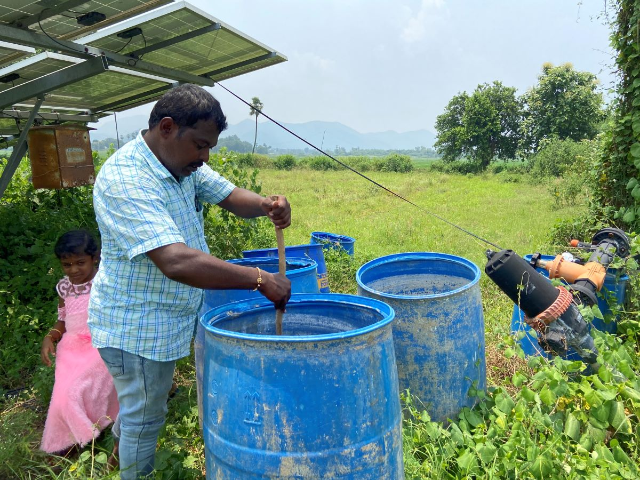 Farmer P. Sabarinath stirs organic manure on his natural farm in Atlapragada Konduru village, Andhra Pradesh state, India, September 1, 2023. Thomson Reuters Foundation/Roli Srivastava |
"If you want to sustain agriculture as (India's) biggest employer, and want to bring in sustainable farming, first bring (a) living income to farmers," Devinder Sharma, an independent agriculture expert, told our correspondent Roli Srivastava.
We'll bring you more stories throughout this week on the drive to make Indian agriculture more eco-friendly, from women champions to sustainable cotton. Please read and share!
Adaptation arrears
The COP28 climate summit, starting next week, will see wealthy nations come under pressure to deliver more finance for vulnerable countries and communities, including small-scale farmers, to adapt to more extreme and erratic weather patterns.
The latest official data, out last week, shows that adaptation funding dropped below $25 billion in 2021, meaning donors will have to dig deep to meet a commitment to increase it to at least $40 billion a year by 2025.
Who is covering the current shortfall? New research shows it is - among others – the family farmers we are reporting on in our Growing Green series, who received only about $2 billion, or 0.3% of international climate finance in 2021.
A newly released survey across 13 countries in Asia, Africa and Latin America estimated that nearly 440 million small-farmer households are collectively spending about $368 billion annually on adjusting to a warmer world.
"Farmers working small plots of land around the globe are the unsung heroes of the battle to adapt to the climate and nature crises," said survey co-lead Xiaoting Hou Jones, at the UK-based International Institute of Environment and Development. 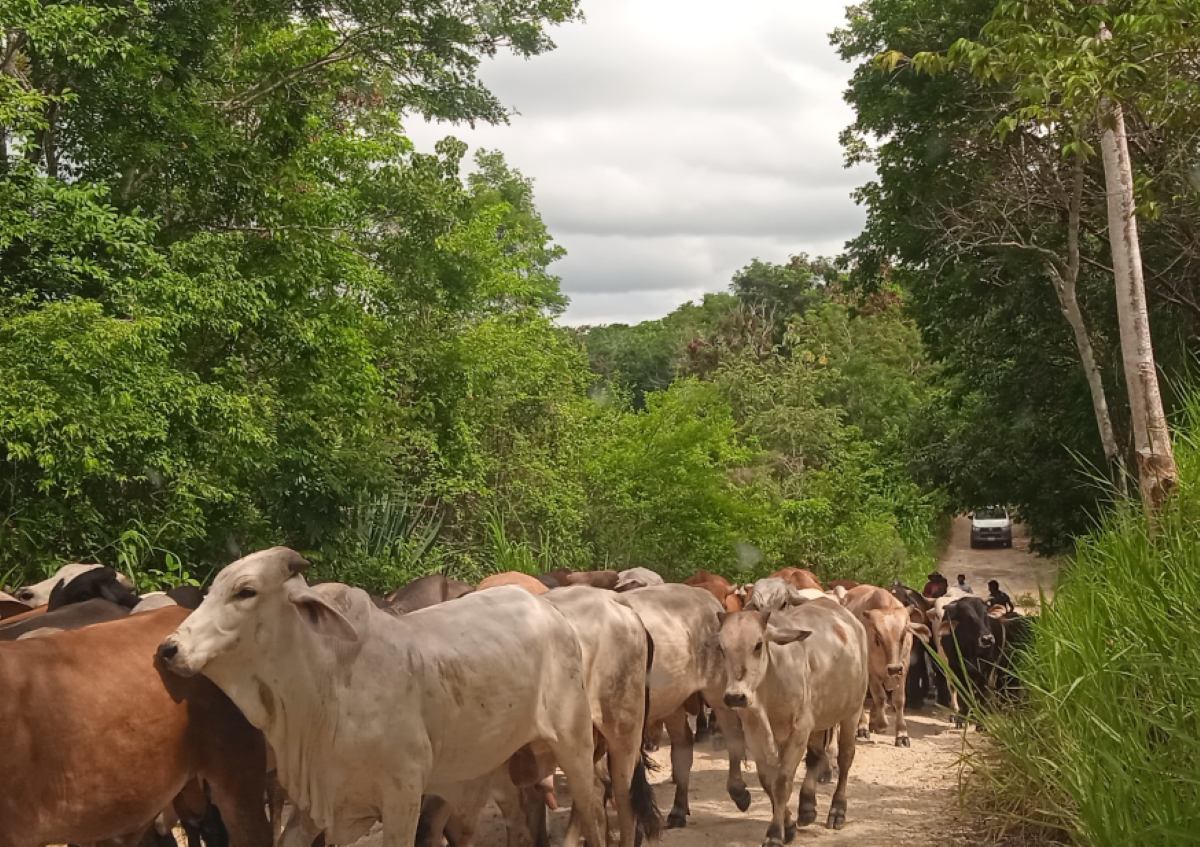resize1.png/640w) Illegal cattle ranching in the Maya Biosphere Reserve, Peten, Guatemala. September 13, 2023. Thomson Reuters Foundation/Anastasia Moloney |
Kicking out cowboysOur reporter Anastasia Moloney heard a similar refrain when she travelled to
Guatemala's northern Maya Biosphere Reserve - a vast expanse of protected jungle and ancient ruins - where she found ranchers on horseback herding cattle to grazing grasslands illegally created on the land.
Since the reserve was established in 1991, it has lost a third of its forest cover, mainly due to unauthorised logging, ranching and man-made fires.
But farming and Indigenous communities living inside the reserve are fighting back by restoring razed forest and seeking to protect their own livelihoods as well as the natural environment, under a system of forest concessions awarded by the Guatemalan government.
With all the talk of global agreements and billions of dollars at the COP summits, it's often too easy to forget those doing the hard work on the frontlines. Myself and Context climate editor Laurie Goering will be discussing how COP28 developments could affect these communities, live on X/Twitter next Tuesday (Nov 28) at 1500 GMT.
Come and join the conversation!
Megan |
|
| | Sustainable farming practices will only take off if they better protect incomes already hit by losses from climate change impacts, experts say | Some Indian farmers are switching to sustainable ways of growing food, generating carbon credits in the process by slashing climate-heating emissions | Greener methods attract new recruits as agriculture is hit by a harsher climate, but many farmers still prefer chemical fertilisers | How can a 'just transition' for Africans - and better protection for those impoverished by climate impacts - be achieved? | Scientists say deforestation is compounding the effects of climate
change, threatening to turn parts of the forest into savannah | New clean energy jobs are outpacing fossil fuel roles, raising questions about the skills they require and how much they pay | |
| | | | | | |
|