CEO Picks - The best that international journalism has to offer!
 S7 S7Branding in the Age of Social Media   Marketers originally thought that Facebook, YouTube, and Twitter would let them bypass mainstream media and connect directly with customers. Hoping to attract huge audiences to their brands, they spent billions producing their own creative content. But consumers never showed up. In fact, social media seems to have made brands less significant.
Continued here
|
S70Libya's Unnatural Disaster  Footage and eyewitness accounts have conveyed harrowing scenes from the storm-struck Libyan town of Derna: overflowing morgues and mass burials, rescuers digging through mud with their bare hands to recover bodies, a corpse hanging from a streetlight, the cries of trapped children. Two aging dams to Derna’s south collapsed under the pressure of Storm Daniel, sending an estimated 30 million cubic meters of water down a river valley that runs through the city’s center and erasing entire neighborhoods. Some 11,300 people are currently believed dead—a number that could double in the days ahead. An estimated 38,000 residents have been displaced.Libya has seen no shortage of suffering and misery since the 2011 revolution that toppled its longtime dictator, Muammar Qaddafi. Yet Storm Daniel promises to be a singular event. Already, Libyan commentators inside the country and out are pointing to the apocalyptic loss of life in Derna as the product not simply of a natural disaster, but of Libya’s divided and ineffectual governance. The west of the country is run by the internationally recognized Government of National Unity; the east, including Derna, falls under the rule of the renegade strongman Khalifa Haftar.
Continued here
|
| ? |
 |
S2Exploit the Product Life Cycle  Most alert and thoughtful senior marketing executives are by now familiar with the concept of the product life cycle. Even a handful of uniquely cosmopolitan and up-to-date corporate presidents have familiarized themselves with this tantalizing concept. Yet a recent survey I took of such executives found none who used the concept in any strategic way whatever, and pitifully few who used it in any kind of tactical way. It has remained—as have so many fascinating theories in economics, physics, and sex—a remarkably durable but almost totally unemployed and seemingly unemployable piece of professional baggage whose presence in the rhetoric of professional discussions adds a much-coveted but apparently unattainable legitimacy to the idea that marketing management is somehow a profession. There is, furthermore, a persistent feeling that the life cycle concept adds luster and believability to the insistent claim in certain circles that marketing is close to being some sort of science.1
Continued here
|
S3The 30 Elements of Consumer Value: A Hierarchy  What consumers truly value can be difficult to pin down and psychologically complicated. But universal building blocks of value do exist, creating opportunities for companies to improve their performance in existing markets or break into new markets. In the right combinations, the authors’ analysis shows, those elements will pay off in stronger customer loyalty, greater consumer willingness to try a particular brand, and sustained revenue growth.
Continued here
|
| ? |
|
S4S5Neuromarketing: What You Need to Know  The field of neuromarketing, sometimes known as consumer neuroscience, studies the brain to predict and potentially even manipulate consumer behavior and decision making. Over the past five years several groundbreaking studies have demonstrated its potential to create value for marketers. But those interested in using its tools must still determine whether that’s worth the investment and how to do it well.
Continued here
|
S6Business Marketing: Understand What Customers Value  How do you define the value of your market offering? Can you measure it? Few suppliers in business markets are able to answer those questions, and yet the ability to pinpoint the value of a product or service for one’s customers has never been more important. By creating and using what the authors call customer value models, suppliers are able to figure out exactly what their offerings are worth to customers.
Continued here
|
S8The Globalization of Markets  Many companies have become disillusioned with sales in the international marketplace as old markets become saturated and new ones must be found. How can they customize products for the demands of new markets? Which items will consumers want? With wily international competitors breathing down their necks, many organizations think that the game just isn’t worth the effort.
Continued here
|
| ? |
|
S9How to Scale Local Innovations in Big Companies  All too often innovations — including new products, new HR policies to attract and retain talent, and new production processes —developed in one part of a business stay there. Other groups that could benefit from them don’t know they exist. This leads to lost revenues and higher costs, since teams around the world often end up duplicating (or triplicating, or quadruplicating) investments in solving common problems. This article identifies three common obstacles to scaling innovations and describes a way to overcome them.
Continued here
|
S10Will AI Replace the Front Office in Pro Sports?  With accurate player-availability predictions for all active players, AI-powered decision-making is dramatically improved around three dimensions: 1) Risk management: If a productive wide-receiver is likely to get hurt, for example, a team might invest more in talented backups, to minimize drop-off in team performance during injury. 2) Training and targeted interventions: If AI suggests a player is injury-prone, teams can target that player with customized training, nutrition, or other regimens to reduce the likelihood of injury. Alternatively, a team might choose to reduce a player’s workload, also reducing risk. 3) Personnel decisions: By identifying factors that predict injury or other unavailability, teams can draft, trade for, or otherwise acquire players that they believe are more likely to be available season-long. Additionally, teams may choose to trade players for whom injury seems likely.
Continued here
|
| ? |
|
S11Welcome to the Experience Economy How do economies change? The entire history of economic progress can be recapitulated in the four-stage evolution of the birthday cake. As a vestige of the agrarian economy, mothers made birthday cakes from scratch, mixing farm commodities (flour, sugar, butter, and eggs) that together cost mere dimes. As the goods-based industrial economy advanced, moms paid a dollar or two to Betty Crocker for premixed ingredients. Later, when the service economy took hold, busy parents ordered cakes from the bakery or grocery store, which, at $10 or $15, cost ten times as much as the packaged ingredients. Now, in the time-starved 1990s, parents neither make the birthday cake nor even throw the party. Instead, they spend $100 or more to “outsource” the entire event to Chuck E. Cheese’s, the Discovery Zone, the Mining Company, or some other business that stages a memorable event for the kids—and often throws in the cake for free. Welcome to the emerging experience economy.
Continued here
|
S12A Refresher on A/B Testing  A/B testing is a way to compare two versions of something to figure out which performs better. While it’s most often associated with websites and apps, the method is almost 100 years old and it’s one of the simplest forms of a randomized controlled experiment. This testing method has risen in popularity over the last couple of decades as companies have realized that the online environment is well-suited to help managers, especially marketers, answer questions like, “What is most likely to make people click? Or buy our product? Or register with our site?”. It’s now used to evaluate everything from website design to online offers to headlines to product descriptions. The test works by showing two sets of users (assigned at random when they visit the site) different versions of a product or site and then determining which influenced your success metric the most. While it’s an often-used method, there are several mistakes that managers make when doing A/B testing: reacting to early data without letting the test run its full course; looking at too many metrics instead of focusing on the ones they most care about; and not doing enough retesting to be sure they didn’t get false positive results.
Continued here
|
| ? |
|
S13A Simple Way to Introduce Yourself  Many of us dread the self-introduction, be it in an online meeting or at the boardroom table. Here is a practical framework you can leverage to introduce yourself with confidence in any context, online or in-person: Present, past, and future. You can customize this framework both for yourself as an individual and for the specific context. Perhaps most importantly, when you use this framework, you will be able to focus on others’ introductions, instead of stewing about what you should say about yourself.
Continued here
|
S1415 Rules for Negotiating a Job Offer  In some industries, a weak labor market has left candidates with fewer options and less leverage, and employers better positioned to dictate terms. Those who are unemployed, or whose current job seems shaky, have seen their bargaining power further reduced. But the complexity of the job market creates opportunities for people to negotiate the terms and conditions of employment. Negotiation matters most when there is a broad range of potential outcomes.
Continued here
|
| ? |
|
S15How to Answer "Why Do You Want to Work Here?"  Of all the interview questions job applicants prepare for, the most obvious ones sometimes get the least attention. Yes, you came ready to share your biggest flaw, your greatest strength, a moment when you shined, and a concept you learned, but what do you do with a broad but direct question like “Why do you want to work here?” In this piece, the author offers three strategies for answering this common interview question and provides sample answers for you to use as a guide.
Continued here
|
S16How to Write a Cover Letter  Perhaps the most challenging part of the job application process is writing an effective cover letter. And yes, you should send one. Even if only one in two cover letters gets read, that’s still a 50% chance that including one could help you. Before you start writing, find out more about the company and the specific job you want. Next, catch the attention of the hiring manager or recruiter with a strong opening line. If you have a personal connection with the company or someone who works there, mention it in the first sentence or two, and try to address your letter to someone directly. Hiring managers are looking for people who can help them solve problems, so show that you know what the company does and some of the challenges it faces. Then explain how your experience has equipped you to meet those needs. If the online application doesn’t allow you to submit a cover letter, use the format you’re given to demonstrate your ability to do the job and your enthusiasm for the role.
Continued here
|
| ? |
|
S17How to Write a Thank You Email After an Interview  You’ve updated your resume, written your cover letter, and prepared for your interview. Now it’s time for your thank you note to seal the deal. In this piece, the author outlines what to say — and not to say — in your thank you email to interviewers and answers common questions like: How much detail should you include? When should you send it? And why is it important to do? He also includes three sample emails to use as a guide.
Continued here
|
S1838 Smart Questions to Ask in a Job Interview  The opportunity to ask questions at the end of a job interview is one you don’t want to waste. It’s both a chance to continue to prove yourself and to find out whether a position is the right fit for you. In this piece, the author lists sample questions recommended by two career experts and divides them up by category: from how to learn more about your potential boss to how to learn more about a company’s culture. Choose the ones that are more relevant to you, your interests, and the specific job ahead of time. Then write them down — either on a piece of paper or on your phone — and glance at them right before your interview so that they’re fresh in your mind. And, of course, be mindful of the interviewer’s time. If you were scheduled to talk for an hour and they turn to you with five minutes left, choose two or three questions that are most important to you. You will always have more time to ask questions once you have the job offer in hand.
Continued here
|
S19How to Give a Killer Presentation  According to Anderson, presentations rise or fall on the quality of the idea, the narrative, and the passion of the speaker. It’s about substance—not style. In fact, it’s fairly easy to “coach out” the problems in a talk, but there’s no way to “coach in” the basic story—the presenter has to have the raw material. So if your thinking is not there yet, he advises, decline that invitation to speak. Instead, keep working until you have an idea that’s worth sharing.
Continued here
|
S20How to Find Your Purpose  Purpose can be defined as an overarching intention that is personally meaningful to you and of consequence to the world beyond yourself. Your purpose can help you organize your life, give you a clear direction, and motivate you — especially when you encounter life’s inevitable setbacks and disappointments.
Continued here
|
S21S22Sustainability Is About Your Workforce, Too  In recent years, many companies hired chief sustainability officers and established a set of high-priority programs to reduce carbon emissions and the risk of global climate change. As the EU moves forward with a number of regulations designed to protect the workforce, it’s time to extend the concept of sustainability. People sustainability takes a holistic approach to corporate human capital practices, including diversity and inclusion, well-being, employee safety, and fair pay. It raises these human capital issues to the C-suite and obliges chief human resource officers to work with chief sustainability officers on these programs.
Continued here
|
S23How to Get Honest and Substantive Feedback from Your Customers  Businesses can’t improve operations without honest and substantive feedback. Customers can be reluctant to provide it, for several reasons. Companies can try to overcome this by focusing feedback requests on improvement (not employee assessment), focusing on customer actions instead of words, and approaching the gathering of feedback as a habit rather than an occasional effort.
Continued here
|
S24A More Impactful Strategy for Sustainable Investing  The effectiveness of sustainable investing has been challenged, with critics like Tariq Fancy describing it as a mere placebo. Amidst rising skepticism and stricter disclosure requirements, a deeper dive reveals that traditional methods of influencing companies, namely “voice” (shareholder engagement) and “exit” (portfolio screening), are not exhaustive. Through a comprehensive review of over 3,500 research papers, a new approach — “field building” — emerges. This tactic acknowledges the interconnected web of stakeholders around companies, termed “fields”, that profoundly influence corporate behavior. By reshaping these fields, investors can indirectly drive sustainable change in firms. Five tactics are highlighted: (1) Shifting other investors’ evaluation of issues, (2) Sharing expertise, (3) Delegitimizing certain business activities, (4) Establishing voluntary standards, and (5) Supporting regulatory changes. While promising, field-building presents challenges like profitability and political exposure. Yet, by embracing this expanded toolkit, investors can magnify their positive impact and appeal to an increasingly conscious investment clientele.
Continued here
|
S25How the Geeks Rewrote the Rules of Management  Andrew McAfee is a principal research scientist at the MIT Sloan School of Management. Throughout his career, he has done ground-breaking research on how digital technologies are changing the world. He is a prolific writer, a frequent contributor to HBR and other outlets, and a sought-after commentator on technological change – especially, these days, on the potential of generative AI. He is the author of the forthcoming book “The Geek Way: The Radical Mindset that Drives Extraordinary Results,” the subject of much of this “New World of Work” interview. His big idea is that “geeks” have created not only the technology that’s driving our future but also a management approach that defines contemporary corporate excellence. It’s a somewhat contrarian view; after all, many of us have criticized Silicon Valley-run businesses as being male-dominated and lacking in empathy (even, of course, as we continue to use their products). What does McAfee mean by geek? He defines them as “obsessive mavericks,” people who become obsessed with hard problems and are willing to pursue unconventional solutions – to avoid the dysfunctions that have traditionally plagued companies as they expand.
Continued here
|
S26Should we be worried about older politicians?  Pauline Newman, now 96, holds a lifetime position as a US federal judge. Though she wants to carry on working, she's in the midst of lawsuits with colleagues who want her to retire.The US has become a hotspot for debates about whether people in the political sphere can ever be too old to lead. The top contenders for the 2024 US presidential election are Joe Biden, who at 80 is over twice as old as the median American; and 77-year-old Donald Trump, who is a more than a decade beyond the "Normal Retirement Age" – the age at which Americans can receive their full retirement benefits.
Continued here
|
S27The politics of Africa's TikTok bans  In August, Senegal and Somalia banned the app, with calls to do the same in Kenya and Uganda. While local governments and petitioners have cited security risks and morality as reasons to take action against TikTok, lawyers and activists told Rest of World via text and social media messages that the Chinese app is falling prey to politically motivated decisions.“It seems it’s a political decision shrouded in a morality cloak,” said Mohamed Mubarak, a Somali policy analyst. “The government is unhappy about the political parody of the president and [prime minister] and is using ‘human rights’ as a justification.” In its official announcement of the ban on August 20, the Somali government said its decision was based on the damage the app had caused to the country’s social morals and cultural values.
Continued here
|
S28The U.S. is racing to source chips from Vietnam -- but engineers are scant  In 2004, a Vietnamese-American entrepreneur opened a microchip design company in Hanoi — not for business reasons, but simply to be close to his Vietnamese girlfriend, goes the story. He hired electrical engineering and telecommunications student Nguyen Thanh Yen, despite Yen lacking any knowledge about chips. Yen spent his first three months on the job devouring textbooks on chip design.Fast forward to the present day, and Yen is the lead engineer at Korean chip design company CoAsia Semi’s Hanoi branch. Despite building a thriving career, he still has the same struggle as his first boss: finding enough chip engineers to hire. Over the past three years, he’s only been able to recruit 70 chip design engineers, a fraction of his target goal of 300, he told Rest of World.
Continued here
|
S29The SoftBank-backed company that lets you buy glasses over WhatsApp  Founded in 2010, Lenskart is an online-first brand that sells prescription eyewear, contact lenses, sunglasses, and accessories. Its app offers three ways to buy glasses: The “buy at store” option, which lets users locate the nearest Lenskart retail store from its network of 2,000 outlets, “try at home,” where an eyewear expert brings over 150 frames to the customer’s doorstep, or “buy on chat,” where users place orders over WhatsApp.Co-founded by Peyush Bansal, a former Microsoft employee, Lenskart launched its own premium eyewear brand, John Jacobs, in 2017. It has since expanded operations to Southeast Asia and the Middle East. The SoftBank-backed company is one of the few internet companies that reported a profit in two of the last three years. For the 2022 financial year, Lenskart’s revenue was $180 million, of which the sale of eyewear products alone contributed to 94% of its total revenue.
Continued here
|
S30Can You Spot a Satellite?  Thousands of spacecraft circle Earth. Seeing them from the ground is surprisingly easy—and a lot of funWhen I take people out for a stargazing session on a dark night, they’re always surprised to find out how many human-made satellites are visible as they pass overhead. In fact, if you stay out for an hour or two, you can easily spot a dozen or more making their way across the sky! I understand the confusion, though. Satellites seem so far away—in space—that you’d think they’d be almost invisible and only rarely seen.
Continued here
|
S31How Schadenfreude Is Poisoning U.S. Politics  Partisan desires to see opponents harmed has created a vibrant demand for promises of candidate cruelty in the U.S.The arrest of Donald Trump in Georgia, for his attempt to overturn the result of the 2020 presidential election, was a landmark moment in American political history. The momentousness arose not only from the event itself (Trump was the first president ever to have a mug shot taken). The public reaction to Trump’s arrest—an outburst of unbridled euphoria—clearly illustrates a dynamic increasingly animating American politics: a large portion of the public enjoys seeing harm or misfortune befall those with whom they disagree politically.
Continued here
|
S32S33Forgotten Memories May Remain Intact in the Brain 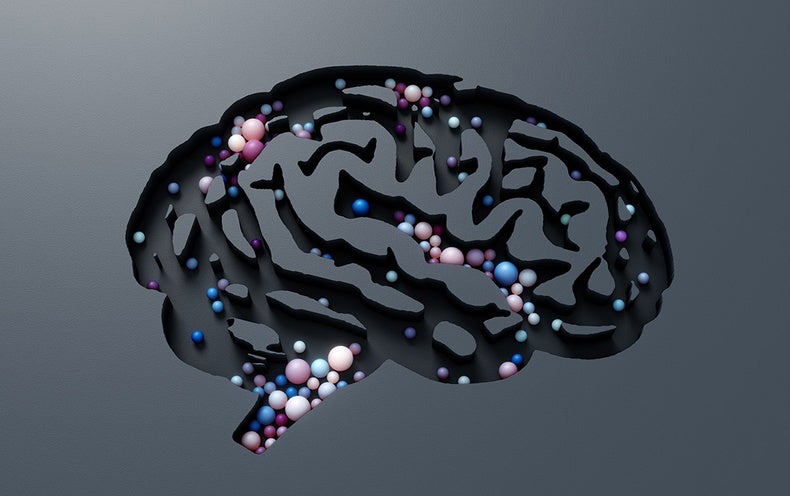 Forgetting is a fact of life—one that many people find frustrating. But mounting evidence pushes back at the notion that a slip or lapse in our recollection is inherently bad. Indeed, forgetting can sometimes help people cope psychologically or let go of useless knowledge. In a new study, neuroscientist Tomás Ryan of Trinity College Dublin and his colleagues have examined the fundamental biology underlying a form of forgetting we experience every day. Their work suggests that when we can’t recall an old phone number or a high school teacher’s name, those details are not necessarily lost. As Ryan explained to Mind Matters editor Daisy Yuhas, forgetting may be an active process that the brain uses to support learning. He also discussed how dementia may ultimately reflect disordered forgetting more than lost memories.You study an idea that some people may find counterintuitive: forgetting can be part of learning. How so?
Continued here
|
S34Why Japan Is Building Its Own Version of ChatGPT  Some Japanese researchers feel that AI systems trained on foreign languages cannot grasp the intricacies of Japanese language and cultureJapan is building its own versions of ChatGPT — the artificial intelligence (AI) chatbot made by US firm OpenAI that became a worldwide sensation after it was unveiled just under a year ago.
Continued here
|
S35S36Dams Worldwide Are at Risk of Catastrophic Failure  After two dams in northeastern Libya failed, thousands of people are dead, thousands more are unaccounted for, and tens of thousands are displaced in the city of Derna and surrounding towns. The dams along the Wadi Derna river valley collapsed amid Storm Daniel, a Mediterranean cyclone that dropped up to 16 inches of rain over parts of the North African country in a single 24-hour period this week. The same record-breaking storm also inundated Greece, Bulgaria and Turkey, causing devastating flooding across the region of those nations before making landfall in Libya.The scale of the catastrophe in Derna, a city of around 100,000 people, is massive. Yet its underlying causes are not unique. The disaster occurred at the confluence of sociopolitical instability wrought by civil war, a historic storm (likely exacerbated by climate change) and neglected infrastructure: the destroyed dams, first constructed in the 1970s, had reportedly not been maintained since 2002. Similar conditions are replicated in many other places worldwide. In the aftermath of Derna’s dam collapses, experts are calling for renewed attention to the international problem of aging, ill-maintained dams.
Continued here
|
S37Life-Changing Cystic Fibrosis Treatment Wins $3-Million Breakthrough Prize  A trio of scientists who developed the combination drug Trikafta are among the winners of five major awards in life sciences, physics and mathematicsThe triple-drug combination Trikafta has given a new lease of life to 90% of people with cystic fibrosis, an inherited disorder that affects the lungs and other organs. Now, the trio of researchers who spearheaded its development has won one of this year’s US$3-million Breakthrough prizes — the most lucrative awards in science.
Continued here
|
S38Climate Change Is Hindering Global Growth and Prosperity, U.N. Says  In the five decades between 1970 and 2021, extreme climate events caused more than two million deaths and led to economic losses of $4.3 trillion, 60 percent of which occurred in developing countries, a U.N. report foundCLIMATEWIRE | Climate change is undermining efforts to address hunger, health and other sustainable development targets — including the transition to clean energy, a U.N. report said Thursday.
Continued here
|
S39Al Roker: An extreme weather report from America's weatherman  It's not just you: the weather is getting worse. And if there's one person who would know, it's "America's weatherman," Al Roker, who's spent decades reporting live from some of the worst storms and natural disasters in history. He explains how we can each take action to address climate change and work towards a more sustainable, hopeful future for generations to come.
Continued here
|
S40Welcome to Halal Hinge  Swoosh. Ping. Slow and studied scrolling. Typing with the index finger. My mother is on the prowl for a man. Not for herself, of course, but for any of her three daughters, all of whom have the great misfortune of being single in their late twenties and early thirties. “I’m depressed,” she tells us when the subject of suitors comes up. She, a Bangladeshi woman who got married at 19 and had three kids by 27, can’t believe that none of us have procured a husband or given her any grandchildren. So, she decided to take matters into her own hands. She is now part of several WhatsApp groups where hundreds of fussy parents are on the hunt.Instead of debating the merits of The Office or pineapple on pizza as one does on Hinge, mums and aunties in these groups discuss deal-breakers such as level of piety, education, willingness to relocate—and the ever controversial, interest in living with in-laws. They trade CVs, often called “biodata” in South Asian communities. When a parent is happy with what they’ve heard, they may forward information to their children. The whole process is more bureaucratic than you might think. Each biodata comes with a unique code, and there are subgroups depending on your preferences, including those for people living in London or seeking older suitors or divorcées. If you like the sound of one suitor, you can find their preferred contact details (frequently a different number than the one in the WhatsApp chat) and message them privately.
Continued here
|
 |
TradeBriefs Publications are read by over 10,00,000 Industry Executives About Us | Advertise Privacy Policy Unsubscribe (one-click) You are receiving this mail because of your subscription with TradeBriefs.
Our mailing address is GF 25/39, West Patel Nagar, New Delhi 110008, India |