|  | Know better. Do better. |  | Climate.
Change.News from the ground, in a warming world |
|
| | Bonn bunfightMore than halfway through the mid-year U.N. climate talks in Bonn, progress is painfully slow - and fights over a lack of climate finance to help developing countries curb their planet-heating emissions are holding up even the adoption of the agenda for the meeting.
This may seem absurd, but it's a sign of the wider politics shaping global climate action, which is hitting a roadblock over insufficient international funding for poorer nations - whether to adopt clean energy, adapt to a warmer world or deal with loss and damage from extreme weather and rising seas.
A three-day dialogue at the Bonn negotiations didn't do a great deal to advance preparations for setting up a new loss and damage fund at the COP28 summit in Dubai in December, turning out to be more of a wish list and inventory of what's already being done by humanitarian agencies.
The real heavy lifting on loss and damage finance is being done by a committee that's meeting throughout the year to get the nuts and bolts in place for the hard-won fund that gained backing at COP27.
As our explainer outlines, there are quite a few tricky issues to be ironed out before COP28 - including how this fund can improve what's being done on the ground to help people by overstretched aid agencies, which are worried they won't be able to cope in a hotter future.
"We can't allow the accountability to be shifted outside the (U.N. climate) system - for a very simple reason: 90% of disasters we are facing today are climate-related," argues Harjeet Singh, head of global political strategy for Climate Action Network International. 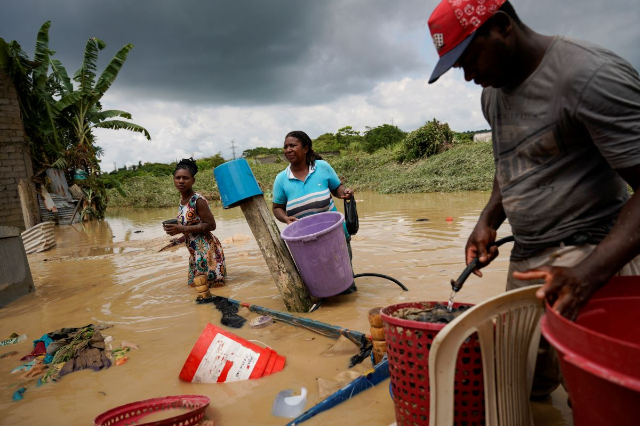 People try to salvage things after their homes and neighbourhood were flooded due to heavy rains, in Esmeraldas, Ecuador June 5, 2023. REUTERS/Santiago
Arcos |
Net-zero noiseMeanwhile, new data released in Bonn on net-zero emissions commitments shows that, at the national level, nearly 150 countries have now set targets to that end - but the devil is in the detail of the plans to get there, including the efforts that will be needed by cities and companies.
In an annual update from Net Zero Tracker, analysts point out that 37% of the world’s largest companies have yet to set any kind of greenhouse gas mitigation target, while only 252 large cities have adopted net-zero goals.
What's more, the credibility of almost all of those targets is weak - which means implementation could fall short.
One key blocker to action in the real world is a renewed surge in climate disinformation, amid calls for tougher action by Big Tech to enforce policies against it and tackle greenwashing, reports our London-based tech correspondent Adam Smith.
Common tactics by climate deniers these days include the argument that green energy is expensive and exacerbates the cost-of-living crisis, as well as a push to make climate skepticism part of wider culture wars, for example over "wokeness". 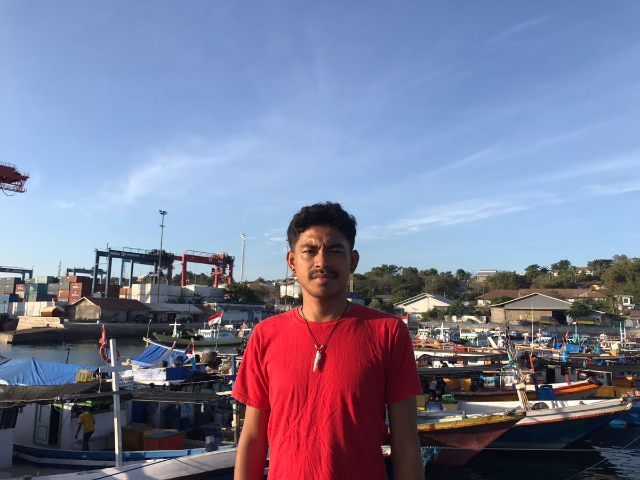 Fisherman and free diver Radith Giantiano poses by boats in a port in Kupang, East Nusa Tenggara, Indonesia in May 2023. Radith Giantiano/Handout via Thomson Reuters Foundation |
Human rights routeBut as time runs out to keep
warming to the most ambitious globally agreed limit of 1.5C, activists and ordinary folks are increasingly turning to the law to protect their human right to a clean and healthy environment, declared by the U.N. last July.
Forty such cases were brought between 2015 and 2020, especially in nations or states that have guaranteed rights to a healthy environment in their constitutions or local and national laws, according to Verisk Maplecroft.
"The pivot that these activists have taken is to start using human rights law," said Will Nichols, head of climate and resilience for the risk consultancy. "It seems to be a newer approach."
Indonesian fisherman Radith Giantiano - still suffering the fallout of tropical cyclone Seroja two years after it devastated his coastal community - is one of 13 complainants looking to take legal action based on the claim the government has violated their human rights under the constitution, as they face life-threatening challenges and adverse impacts to their health, education, livelihoods, food and water supplies from climate change.
One to watch amid the 1,400 climate lawsuits worldwide that have been filed since 2015, making the law a major tool in the climate action toolbox.
See you next week,
Megan |
|
| | Climate change impacts from rising temperatures to lack of rain hit Bangladeshi tea harvest as pickers worry about pay and health | Climate migration is rising among many communities in Nepal as worsening droughts and erratic rainfall cause water shortages | Climate litigation is increasingly using human rights laws as basis to hold countries and companies to account on green pledges | Falsehoods spread by oil companies, climate skeptics and others are a threat to progress against global warming, campaigners say | As countries meet at Bonn climate talks, they must reject false solutions like carbon
offsets | Rather than hurting farming and fishing, protecting nature pays for itself | |
| | | | | | |
|